MCP server · Developer tools
port-keeper MCP server
by gridhra
Lets your AI give each copy of a project its own set of ports, so parallel work never clashes.

port-keeper is a small helper that hands out port numbers to your projects. If you run several copies of the same project at once, each copy normally fights over the same ports. This tool gives every copy its own set, and your AI can ask it which address a service is on.
What is an MCP server? The 30-second version
On its own, your AI can only chat. An MCP server is a small helper program that gives your AI one new skill or one new connection. This one connects your AI to port-keeper, a local record of which port belongs to which service. Once connected, your AI can look up addresses and set up ports for you instead of guessing numbers.
What this MCP server does
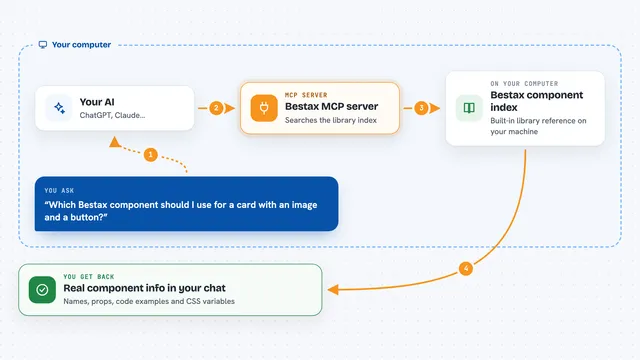
You ask your AI something like which address the admin screen of a project is on. Your AI calls this helper. The helper checks its local record and finds the port for that service. It hands the address back, and your AI tells you the answer. It can also write the port numbers into your project's .env file when you ask it to set up a copy.
 Click to zoom
What you can do with it
- Look up the web address of a service by name
- Give a new copy of a project its own block of ports
- Write the port numbers into your .env file
- Check which project and copy you are currently in
- See whether your .env file is out of date
- Reuse another copy's database and mail catcher for a new copy
- Find out what is using a port that is already taken
Try asking your AI
- “What is the address of the admin screen for shop slot 3?”
- “Set up a new copy of this project for the hotfix branch and give it its own ports.”
- “Is my .env file up to date for this working copy?”
- “Which project and slot am I in right now?”
What it gives back to you
You get back plain answers in the chat, like a web address such as http://localhost:20000 or a short note saying which project and copy you are in. When you ask it to set up ports, it writes them into a file in your project and tells you it is done. It can also report whether your .env file is out of date.
Before you start
What you need
- The port-keeper program installed on your computer
- A project with a port-keeper.toml file listing its services
- An MCP client such as Claude Code or the Claude desktop app
Good to know
It writes port numbers into a file inside your project (the managed section of .env.local), so point it at the right project and check the file if something looks off.
Install it with your AI
Add port-keeper MCP server to your AI, no technical skills needed
You don't install anything by hand. You copy one prompt, paste it into an AI that can work on your computer, and it checks, installs and connects the server for you, asking you when it needs something.
Sign in to get the install prompt
Members get a ready-made prompt that lets the Claude desktop app check port-keeper MCP server, install it and connect it for them, step by step. You don't need any technical skills: you copy, paste and answer a few questions. Your connected AI can also find and install any of the 4,609 MCP servers here for you.
Who it's for
Developers who run several copies of the same project at once, or who use coding agents in parallel and keep hitting port clashes.