MCP server · Developer tools
CodeHealth MCP server
Ask your AI to scan a codebase for dead code, circular imports, coupling, and architecture drift.

CodeHealth MCP is a small helper that lets your AI look at a codebase and report on its health. It finds things like unused code, loops in imports, and messy connections between parts of a project. It is handy for developers and anyone who reviews code and wants a quick second opinion.
What is an MCP server? The 30-second version
On its own, your AI can only chat. An MCP server is a small helper program that gives your AI a new skill or a connection to a service. This one connects your AI to a code analysis engine, so when you ask about a project, the AI can actually run checks on it and bring back findings instead of guessing.
What this MCP server does
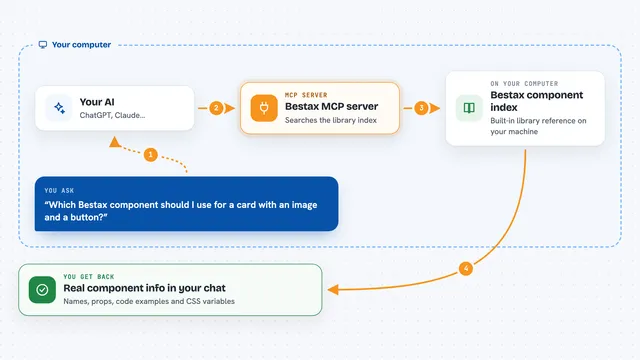
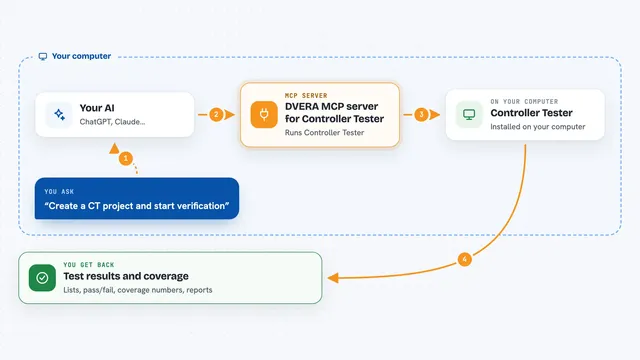
You ask your AI something like "run a full health scan on this repo." The AI passes that request to this helper. The helper reads the code, runs several checks (dead code, circular imports, coupling, and layer violations), and hands the results back. The AI then shows you a list of findings with file and line numbers, plus a health score from 0 to 100 and suggested fixes.
 Click to zoom
What you can do with it
- Find unused functions, classes, and modules in a project
- Spot circular import loops between files
- Measure how tightly connected modules are and where refactoring might help
- Check whether code breaks layer boundaries like UI reaching into data
- Run one combined scan that returns a 0 to 100 health score
- Ask for a plain-language explanation of any single finding
- Check whether a remote MCP endpoint is actually healthy, not just returning HTTP 200
Try asking your AI
- “Run a full health scan on /path/to/my/repo”
- “Find circular dependencies in the frontend folder”
- “Check coupling metrics in src/services”
- “Explain this finding about the unused module in utils”
What it gives back to you
You get back a list of findings, each with a type, a severity (critical, warning, or info), the file and line, and a suggested fix. A full scan also returns a health score from 0 to 100 and a short list of prioritized actions. The AI shows this in the chat, usually as a readable summary or table you can scroll through.
Before you start
What you need
- Node.js installed on your computer
- The project files you want to analyze, either on your machine or a GitHub link
- An LLM API key (a kind of password for AI services) if you want the AI-written explanations
- A GitHub token only if you want to scan private repositories
Good to know
It reads your project files, so only point it at code you are allowed to share, and be aware that a full scan can send file contents to the AI provider you configured.
Install it with your AI
Add CodeHealth MCP server to your AI, no technical skills needed
You don't install anything by hand. You copy one prompt, paste it into an AI that can work on your computer, and it checks, installs and connects the server for you, asking you when it needs something.
Sign in to get the install prompt
Members get a ready-made prompt that lets the Claude desktop app check CodeHealth MCP server, install it and connect it for them, step by step. You don't need any technical skills: you copy, paste and answer a few questions. Your connected AI can also find and install any of the 4,609 MCP servers here for you.
Who it's for
Developers, tech leads, and anyone who reviews or maintains a codebase and wants a quick health check without digging through CI dashboards.