MCP server · Notes
Artel MCP server
Give your AI a shared memory so it remembers what you and your other agents already figured out.

Artel is a shared notepad for you and your AI helpers. Whatever you or any of your agents learn gets written down once, and it comes back to you at the right moment, like right before you edit a file or when you pick up work on Monday. It is handy if you run several AI sessions and keep repeating yourself.
What is an MCP server? The 30-second version
On its own, your AI can only chat with you in that one window. An MCP server is a small helper program that gives your AI a new skill or a connection to an app or service. This one connects your AI to Artel, your own shared notepad, so it can look things up and write things down for you. You run Artel yourself, on your own machine, so nothing goes to anyone else's cloud.
What this MCP server does
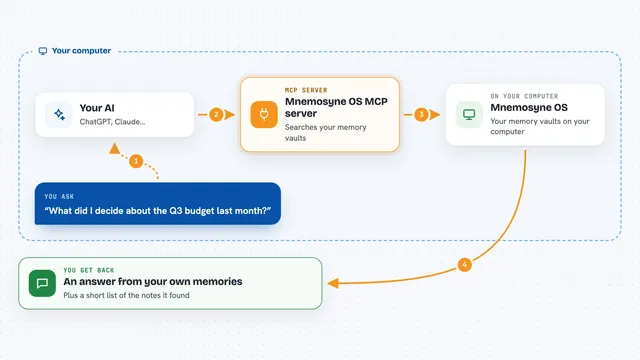
You ask your AI something, or it starts working on a file. Your AI talks to this helper, and the helper talks to your Artel notepad. Artel searches its notes by meaning, not just by keyword, and hands back the notes that matter right now. It also writes down what happened in your session so the next agent knows. A background worker tidies the notes while you are away, merging duplicates and fading things that stopped being true.
 Click to zoom
What you can do with it
- Remember what you or another agent already learned about a file
- Pick up where you left off on a task from a previous session
- Share notes between several agents on different machines
- Search your notes by meaning instead of exact words
- Keep a record of decisions you made and why
- Track tasks and messages between agents
- Let a background worker clean up and merge notes over time
Try asking your AI
- “What did we figure out about the token refresh in auth.py?”
- “Where did I stop on the migration on Friday?”
- “Has anyone seen this flaky test fail before, and what was it?”
- “Write down that the shared fixture was the cause of the March test failure.”
What it gives back to you
You get notes back in the chat, written in plain words, often with a short summary of what was learned and when. It can also show you a list of related notes or a task status. When it writes something down, it tells you it saved the note. The dashboard in your browser lets you browse and search everything yourself.
Before you start
What you need
- A computer where you can run Docker (the README uses docker compose)
- Docker and Docker Compose installed
- A password you choose for the dashboard (UI_PASSWORD)
- Optional: an Anthropic or OpenRouter API key if you want the background archivist to tidy notes
Good to know
It stores notes about your work on your own machine, so anyone with access to that machine or the dashboard password can read them.
Install it with your AI
Add Artel MCP server to your AI, no technical skills needed
You don't install anything by hand. You copy one prompt, paste it into an AI that can work on your computer, and it checks, installs and connects the server for you, asking you when it needs something.
Sign in to get the install prompt
Members get a ready-made prompt that lets the Claude desktop app check Artel MCP server, install it and connect it for them, step by step. You don't need any technical skills: you copy, paste and answer a few questions. Your connected AI can also find and install any of the 4,066 MCP servers here for you.
Who it's for
People who run several AI coding sessions or agents and want them to share what they learn, without repeating themselves.