MCP server · Developer tools
OverlayQA MCP server
by OverlayQA
Let your AI audit web pages for accessibility and color contrast, then file and manage QA issues.

OverlayQA MCP is a helper that connects your AI coding assistant to OverlayQA, a tool for checking websites for accessibility problems and design issues. You can ask your assistant to scan a web page, find problems, and create or update issues in your OverlayQA projects, all without leaving your editor. It is handy for developers, designers, and QA folks who want to catch accessibility and contrast issues early.
What is an MCP server? The 30-second version
On its own, your AI can only chat with you. An MCP server is a small helper program that gives your AI a new skill or a connection to an app or service. This server connects your AI to OverlayQA, so the AI can run accessibility scans, check color contrast, and manage issues in your OverlayQA account when you ask. You do not need to know how it works under the hood; you just talk to your AI like usual.
What this MCP server does
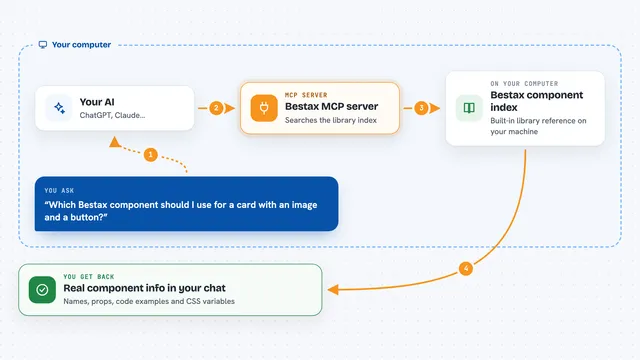
You ask your AI to scan a web address for accessibility or contrast problems. The AI uses this helper to send the request to OverlayQA. OverlayQA runs the check and sends back a list of issues with severity levels and an overall score. The AI shows you the results in your chat. You can then ask it to create issues for the problems it found, or to list, update, or comment on existing issues in your projects.
 Click to zoom
What you can do with it
- Scan any public web page for WCAG accessibility violations
- Check color contrast ratios and see which elements fail
- Create issues automatically for problems above a severity you choose
- List and filter issues by status, severity, type, label, or assignee
- Update issue details, assign them, or mark them as ignored
- Create and manage projects and labels in your OverlayQA workspace
- Read and post comments on issues, with optional file attachments
Try asking your AI
- “Scan example.com for accessibility issues.”
- “Check the contrast on our pricing page and tell me what's failing.”
- “Scan staging.acme.com and create issues for anything critical or high.”
- “List the open critical issues in the Acme Web project.”
What it gives back to you
You get back a summary of what was found: a list of violations with severity, the WCAG rule they break, and an overall score out of 100. For contrast checks, you see the failing foreground and background color pairs. When you create or update issues, you get confirmation with the issue ID and details. Everything appears right in your chat window.
Before you start
What you need
- A free OverlayQA account (a browser tab opens on first run to connect it)
- An MCP-compatible editor like Claude Code, Cursor, or Windsurf
- Node.js installed on your computer (the server runs with npx)
Good to know
It can create, update, and delete issues, labels, and comments in your OverlayQA account, so double-check before confirming changes.
Install it with your AI
Add OverlayQA MCP server to your AI, no technical skills needed
You don't install anything by hand. You copy one prompt, paste it into an AI that can work on your computer, and it checks, installs and connects the server for you, asking you when it needs something.
Sign in to get the install prompt
Members get a ready-made prompt that lets the Claude desktop app check OverlayQA MCP server, install it and connect it for them, step by step. You don't need any technical skills: you copy, paste and answer a few questions. Your connected AI can also find and install any of the 4,609 MCP servers here for you.
Who it's for
Developers, designers, and QA testers who want to catch accessibility and design issues while working in their code editor.