MCP server · Security
ContrastAPI security MCP server
by UPinar
Lets your AI look up security facts: known bugs in software, suspicious domains, and threat clues.

ContrastAPI is a helper that gives your AI a set of security research tools. You can ask it about a known software weakness, check whether a domain looks shady, or look up a threat clue you found in an email. It is handy for anyone who deals with security questions at work, even if you are not a security expert.
What is an MCP server? The 30-second version
On its own, your AI can only chat with you using what it already learned. An MCP server is a small helper program that gives your AI a new skill or a connection to an outside service. This one connects your AI to ContrastAPI, a security information service. Once it is connected, your AI can look things up there and bring answers back to you when you ask.
What this MCP server does
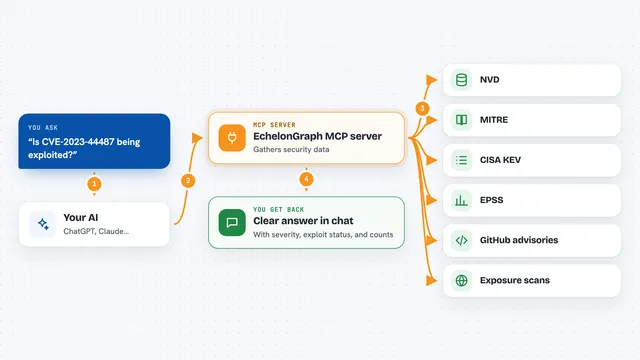
You ask your AI a security question in normal words, like whether a piece of software has a known problem. Your AI sends that request to the ContrastAPI helper. The helper then asks trusted public sources, such as the official US vulnerability database, and gathers the facts. It hands the results back to your AI, which explains them to you in the chat. You never have to visit those websites yourself.
 Click to zoom
What you can do with it
- Look up whether a software product has a known security flaw
- Check how likely a flaw is to actually be attacked
- See if a flaw is on the US government's list of actively exploited bugs
- Investigate a domain name, including its registration and certificate details
- Look up clues like suspicious IP addresses or file hashes
- Scan a piece of code for accidentally exposed passwords or keys
- Check basic email security settings for a domain
Try asking your AI
- “Does the version of Log4j we use have any known security problems?”
- “Is example.com a safe domain, or does it look suspicious?”
- “What can you tell me about this IP address I found in our logs: 203.0.113.10”
- “Check this code snippet for any hardcoded passwords or API keys”
What it gives back to you
You get back plain answers in the chat, often with a short summary and a list of details like severity, dates, and sources. For a domain check you might see registration info, certificate details, and any red flags. For a code scan you get a list of anything suspicious it found. Everything is explained in normal language, not raw data.
Before you start
What you need
- The Claude desktop app or another app that supports MCP servers
- Node.js installed on your computer (the setup uses a small tool called npx)
- No account or API key needed, it is free to use
Good to know
It only reads public security information, but the results are only as good as the public sources, so always double-check before making big decisions.
Install it with your AI
Add ContrastAPI security MCP server to your AI, no technical skills needed
You don't install anything by hand. You copy one prompt, paste it into an AI that can work on your computer, and it checks, installs and connects the server for you, asking you when it needs something.
Sign in to get the install prompt
Members get a ready-made prompt that lets the Claude desktop app check ContrastAPI security MCP server, install it and connect it for them, step by step. You don't need any technical skills: you copy, paste and answer a few questions. Your connected AI can also find and install any of the 4,361 MCP servers here for you.
Who it's for
Office workers who handle security questions, IT support, developers, and anyone who needs quick, trustworthy answers about software flaws or suspicious domains.