MCP server · Developer tools
Kom MCP server
by weibaohui
Lets your AI look at and manage your Kubernetes clusters, pods, and deployments for you.

Kom is a helper that connects your AI assistant to Kubernetes, the system many companies use to run their apps on servers. Once it is set up, you can ask your AI things like which pods are running or restart a deployment, and it will go and do it. It is handy for anyone who works with servers or cloud apps but does not want to type long commands by hand.
What is an MCP server? The 30-second version
On its own, your AI can only chat. It cannot see your servers or change anything there. An MCP server is a small helper program that gives your AI a new skill or a connection to another system. This one connects your AI to Kubernetes, so when you ask a question about your clusters, the AI can go look things up or make changes for you.
What this MCP server does
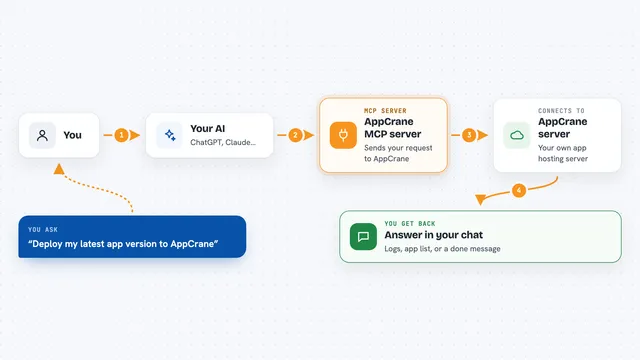
You ask your AI a question about your Kubernetes setup, like which pods are running or why a deployment is stuck. The AI sends that request to this helper program. The helper talks to your Kubernetes clusters, gathers the information or makes the change you asked for, and sends the result back. Then the AI explains it to you in plain words in the chat. It can work with several clusters at once, so you can ask about any of them by name.
 Click to zoom
What you can do with it
- List all the Kubernetes clusters you have connected
- List pods, deployments, nodes, and other resources in a cluster
- Restart, stop, or scale a deployment up or down
- Read the logs from a pod
- Run a command inside a pod
- Check node CPU and memory usage
- Apply or delete resources using a YAML file
Try asking your AI
- “List all pods in the kube-system namespace”
- “Restart the nginx deployment in the default namespace”
- “Show me the logs from the pod named web-1”
- “Scale the api deployment to 5 replicas”
What it gives back to you
You get answers in the chat, usually as a list or a short summary. For example, it might show you a table of pods with their names and status, or tell you that a deployment was restarted. If you ask for logs, it shows the log text. If you ask it to change something, it tells you whether the change worked.
Before you start
What you need
- A Kubernetes cluster you can reach
- A kubeconfig file (a small file that holds the connection details for your cluster)
- The kom program itself, either built from the source code or run as a binary
Good to know
This helper can change or delete things in your Kubernetes clusters, so be careful with requests that restart, scale, or remove resources.
Install it with your AI
Add Kom MCP server to your AI, no technical skills needed
You don't install anything by hand. You copy one prompt, paste it into an AI that can work on your computer, and it checks, installs and connects the server for you, asking you when it needs something.
Sign in to get the install prompt
Members get a ready-made prompt that lets the Claude desktop app check Kom MCP server, install it and connect it for them, step by step. You don't need any technical skills: you copy, paste and answer a few questions. Your connected AI can also find and install any of the 4,609 MCP servers here for you.
Who it's for
Developers, DevOps engineers, and IT staff who manage Kubernetes clusters and want to ask questions or make changes using plain language.