
AI news ·
Energy stocks outperform tech giants in AI boom returns
Energy companies in a Saxo Bank basket are returning 38% year-over-year, doubling the 19% return of the Magnificent Seven tech stocks. Exxon Mobil's earnings more than doubled last quarter as $95 oil and existing infrastructure let energy firms monetize AI demand immediately.
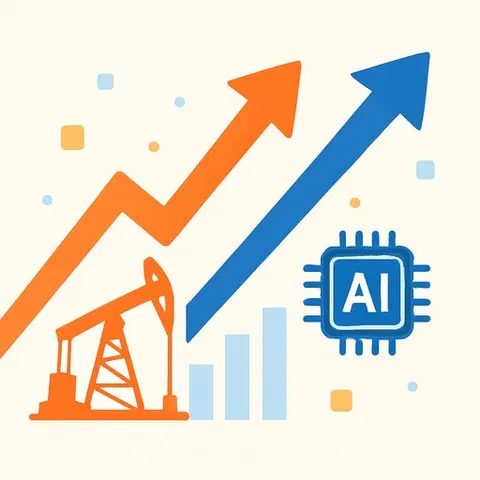
The biggest financial returns from the AI buildout are flowing to energy companies, not the tech giants spending billions on data centers. A basket of seven major energy firms compiled by Saxo Bank has delivered an average year-over-year return of 38%, compared with 18% for the Magnificent Seven tech stocks.
The divergence highlights a sharp difference in investment timing. Tech companies are pouring capital into infrastructure with uncertain payback horizons. Energy companies are generating cash from existing assets right now, aided by $95 oil prices and geopolitical supply pressures.
The capex gap widens
Meta's second-quarter results illustrate the pressure on Big Tech. Revenue climbed to $60 billion, but capital expenditures hit $31 billion. The cost of sustaining AI growth keeps rising, and the timeline for returns on those data center investments remains unclear.
Energy companies face the opposite dynamic. Their infrastructure is already built. Years of capital discipline and a focus on returning cash to shareholders mean investment has been constrained while free cash flow expands. When oil prices surge, that cash drops straight to the bottom line.
Exxon's earnings double
Exxon Mobil reported earnings more than doubled last quarter. Higher crude prices helped, but refining profits also jumped. The integrated energy model is capturing value across the supply chain at a moment when demand signals remain strong.
"The energy companies are the ones that are really monetizing the AI boom," said Yahoo Finance's Inez Ferreira. "While you think about the AI trade and Big Tech, the hyperscalers that are building out that infrastructure and when they will see their return on investment, for the energy complex, the energy companies, they are monetizing on that today."
The seven energy names outperforming
The Saxo Bank basket includes Exxon Mobil, Chevron, ConocoPhillips, TotalEnergies, and three other large-cap energy firms. Their collective 38% return doubles the Mag 7's performance over the same period, a reversal of the narrative that has dominated markets for two years.
Big Tech has not failed in the AI trade. Revenue and profit numbers remain strong. But the market is beginning to price in the escalating cost of maintaining that growth, while rewarding the companies that supply the literal fuel for it.
Why this matters for finance professionals
The energy sector's outperformance changes the calculus for portfolio allocation and sector rotation strategies. CFOs and investment committees weighing AI for Finance applications should track the widening spread between tech capex and energy free cash flow - it signals where real economic value is accruing during the infrastructure buildout phase. For senior finance leaders mapping their own AI investment roadmaps, this pattern reinforces the importance of distinguishing between spending for future capability and assets generating returns today. Those developing strategy through an AI Learning Path for CFOs can apply the same discipline to internal capital allocation decisions.