
AI news ·
Firms risk losing nearly one in four professionals within two years over failed AI execution, study finds
Nearly 24% of professionals may quit over the AI execution gap. This risks $143 billion in U.S. client revenue.
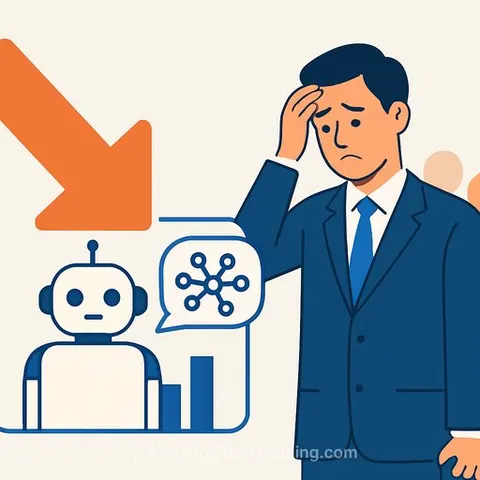
Nearly one in four professionals are prepared to resign within two years if their employer fails to deliver on AI, according to a Thomson Reuters report that puts HR at the centre of an AI "execution gap" that could put up to US$143 billion in U.S. client revenue at risk and cost an estimated US$232,000 per skilled employee replaced.
The survey of 1,816 professionals across law, tax, audit, accounting, compliance, risk and global trade in 62 countries, conducted in March and April 2026, found that 74% use AI tools every week, but organizations are struggling to translate that usage into real value. More than nine in ten reported some degree of AI "value gap."
Talent risk hits mid-career staff hardest
Among professionals experiencing a gap between what AI can do and what their organisation delivers, 24% are weighing an exit within two years and 13% within 12 months. The risk is concentrated among mid-career employees, whom the report calls the most embedded AI users and the most operationally critical staff. Almost three in ten said they would change jobs within two years if AI fails to deliver.
When senior staff leave, they take the mentorship junior colleagues depend on. Seventy-one percent said early-career roles need structured support to build the judgment AI risks displacing.
Shadow AI widens governance gaps
The report found that 34% of professionals use AI tools their organisation has not sanctioned and cannot monitor, rising to 41% among those who feel their employer is moving too slowly. That use is not careless: 96% said their AI must safeguard confidential data, 94% require verified content and 90% need explainable outputs, yet 41% said they lack access to tools meeting those conditions.
Steve Hasker, president and CEO of Thomson Reuters, said, "When outputs shape legal judgments, regulatory filings, or client advice, 'almost right' isn't good enough."
AI tool access influences hiring and retention
Access to professional-grade AI is now a hiring factor, with 62% reporting it would influence whether they accept a new role. The pull is strongest among current users: nearly one in three would turn down a role that did not offer such tools, compared with 12% of those without access.
Clients are adding pressure. The report found 78% consider AI-enabled quality improvements very important or essential, but just 6% say most providers deliver, and 32% expect to reconsider relationships with lagging firms within 12 months.
Execution gap is a change management failure
The core failure is organisational, not technical. Thirty-five percent of those with a named AI strategy said it is invisible in their day-to-day work, and 17% said their organisation has no AI direction at all. Asked why strategies stall, respondents cited tools not being in place (47%), inadequate training (43%), no clear priorities (32%) and no shared understanding (30%).
Hasker added, "AI is a powerful force multiplier, but the judgment, relationships and accountability remain human, and that won't change."
Todd Legere, a research and policy analyst at the Information and Communications Technology Council (ICTC), told HRD that "foundational AI and technical literacy" are most effective when reinforced through "real-world problem solving that mirrors practical business cases." He said, "A successful training approach starts by ensuring that leaders at all levels, including executives and managers, are AI-literate enough to identify meaningful opportunities for adoption. Beyond technical depth, organizations should foster broad AI literacy so employees understand both the potential and the limits of AI, and how to use it responsibly with appropriate human oversight."
Erin Polcyn Sailer, CPHR Canada board chair, cautioned that "AI-skilled workers won't be able to add value" if AI is simply an "add-on or a response to market hype." She added, "Technology alone doesn't create value - people do."
Why this matters for HR
The retention threat is immediate and concentrated among the mid-career professionals who keep daily operations running. HR teams must close the execution gap by tying AI strategies to real workflows, ensuring tools meet security and accuracy standards, and building AI literacy at every level-not just in technical roles. Access to professional AI tools is now a competitive differentiator in hiring, and clients are watching. For HR leaders driving this shift, an AI Learning Path for CHROs offers structured guidance on the change management and literacy gaps the report surfaces. Practical resources focused on AI for Human Resources can help teams move from experimentation to embedded, responsible use.