
AI news ·
Hundreds of economists urge institutions to act on AI job displacement
Over 200 economists and AI researchers, including 16 Nobel laureates, urge action on AI's economic risks. They warn it may cause massive job displacement within a decade.
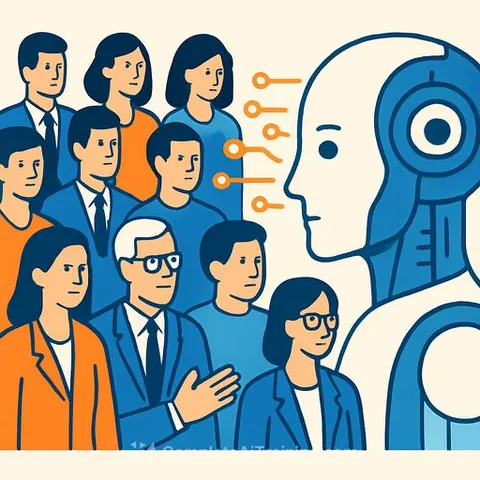
More than 200 economists and AI researchers, including 16 Nobel laureates, released an open letter Monday urging governments and institutions to act now on the economic risks of artificial intelligence. The four-sentence statement warns that AI-driven job displacement and market disruption could unfold faster than the Industrial Revolution, demanding new guardrails and incentives to steer the technology toward broad benefit.
The letter was organized by Stanford University's digital economy lab and signed by computer scientists and executives from Anthropic, Google, and OpenAI, among others. It says leaders must "build the incentives, guardrails, and institutions needed to steer AI in a direction that complements humans and benefits society."
The scale of the warning
The group's central claim is stark: "AI may become radically more powerful over the next 10 years," the letter states. "This could drive an unprecedented transformation of our economy, larger than the Industrial Revolution, but unfolding over a vastly shorter time frame. It could bring risks, including large-scale job displacement, as well as opportunities such as major gains in living standards."
Signatories include AI pioneer Yoshua Bengio, a professor at the University of Montreal and Turing Award winner. He said in a separate statement that based on current development trajectories, "it is highly plausible that AI will drastically transform our economies."
A deliberate path, not a reactive one
Bengio framed the choice as one of democratic control versus market drift. "We must be intentional and make collective, democratic choices, rather than letting market forces play out and risking leaving most citizens behind," he said.
That call echoes a growing focus in policy circles on how to shape AI adoption before labor markets and public finances absorb the shock. For government and finance professionals, the letter underscores that institutional design - not just technological capability - will determine who benefits from AI-driven productivity gains. Resources like AI for Government and the AI Learning Path for Policy Makers offer structured ways to build the expertise needed for these decisions.
Why this matters for government and finance professionals
The letter's signatories are not fringe voices - they include central figures in AI development and economic policy. For those in treasury, labor, and regulatory roles, the message is that waiting for market signals will be too slow. Budget planning, workforce retraining programs, and financial stability assessments need to account for rapid, nonlinear changes in employment and productivity. The letter provides a clear, credentialed signal to start that work now.