
AI news ·
Sam Altman says some companies use AI as cover for layoffs they would have made anyway
Sam Altman says some companies blame AI for layoffs they'd have made anyway. But research shows nearly 90% of executives report no AI-driven job losses since ChatGPT launched.
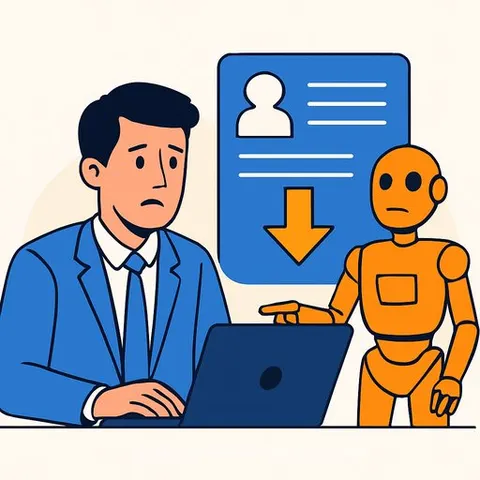
Companies Blame AI for Layoffs They'd Make Anyway, Altman Says
OpenAI CEO Sam Altman acknowledged in February that some companies are using AI as cover for workforce cuts they would have made regardless. He called the practice "AI washing" during remarks at the India AI Impact Summit.
"There's some AI washing where people are blaming AI for layoffs that they would otherwise do," Altman told CNBC-TV18. He added that real job displacement from AI exists alongside this trend, but the scale remains unclear.
The Data Doesn't Match the Warnings
Recent research suggests AI's impact on employment has been overstated. A February study by the National Bureau of Economic Research surveyed C-suite executives across the U.S., U.K., Germany, and Australia. Nearly 90% said AI had no effect on workplace employment in the three years since ChatGPT's release in late 2022.
A Yale Budget Lab analysis using Bureau of Labor Statistics data found no significant changes in occupational composition or unemployment length for workers in AI-exposed roles through March 2026. Martha Gimbel, executive director of the Yale Budget Lab, said the data shows no major macroeconomic effects from AI at present.
Apollo Global Management chief economist Torsten Slok drew a parallel to the 1980s IT boom. Nobel laureate Robert Solow observed little productivity gain from personal computers despite predictions of a surge. "AI is everywhere except in the incoming macroeconomic data," Slok wrote.
Why Companies Talk Up AI Disruption
Gimbel attributed AI washing to companies masking poor financial performance caused by cautious consumers and geopolitical tensions. WebAI cofounder David Stout added that tech founders face pressure to justify massive ongoing AI investments, prompting them to create narratives of mass worker displacement.
Some companies have already acted. Snap CEO Evan Spiegel announced in April a layoff of 1,000 employees-about 16% of staff-citing AI. Around 40% of employers expect similar cuts in coming years, according to the 2025 World Economic Forum Future of Jobs Report.
Anthropic CEO Dario Amodei has warned of potential losses of 50% of entry-level office jobs to AI. Altman said he expects job displacement to accelerate but predicted new roles would emerge alongside losses, as has occurred with previous technology shifts.
Early Signs of Real Impact
Some economists see early evidence that AI is beginning to affect labor markets. Stanford University's Erik Brynjolfsson noted a decoupling of job growth and GDP growth in revised 2025 data. The latest jobs report showed gains of just 181,000 despite fourth-quarter GDP tracking at 3.7%.
Brynjolfsson's analysis found a 2.7% year-over-year productivity jump last year, which he attributed to AI benefits. His own research from last year showed a 13% relative decline in employment for early-career workers in AI-exposed roles, while experienced workers saw stable or growing employment.
Brynjolfsson suggested the economy may be transitioning from an investment phase to a "harvest phase" where earlier AI spending produces measurable output. This pattern could resemble a J-curve: initial slowdown masked by heavy spending, followed by exponential productivity gains.
For HR professionals and IT leaders, understanding the difference between AI washing and genuine displacement matters for workforce planning. AI for Human Resources and AI Learning Path for CHROs offer frameworks for assessing how AI will actually affect your organization.