
AI news ·
Sensitive HR data drives companies to run AI inside their own infrastructure
Companies are moving AI for HR back on-premises to keep sensitive employee data-pay, performance, succession plans-out of cloud systems they don't control. The shift is driven by data governance pressure, not distrust of AI itself.
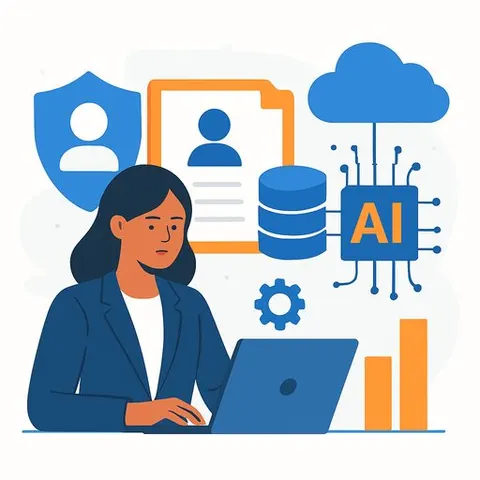
Companies are pulling AI back inside the firewall to protect employee data
For two decades, enterprise technology moved steadily to the cloud. That trajectory is reversing in one critical area: human capital management. Companies are increasingly running AI systems on their own servers rather than sending sensitive employee data to cloud providers.
The shift reflects a single concern: trust. While cloud-based AI tools from OpenAI, Google and Anthropic have proven their capabilities, organisations hesitate to feed confidential information into systems they don't control.
HCM data demands different handling
Human capital management systems hold some of the most sensitive information a company possesses. Compensation structures, performance reviews, succession plans, disciplinary records and strategic hiring decisions sit inside these platforms. For many organisations, this data carries more risk than financial information.
Regulated industries-financial services, legal, healthcare-face the sharpest pressure. But HR departments across all sectors grapple with the same question: when they use AI for workforce planning or talent analytics, where does their employee data actually go?
Data sovereignty has become non-negotiable. Businesses want to know exactly where information sits, who accesses it, and how it's used.
The hybrid model emerges
This isn't a wholesale retreat from the cloud. Instead, organisations are building hybrid environments. Some AI capabilities stay in the cloud for their computing power. Others run on premises, inside controlled networks where sensitive datasets never leave the organisation.
The economics are shifting too. As hardware becomes more powerful and affordable, running AI in-house is moving from prohibitively expensive to viable. That cost change removes a major barrier to keeping employee data internal.
Governance frameworks and model oversight practices are still developing across the industry. Many leaders feel more comfortable adopting AI where they retain full visibility and control.
Security practices set the standard
HCM systems already use techniques like biometric template obfuscation, which ensures underlying personal data cannot be reconstructed or misused. The original data is never stored in usable form.
The same philosophy now applies to AI deployment in workforce management. If organisations use AI to analyse employee trends or optimise operations, they need absolute confidence in how that data is handled.
This shift will accelerate over the next 24 months, driven not by distrust of AI itself but by organisations wanting to deploy it responsibly. Companies see enormous potential in AI for HR. They're choosing to realise that potential within environments that align with their obligations around data protection and employee trust.
For HR leaders, that means understanding how your organisation will balance AI innovation with data governance. Learn more about AI for Human Resources and explore the AI Learning Path for CHROs to understand how this technology fits into your strategy.