AI tool
Clark
Clark provides developers and researchers an AI with its own cloud computer to complete async workspace tasks. Users submit a job and return later to inspect the resulting files, screenshots, and code patches.
About Clark
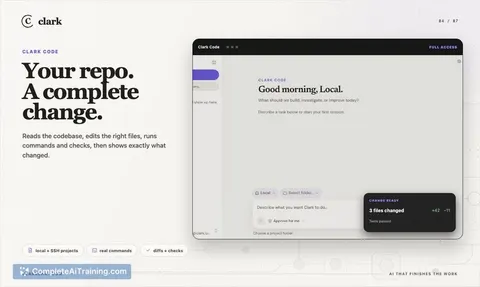
Clark is an AI coworker that operates on its own cloud computer, complete with a browser, terminal, files, and code. You assign a task, close the tab, and return later to finished work - such as sourced research, spreadsheets, decks, audits, or tested code. The tool can run on a schedule, fan work out to parallel specialists, and deliver artifacts with the underlying evidence.
Review
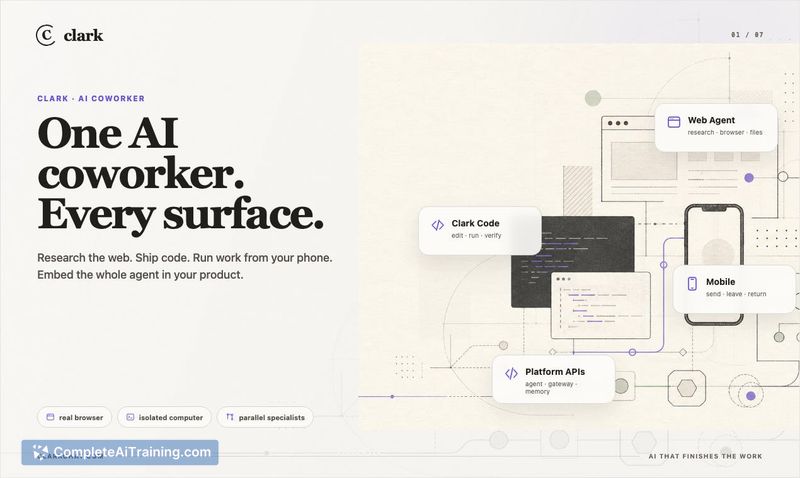
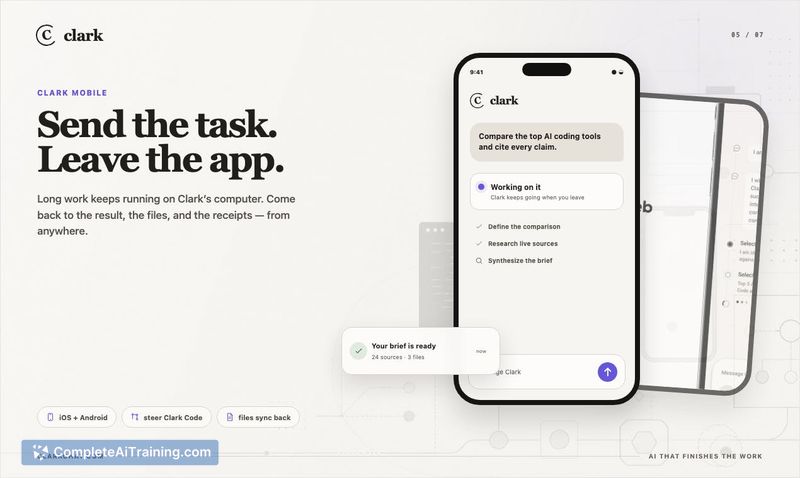
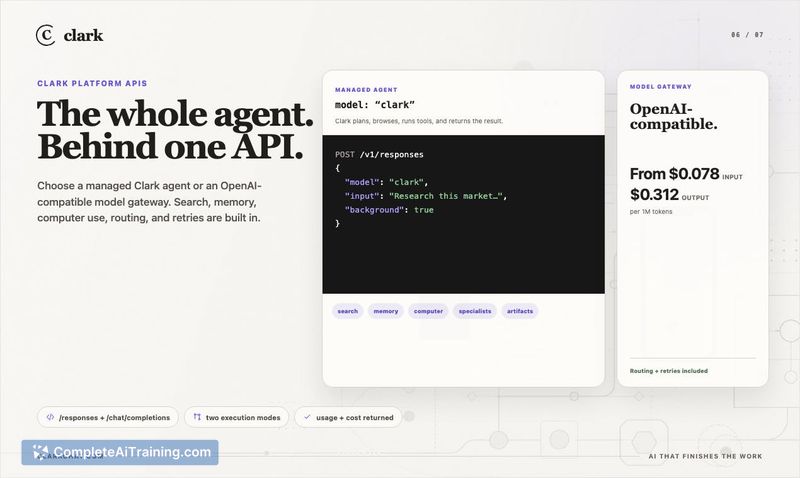
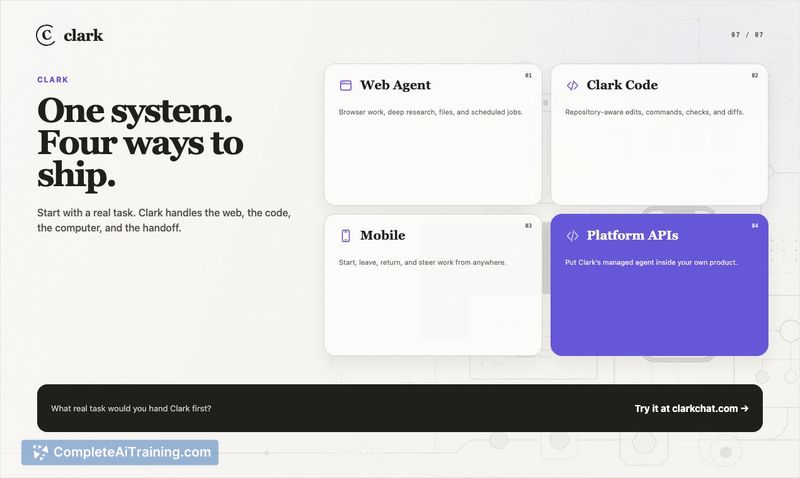
Clark shifts the AI interaction model from a synchronous chat window to an asynchronous workspace. Instead of prompting and waiting, you hand off a real task and get back a concrete result. The cloud computer framing means the agent has access to a browser and file system, which lets it handle multi-step jobs that require external research or code execution.
Key Features
- Cloud computer workspace: Each task runs on an isolated cloud computer with a browser, terminal, files, and code. The agent can navigate the web, manipulate files, and execute commands.
- Parallel specialist fan-out: Clark splits complex work across multiple isolated instances that run concurrently, then merges their outputs into a single artifact automatically.
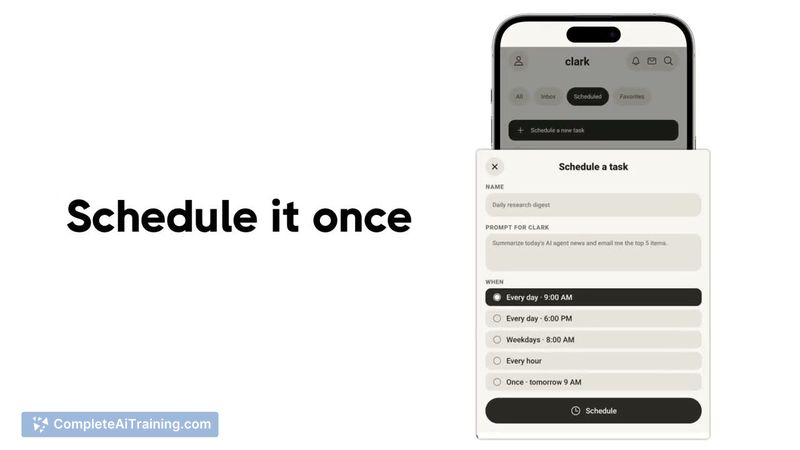
- Scheduled runs and monitoring: Tasks can be set to repeat on a schedule, so Clark can perform periodic checks or updates without manual intervention.
- Evidence artifacts: Completed jobs return files, screenshots, sources, logs, or URLs. The chat interface shows a full proof of work for inspection.
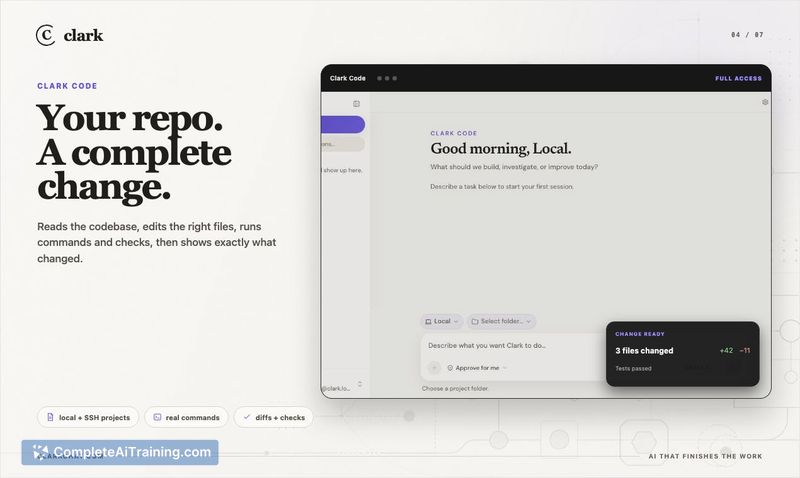
- Clark Code: For software development, Clark works directly inside real repositories, making changes and handing back diffs or pull requests - similar to tools like Codex or Claude Code.
Pricing and Value
Clark offers a free tier with 2000 credits. Details about paid plans, credit costs after the free tier, or subscription pricing have not been defined publicly at this stage.
Pros
- Tasks run asynchronously; you can close the tab and come back to a finished artifact.
- Returned work includes inspectable evidence - files, screenshots, and logs - so you can verify the output.
- The parallel specialist model lets Clark tackle broad research or multi-faceted projects more efficiently than a single-threaded agent.
- Clark Code integrates with existing repositories, which means you can keep using your own version control and review changes before merging.
- An OpenAI-compatible API allows embedding the agent into other tools or workflows.
Cons
- Clark is not well suited for users who need real-time, interactive assistance or step-by-step guidance, as tasks are handed off and completed asynchronously.
- When parallel specialists merge their outputs, the reconciliation process may surface conflicts or inconsistencies that require manual review - the exact handling of those edge cases isn't fully documented yet.
- State persistence across scheduled runs and between separate tasks in the cloud computer is not clearly specified; it's uncertain whether the workspace is ephemeral or durable.
Clark fits use cases where you want to delegate a well-scoped task and inspect the result later - think deep research, document drafts, prototype code, or recurring monitoring. The evidence trail and repository integration make it a practical option for developers and analysts who need to audit the work. If you prefer a live, back-and-forth interaction or need tight control over every intermediate step, this async model may feel limiting.
Jobs Clark suits
We checked Clark against 500+ jobs; these get the most out of it.
Alternatives to Clark
Other tools that do the same main job. Our AI compared Clark with similar tools and kept the ones you could use instead.