AI tool
Iris
Iris is an AI assistant for operations teams that drafts actions across connected tools and only executes them after human approval. It enforces permission boundaries and periodically reviews access rules to prevent policy drift while gradually ex...
About Iris
Iris is an AI agent platform that integrates into a company's existing workflows and tools. It coordinates work across teams, follows up with people through Slack and iMessage, updates connected systems, and moves recurring operational processes forward. The platform is built to handle work for operations, GTM, sales, customer success, finance, recruiting, and other departments, using shared company context, custom workflows, and approval controls.
Review
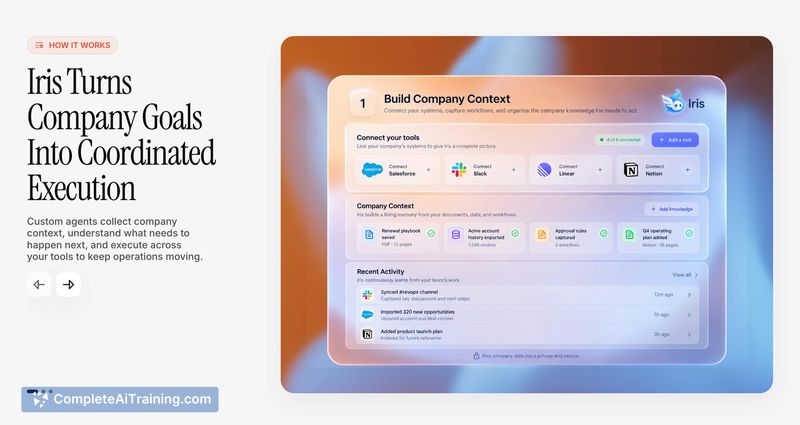
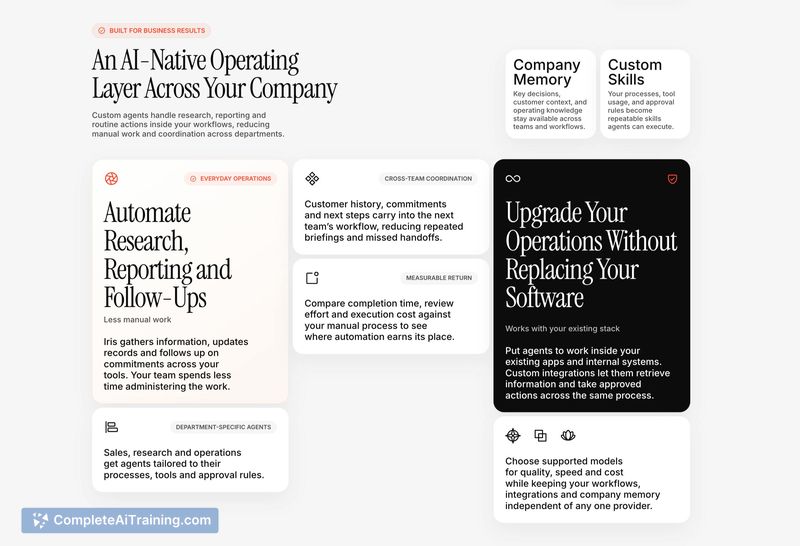
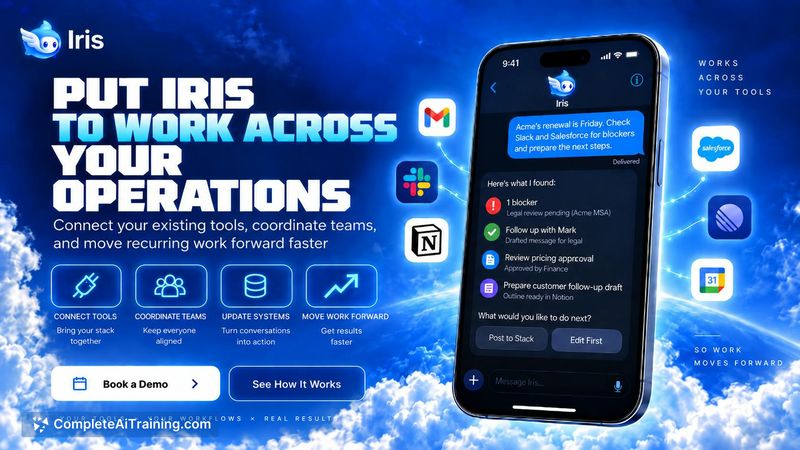

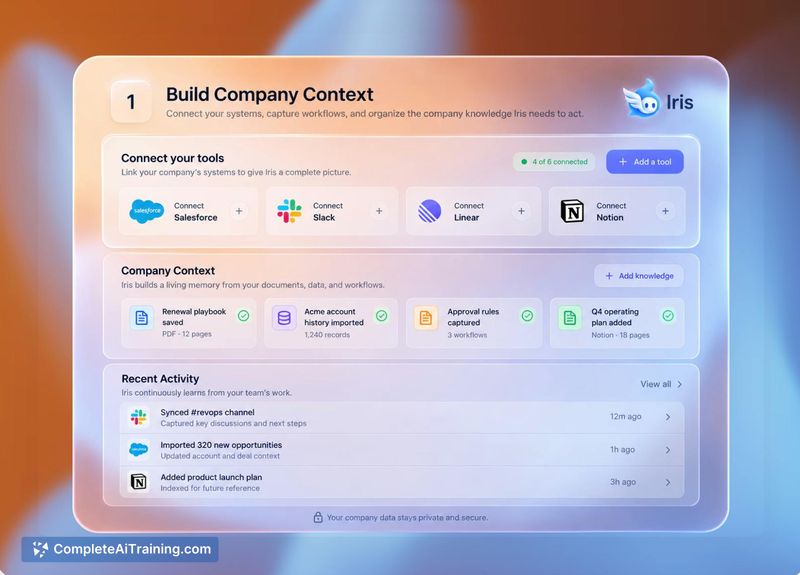
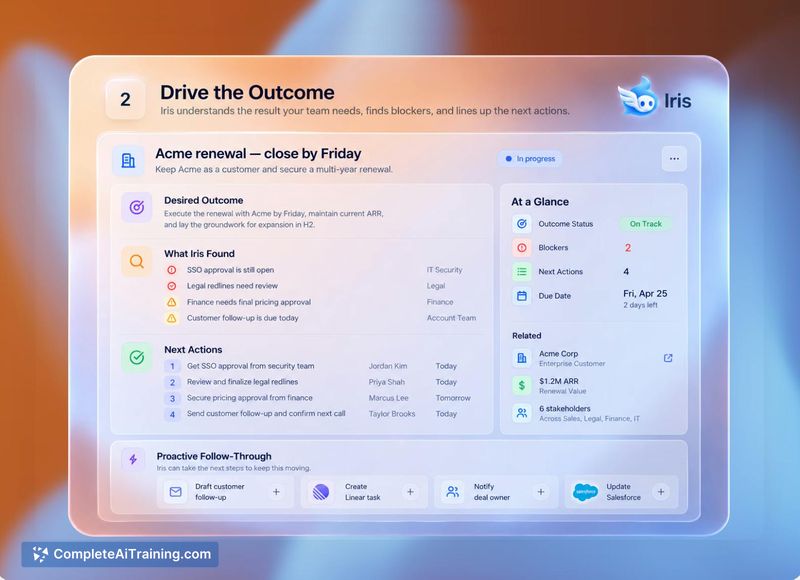
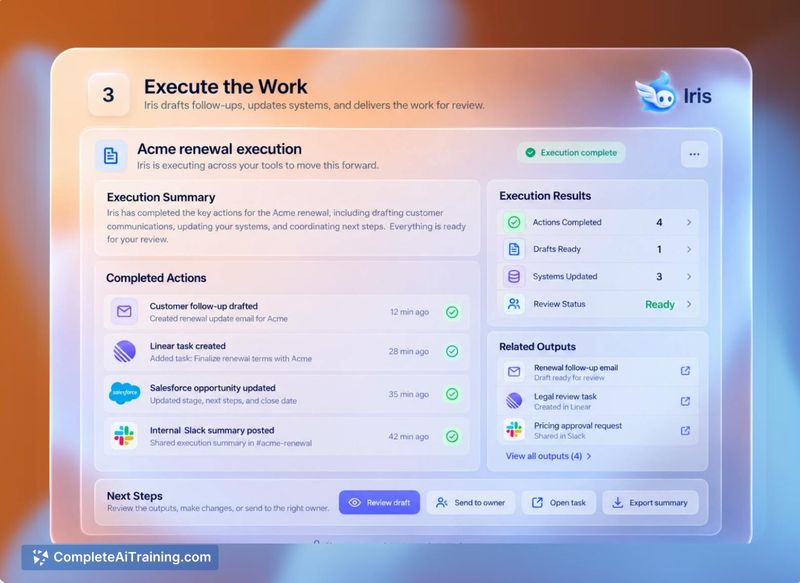
Iris approaches company workflows by focusing on the coordination layer-the manual work of moving information between Salesforce, Slack, email, Linear, Notion, and internal tools. Rather than adding another chatbot, the system takes approved actions across those systems and keeps people in the decision-making loop without requiring them to coordinate every step. The platform is built on the open-source Hermes Agent, which gave the makers existing primitives for tool use, skills, memory, planning, and multi-step execution.
Key Features
- Cross-system coordination: Agents pull together relevant company context, determine next steps, follow up with the right people, and take approved actions across the systems involved in a process.
- Explicit permission configuration: Policies are configured around each team and workflow. Teams specify what the agent can access, what it can execute automatically, and which decisions require approval from which person. Permissions are explicitly set, not inferred from previous approvals.
- Process improvement proposals: As Iris builds context about company structure and recurring work, it identifies opportunities to improve processes. It surfaces proposals for new default rules, which a responsible person reviews and approves before becoming part of that workflow.
- Multi-channel follow-up: Agents follow up with team members through Slack and iMessage to gather information or route decisions, keeping work moving without manual chasing.
- Company-scoped memory: Agents retain shared company context to handle recurring operational work, while keeping memory and repeated approvals from expanding permissions. Situations outside agreed scope come back for a decision rather than being auto-resolved.
Pricing and Value
Iris is listed as requiring payment, with a 20% launch discount currently shown. Specific pricing tiers or subscription models are not detailed in the available reference content. The platform is deployed as a custom integration into a company's existing processes, with policies configured around each team and workflow. How this custom deployment model maps to pricing is not yet defined in the public information.
Pros
- Works across the tools a company already uses-Salesforce, Slack, email, Linear, Notion-without requiring a new standalone interface.
- Permission model separates approving individual actions from approving standing policies, which prevents permission creep as agents handle more work.
- Agents surface process improvement proposals with explicit scope and routing, rather than silently changing behavior.
- Hermes Agent foundation gives the team control over runtime deployment, extension, and system connections.
- Keeps humans in the decision loop while offloading coordination and follow-up tasks that don't require their judgment.
Cons
- The platform is not well suited for teams that want a self-serve, out-of-the-box agent experience without custom deployment and policy configuration.
- Pricing details are not publicly available, making cost evaluation difficult before engaging with the team.
- As an early-stage product, the long-term reliability and breadth of integrations across different company tech stacks remain unproven.
Iris fits companies that already run recurring operational workflows across multiple tools and want to automate the coordination between them, not just the individual tasks. Teams with clear approval structures and a willingness to explicitly configure permissions will get more out of the platform than those looking for a fully autonomous agent. The focus on surfacing process improvements as explicit proposals, rather than silently optimizing, makes it a practical option for operations leaders who want to speed up work without losing control over how decisions get made.
Jobs Iris suits
We checked Iris against 500+ jobs; these get the most out of it.
Alternatives to Iris
Other tools that do the same main job. Our AI compared Iris with similar tools and kept the ones you could use instead.