AI tool
PixVerse R2
PixVerse R2 generates video clips from text descriptions or reference images. It is built for creators and developers who need to turn concepts into short-form video content quickly.
About PixVerse R2
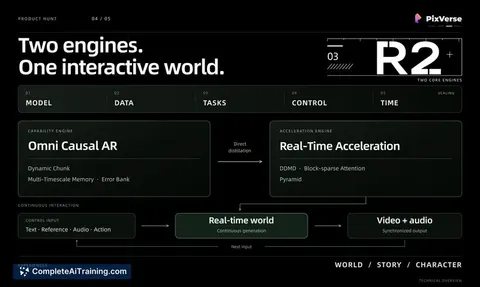
PixVerse R2 is a real-time world model that generates continuously evolving audiovisual worlds from text, images, audio, and user actions. Unlike fixed video generation tools, it creates a persistent, interactive session where changes are remembered and carried forward. The model was built with continuous pretraining using Omni Causal AR, then distilled for real-time interaction in the browser.
Review
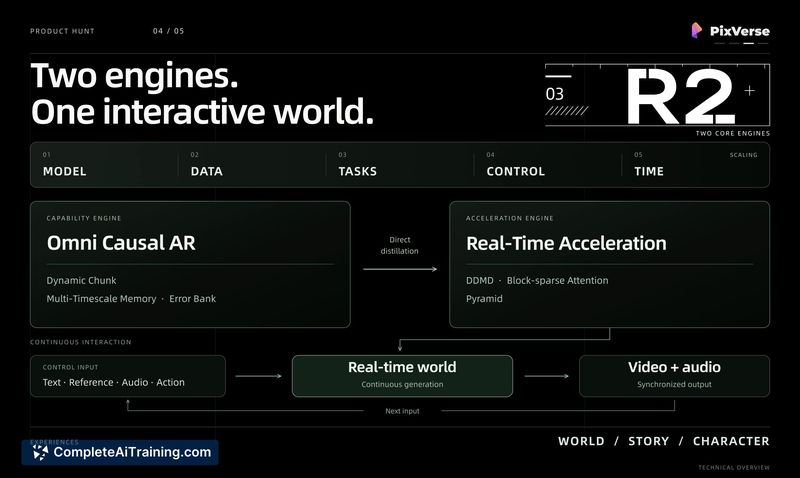
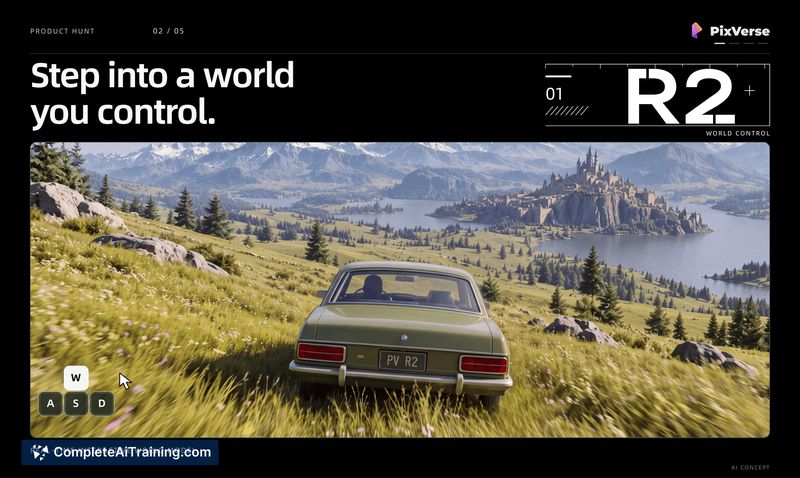
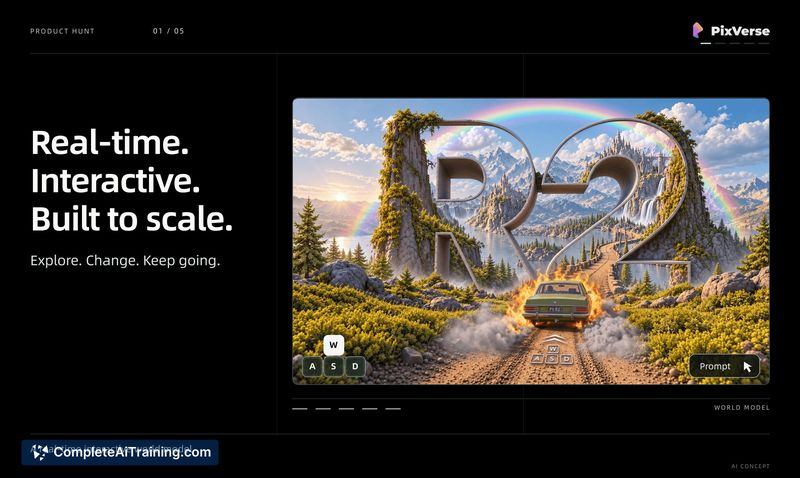

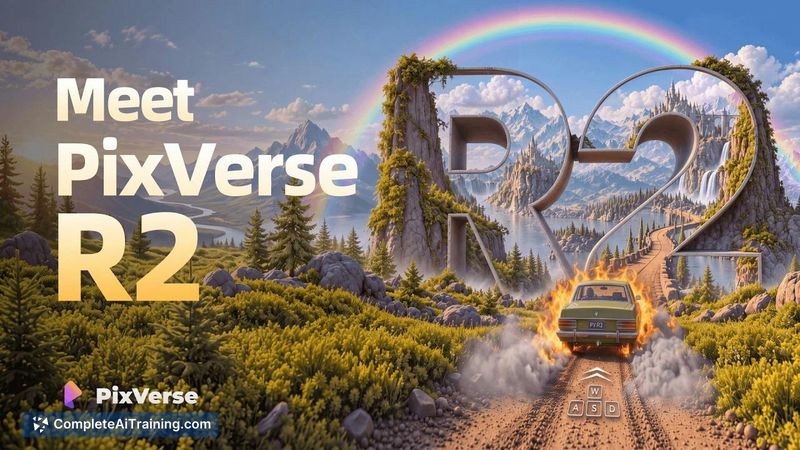
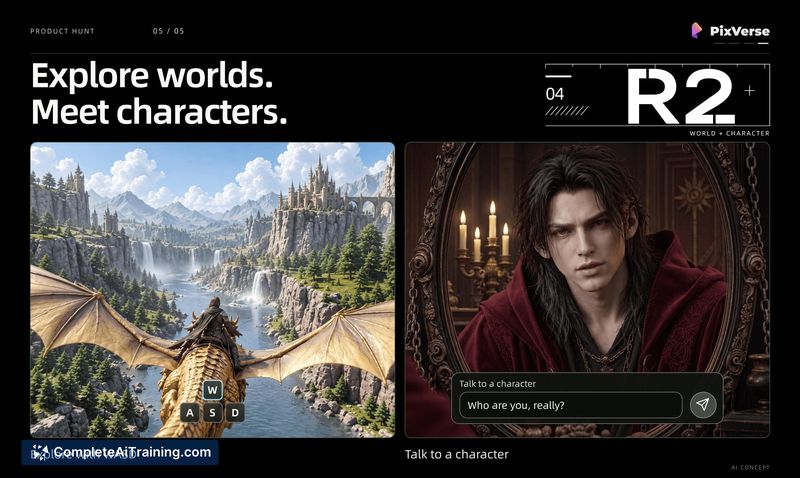
PixVerse R2 shifts the output from a rendered clip to a live, navigable environment that responds as you type or move. The team launched a browser-based experience called PixVerse World, where users can step into AI-generated scenes, move with WASD keys, and prompt changes on the fly. It's an early-stage research product, and the current public demo reflects that - moments of coherence sit alongside visible drift and inconsistency.
Key Features
- Real-time world generation. The model produces audiovisual output that updates continuously rather than rendering a fixed-length video.
- Multimodal input. R2 accepts text prompts, images, audio, and real-time actions during a session.
- Session memory. It retains recent interaction history and longer-term context such as character identity and scene details, carrying changes forward as the world evolves.
- Interactive navigation. Users move through the generated world with WASD controls and can introduce new elements by typing prompts at any moment.
- Browser-based experience. PixVerse World runs in the browser via Next.js on Vercel, removing the need for local installation or specialized hardware.
Pricing and Value
PixVerse R2 is currently listed as free. The team has not published a pricing page or detailed any future subscription tiers, so the long-term pricing model remains undefined at this stage.
Pros
- Generates interactive, real-time worlds instead of static video clips, which opens up use cases for prototyping game concepts and branching narratives.
- Combines multiple input types - text, image, audio, and user movement - in a single session without switching tools.
- Session memory allows a scene to evolve based on prior interactions, making it possible to build on earlier prompts rather than starting fresh each time.
- Runs entirely in the browser, so there's no setup barrier for quickly testing ideas.
- The team has published a technical report detailing the Omni Causal AR pretraining approach, which helps developers understand the model's architecture and limitations.
Cons
- World consistency degrades over longer sessions; the model can drift, and the team acknowledges that keeping things coherent is still an active area of improvement.
- Memory isn't perfect - R2 won't recall every detail from earlier in a session, and the boundaries of what it retains are not clearly defined.
- PixVerse R2 is not well suited for users who need polished, production-ready game environments or precise frame-level control over output, since the generated worlds remain unpredictable and experimental.
PixVerse R2 fits scenarios where rapid ideation matters more than pixel-perfect consistency - interactive story drafts, game concept sketches, or just poking at an AI world to see what happens. Developers and researchers evaluating real-time world models will find the technical report and live demo useful for understanding current capabilities and gaps. Anyone expecting a finished tool for shipping commercial interactive experiences will likely run into the consistency limits fairly quickly.
Jobs PixVerse R2 suits
We checked PixVerse R2 against 500+ jobs; these get the most out of it.
Alternatives to PixVerse R2
Other tools that do the same main job. Our AI compared PixVerse R2 with similar tools and kept the ones you could use instead.