AI tool
siift
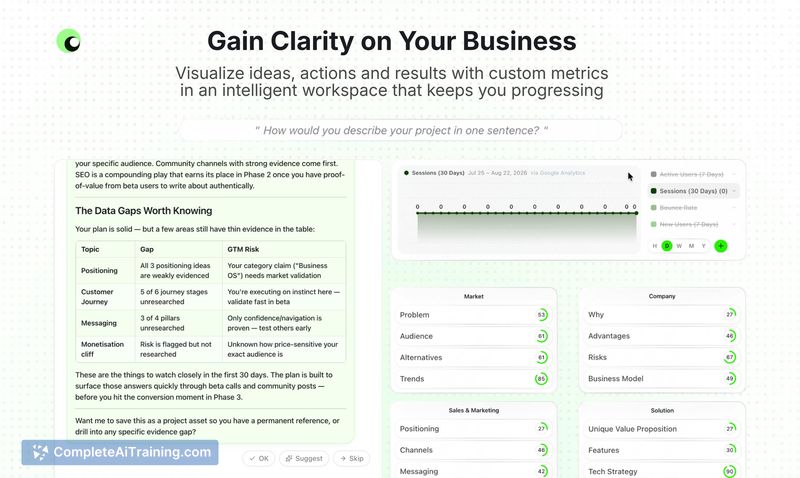
siift is a decision-making workspace for founders and project leads. It replaces chat-based AI with a visual canvas that connects ideas, actions, and metrics so teams can prioritize work based on evidence instead of unchecked AI advice.
About siift
siift is a project management tool that maps business strategy, evidence, decisions, and results onto a shared visual canvas. It uses AI to challenge assumptions, identify risks, and surface what to focus on next, drawing from a company's evolving context and standard frameworks like Lean Canvas. The system is built around what the makers call "collaborative decision intelligence"-transparent, long-term guidance toward measurable outcomes rather than chat-based, yes-man AI responses.
Review
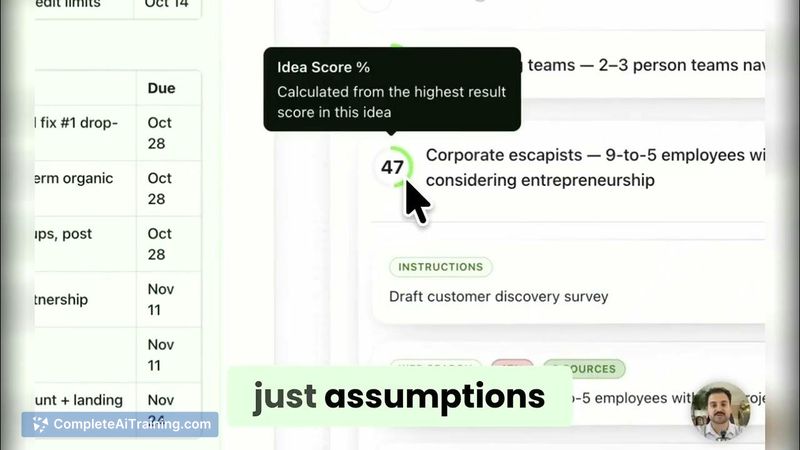
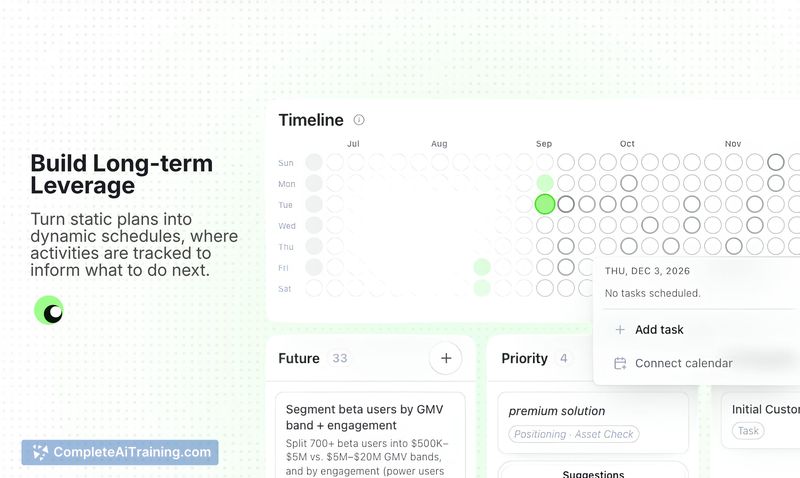
siift enters a crowded productivity space with a specific thesis: general-purpose AI chats accelerate bad decisions when reasoning stays hidden and context gets scattered. The tool responds by structuring business thinking into a single, visual system of record. It's a narrow focus that won't fit every team, but the underlying problem it describes-AI-enabled speed without scrutiny-is one many builders have encountered.
Key Features
- Visual business canvas: Ideas, actions, and results appear on a shared map that a team can view together, moving strategy out of fragmented chat threads.
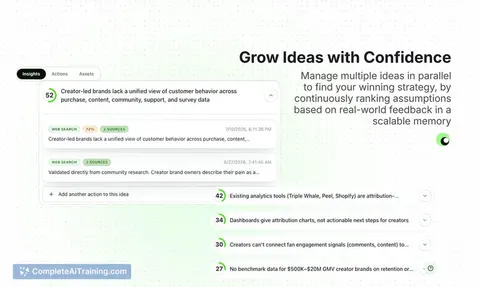
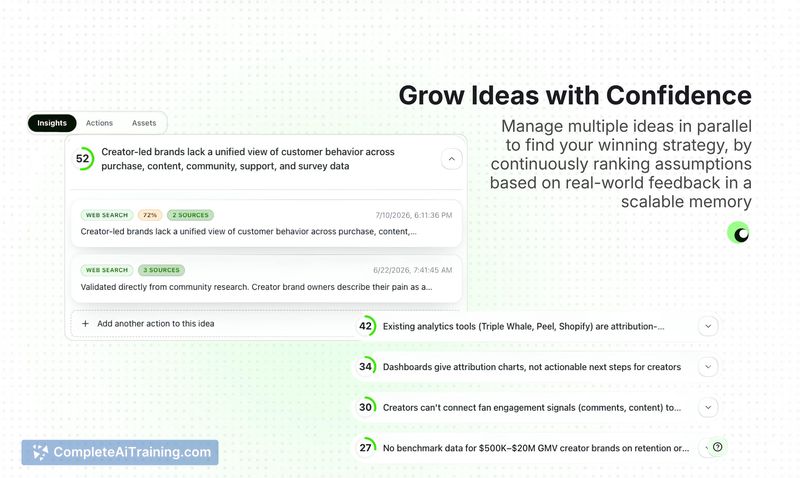
- Assumption risk scoring: The system flags assumptions as risky until sufficient evidence supports them. A separate AI service evaluates evidence independently from the AI that generated the assumption, and the score weighs importance, evidence strength, and conflicting signals.
- Proprietary memory system: siift uses a patent-pending AI memory layer that the makers describe as more dynamic and scalable than conventional methods. It's designed to learn and evolve with a project without context degradation over time.
- Decision intelligence engine: Instead of hiding reasoning, the tool surfaces evidence behind suggestions, key metrics, progress scores, and risks so users can understand why something is flagged as a priority.
- Framework grounding: The AI references established methodologies taught in business schools and entrepreneurship programs-Lean Canvas and MBM are mentioned-rather than relying solely on self-developed models.
Pricing and Value
siift offers a free tier, with paid plans available. During the Product Hunt launch week, the team offered 30% off any paid plan as a lifetime discount. Specific pricing tiers and what each includes are not yet defined in the available reference content. The makers have stated that recent features were added to strengthen the multi-user experience, with an eye toward supporting small and medium enterprises and larger teams, though the product remains sharpest for founders and entrepreneurs at this stage.
Pros
- Visual canvas consolidates strategic context that would otherwise live across scattered chats and documents.
- Independent evidence evaluation reduces the risk of an AI rubber-stamping its own assumptions.
- Transparent reasoning shows users the "why" behind AI suggestions instead of a black-box answer.
- Memory architecture is built to retain project context over time, addressing a known limitation in chat-based AI workflows.
- Grounded in standard business frameworks, which gives the guidance a recognizable structure rather than arbitrary suggestions.
Cons
- The tool is not well suited for teams that already have a mature, well-documented strategy process and don't struggle with AI-generated noise.
- As a newly launched product, long-term reliability and the real-world performance of the memory system remain untested at scale.
- Pricing details beyond the launch discount are not yet public, making cost projections difficult for teams evaluating it.
siift makes the most sense for early-stage founders and small teams who feel overwhelmed by AI-generated options and need a structured way to separate signal from noise. Internal innovation teams and academic settings are also mentioned as emerging use cases. Teams running established, repeatable strategy cadences with clear documentation practices may find the overhead of adopting a new system outweighs the benefit.
Jobs siift suits
We checked siift against 500+ jobs; these get the most out of it.
Alternatives to siift
Other tools that do the same main job. Our AI compared siift with similar tools and kept the ones you could use instead.