MCP server · Developer tools · official
Docker Hub MCP server
by docker · official
Lets your AI search Docker Hub and manage your own repositories and tags for you.

This is a small helper from Docker that connects your AI assistant to Docker Hub, the online library where container images live. Once it is set up, you can ask your AI in plain words to find images, look up tags, or tidy up your own repositories. It is handy if you work with containers and want to stop clicking around the Docker Hub website.
What is an MCP server? The 30-second version
On its own, your AI can only chat with you. An MCP server is a small helper program that gives your AI a new skill or a connection to an app or service. This one connects your AI to Docker Hub, so it can look things up there or make changes for you when you ask. You stay in the chat, and the helper does the talking to Docker Hub behind the scenes.
What this MCP server does
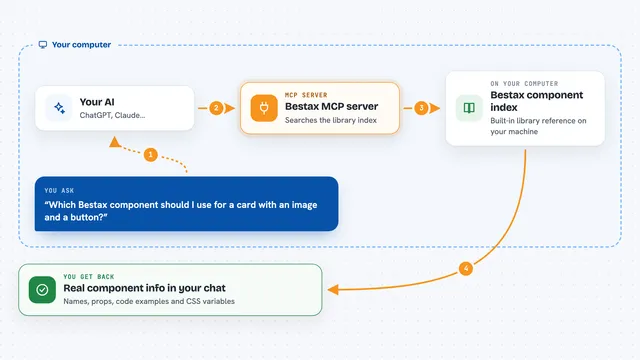
You type a request in your AI chat, like asking for a small Node.js image or a list of your repositories. Your AI passes that request to this helper program. The helper then talks to Docker Hub using your account details, if you gave it any. Docker Hub sends back the answer, and the helper hands it to your AI, which explains it to you in the chat. For some requests it can also make changes, like creating a repository or pushing an image.
 Click to zoom
What you can do with it
- Search Docker Hub for images by name, size, or category
- Look up the tags and details of a specific image
- List all repositories in your own namespace
- Check whether a repository or a tag already exists
- Create a new repository in your namespace
- Update information on a repository you own
- Find Docker Hardened Images for a more secure setup
Try asking your AI
- “Search for official nginx images on Docker Hub”
- “Show me the latest tag details for go”
- “List all repositories in my namespace”
- “Which of my repositories takes up the most space?”
What it gives back to you
You get answers written in the chat, not files to download. These can be lists of images or repositories, tag names, sizes, dates, and short descriptions. If you asked it to create or update something, it tells you what it changed. Everything shows up as normal text you can read and copy.
Before you start
What you need
- Docker installed on your computer
- Node.js version 22 or newer
- A Docker Personal Access Token if you want to manage your own repositories (a kind of password for apps; Docker Hub gives you one for free in your account settings)
- An AI app that supports MCP, like Claude Desktop, VS Code, or Docker's Ask Gordon
Good to know
If you give it your Docker Hub token, it can create and change repositories in your account, so keep the token private and only run the http mode with a secret token.
Install it with your AI
Add Docker Hub MCP server to your AI, no technical skills needed
You don't install anything by hand. You copy one prompt, paste it into an AI that can work on your computer, and it checks, installs and connects the server for you, asking you when it needs something.
Sign in to get the install prompt
Members get a ready-made prompt that lets the Claude desktop app check Docker Hub MCP server, install it and connect it for them, step by step. You don't need any technical skills: you copy, paste and answer a few questions. Your connected AI can also find and install any of the 4,609 MCP servers here for you.
Who it's for
Developers and anyone who works with container images and wants to search or manage Docker Hub without leaving their AI chat.