MCP server · Finance and crypto
Brazilian Central Bank MCP server
Ask your AI for live Brazilian economic data like Selic, IPCA and exchange rates straight from the Central Bank.

This is a helper that connects your AI assistant to the Brazilian Central Bank's public data. It lets you ask everyday questions about interest rates, inflation, exchange rates and GDP and get real, current numbers instead of guesses. It is handy for anyone who works with Brazilian economics, finance or reporting.
What is an MCP server? The 30-second version
On its own, your AI can only chat with you using what it already learned. An MCP server is a small helper program that gives your AI a new skill or a connection to an app or service. This one connects your AI to the Brazilian Central Bank's public data, so it can look up real economic figures for you. When you ask a question, your AI passes it to this helper, and the helper fetches the answer from the Central Bank.
What this MCP server does
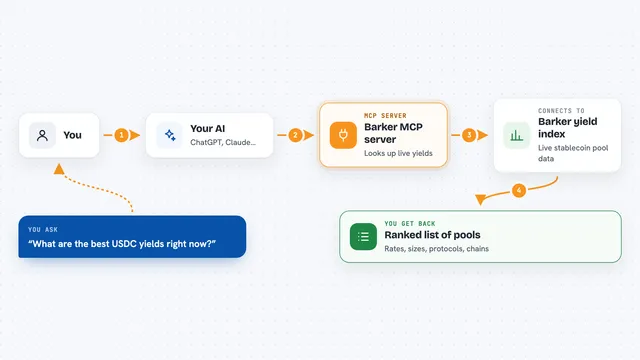
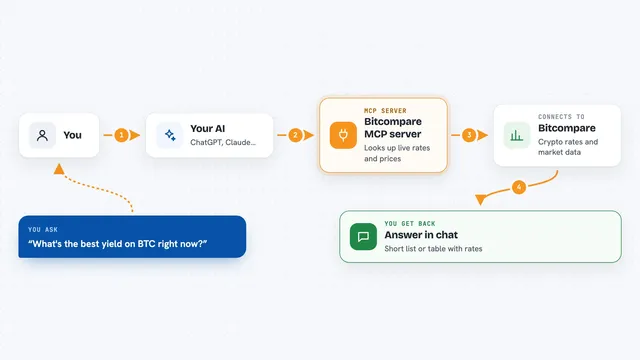
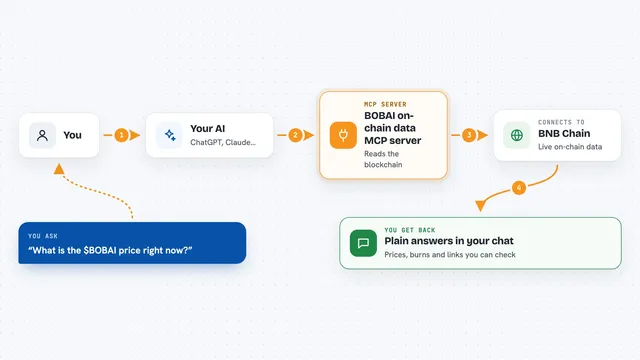
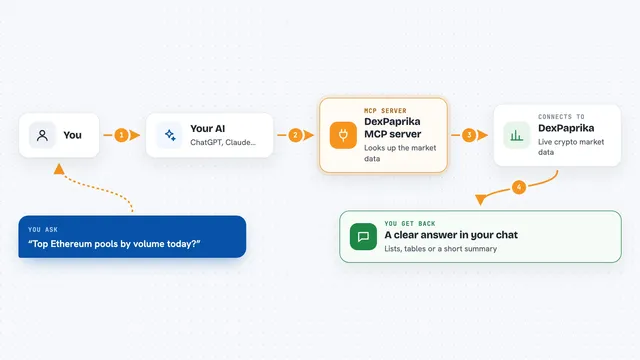
You ask your AI something like the current Selic rate or last year's monthly inflation. Your AI sends that request to this helper. The helper talks to the Brazilian Central Bank's public data service and pulls the exact figures. Then your AI shows you the numbers, usually with the series name, the period and where the data came from. You can also ask for comparisons, variations over time, or what the market expects for the future.
 Click to zoom
What you can do with it
- Check the current Selic interest rate and other key indicators
- Pull monthly IPCA inflation figures for a chosen year
- See how much the dollar moved over the last 12 months
- Compare inflation indices like IPCA, IGP-M and INPC side by side
- Look up what the market expects for inflation or GDP in coming years
- Get official exchange rate quotes for a currency on a specific day
- Search the catalog of available economic series by keyword
Try asking your AI
- “What is the current Selic interest rate?”
- “Show me the monthly IPCA for 2024”
- “What was the USD to BRL variation over the last 12 months?”
- “What does the market expect for inflation in 2027?”
What it gives back to you
You get back the actual numbers from the Central Bank, shown as a short list or table in the chat. For a series you might see the dates and values, plus a note about the series name and how often it is published. For comparisons you get the figures for each series and which one moved most. For market expectations you get the average, median and range of what analysts forecast.
Before you start
What you need
- An AI assistant that supports MCP, like Claude or ChatGPT
- Nothing else if you use the hosted web address; the npx option needs Node.js installed
Good to know
The figures come from the Central Bank's public data and are meant for information, not as financial advice, so double-check anything important before you rely on it.
Install it with your AI
Add Brazilian Central Bank MCP server to your AI, no technical skills needed
You don't install anything by hand. You copy one prompt, paste it into an AI that can work on your computer, and it checks, installs and connects the server for you, asking you when it needs something.
Sign in to get the install prompt
Members get a ready-made prompt that lets the Claude desktop app check Brazilian Central Bank MCP server, install it and connect it for them, step by step. You don't need any technical skills: you copy, paste and answer a few questions. Your connected AI can also find and install any of the 4,361 MCP servers here for you.
Who it's for
People who follow or report on the Brazilian economy, such as analysts, journalists, students and finance or business staff.