
Learning path
Learning AI as a Treasury Analyst
Treasury work runs on daily numbers and careful checks. This path shows you how to use AI for cash positions, forecasts, wires, and reporting while keeping your judgment in charge.

Your path
Everything in the Treasury Analyst AI kit, in the order that makes sense. Members tick off each step and see their progress.
Set up your AI
We guide you through each click.
Let skills do your everyday tasks
Connect your apps and pick your AI apps
Hand whole tasks to AI agents
Build your own tools
Everything for treasury analysts
All the courses, certifications, AI tools, MCP servers and apps for treasury analysts, most relevant first. Open any list to see more.
Take the prompt courses
A short framework course to learn how to ask, then 8 lessons with ready-to-use prompts for treasury analysts.
Start with this framework: how to talk to AI
RACE fits treasury work by specifying role, action, context, and expected quality, like requesting a cash flow forecast with variance notes.
Then your prompt course for treasury analystsWatch the video courses or add them to your Favorites for later
84 video courses our AI picked for treasury analysts, most useful first. Save the ones you want to watch later with the heart.
Favorites are saved to your account: sign in or get your AI kit first.
Show all 84 video courses
Get certified, or add certifications to your Favorites
Every course ends in an exam and a certificate you can add to LinkedIn. Save the certifications you are aiming for with the heart.
Favorites are saved to your account: sign in or get your AI kit first.
More certifications for treasury analystsShow all 24 certifications
Try the AI tools for treasury analysts
14 AI tools our AI matched to the work of treasury analysts, best fit first. Each review shows what it does, its alternatives and the jobs it suits.
Favorites are saved to your account: sign in or get your AI kit first.
Show all 14 AI tools
Connect your AI to the apps treasury analysts use
MCP servers let ChatGPT, Claude or Copilot look things up and get work done in other apps, like your email, calendar or bookkeeping software. These 12 fit the work of treasury analysts best, well-known apps first.

DPX MCP server
by untitledfinancialLets your AI check market and climate signals, score a company's ESG risk, and run cross-border USDC settlements.
Finance and cryptoNo install
camt053 MCP server
by sebastienrousseauLet your AI read ISO 20022 bank statement files, check them, and build reversing entries for you.

Excel MCP server
by sbroenneLet your AI assistant open and work inside real Microsoft Excel on your Windows PC.

Financial Evidence MCP server
by beepboop2025Lets your AI pull dated public evidence on funding, banks and market liquidity, with sources kept separate.
Finance and cryptoResearchNo install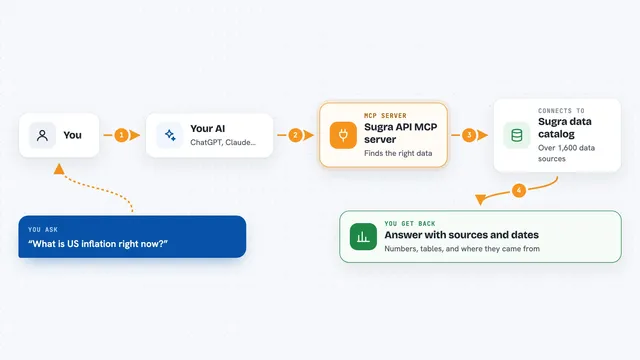
Sugra API MCP server
by Sugra-SystemsLets your AI pull real-world data on markets, economies, companies, climate and more, with sources.
AnalyticsFinance and crypto Official
Brazilian Central Bank MCP server
by SidneyBissoliAsk your AI for live Brazilian economic data like Selic, IPCA and exchange rates straight from the Central Bank.
Finance and cryptoAnalyticsNo installShow all 12 MCP servers

SiftingIO market data MCP server
by SiftingIOLets your AI look up live prices, company filings, and market calendars for stocks, crypto, forex and more.
Finance and crypto Official
Spreadsheet MCP server
by PSU3D0Lets your AI read, edit, and recalculate Excel files safely, without you opening Excel.

Outlook Attachment Reader MCP server
by ZacccckLet your AI open and read the files attached to your Outlook emails, and send local files as drafts.

Snowflake MCP server
by YannBrrdLets your AI look up and query your Snowflake data, with read-only protection on by default.

Box MCP server
by boxLet your AI search your Box files, answer questions about them, and pull out details for you.
Productivity Official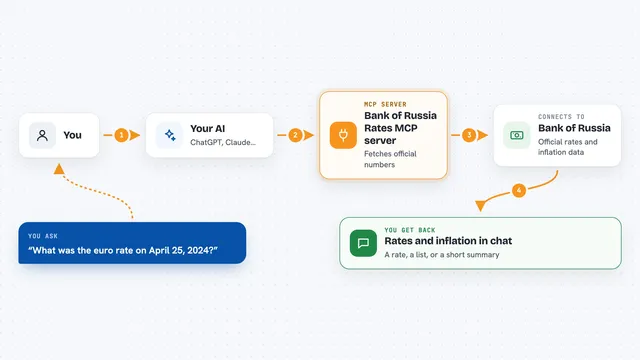
Bank of Russia Rates MCP server
by atomno-mcpLets your AI look up official Russian ruble exchange rates, the key interest rate, and inflation from the Bank of Russia.
Build your own AI apps for treasury analysts
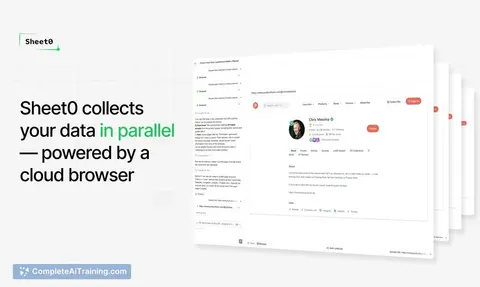
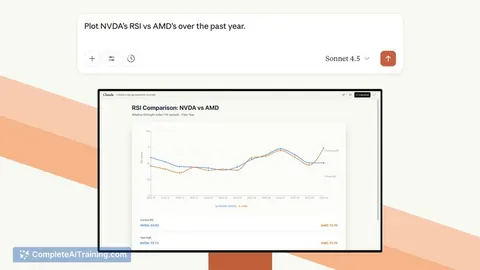
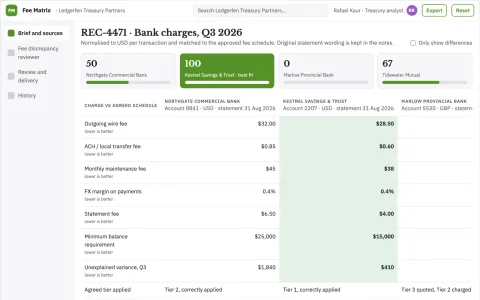
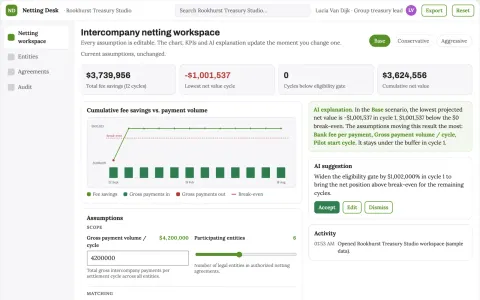
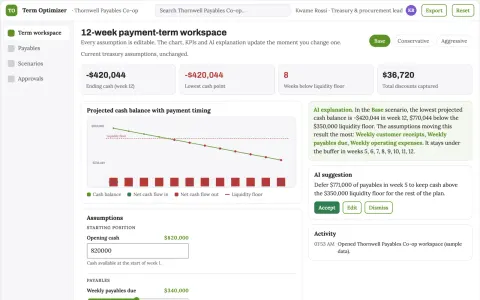
Apps you build yourself with your own AI, no coding needed and no monthly fee. Our AI picked the 3 that fit the work of treasury analysts.


















































About this learning path
6 topicsAI for Treasury Analysts: A Practical Learning Path
Treasury analysts are asked to know where the cash is, what it will be next week, and whether the numbers hold up. AI can take the repetitive parts of that work, the copying, the formatting, the first draft, and give you back the hours you need for the thinking.
This path is built for treasury analysts who are not technical. It starts with setup and connecting your AI, then walks through the prompt course and video lessons chosen for your role, and finishes with the certifications that show what you have learned.
Why AI Matters In Treasury
Cash positions, forecasts, wire checks, and reporting all follow patterns. AI is good at patterns. It can read a bank file and describe what changed, or take your assumptions and turn them into a first draft of commentary you then correct.
The judgment stays with you. What changes is how much of the day goes to assembling information and how much goes to deciding what it means.
What The Path Includes
You begin with setup questions and connecting your AI tool, so it can work with the files and formats you already use. Then you move into skills for the job inside your AI, followed by the prompt course with eight lessons drawn from treasury work.
After that come video courses picked for treasury analysts, and the certifications that go with them. Everything is short and meant to be used the same week.
How It Saves You Time
The daily cash position, the forecast commentary, the wire instructions, and the monthly report all have a first draft inside them. AI writes that draft from your numbers.
You still check every figure that leaves your desk. But you start from something instead of a blank page, and the checking is faster than the writing.
How It Protects Your Career
Treasury teams are being asked to do more with the same headcount. Analysts who hand off the assembly work and spend their time on risk, liquidity, and the story behind the numbers become the ones others rely on.
Knowing how to use AI well, including where not to use it, is becoming part of the job. This path helps you be the person who sets the standard.
How To Start
Set aside an hour this week. Work through the setup questions, connect your AI, and try the daily cash position lesson with one real bank file.
Then pick the lesson that matches your next deadline. Small, repeated use is what makes this stick.
Frequently asked questions
Do I need to know how to code?
No. Everything in this path is done in plain language inside ChatGPT, Claude, or Gemini. You type what you want, the way you would ask a colleague.Is it safe to put bank data into an AI tool?
It depends on your company's rules, and you should check them first. The course covers how to work with masked or sample data when full details cannot leave your systems.How long does the path take?
Most analysts work through it over a few weeks, an hour or two at a time. You can go faster if a deadline is driving you.Will this replace my judgment?
No. AI drafts, sorts, and summarizes. You decide what is accurate, what matters, and what goes to the board.