MCP server · Developer tools
kubefwd MCP server
by txn2
Lets your AI see and forward Kubernetes services to your laptop so your local app can reach them by name.

kubefwd is a small tool that connects your laptop to a Kubernetes cluster. It makes the services running in the cluster show up on your own machine, using their normal names, so your code works the same way locally as it does in the cluster. It is handy for developers who run things in Kubernetes and want to test their work on their own computer without setting up everything again.
What is an MCP server? The 30-second version
On its own, your AI can only chat. An MCP server is a small helper program that gives your AI a new skill or a connection to another tool. Here, the helper connects your AI to kubefwd, which is already talking to your Kubernetes cluster. So when you ask your AI about your services, it can look them up through kubefwd and tell you what is running, what ports are open, and what traffic is flowing.
What this MCP server does
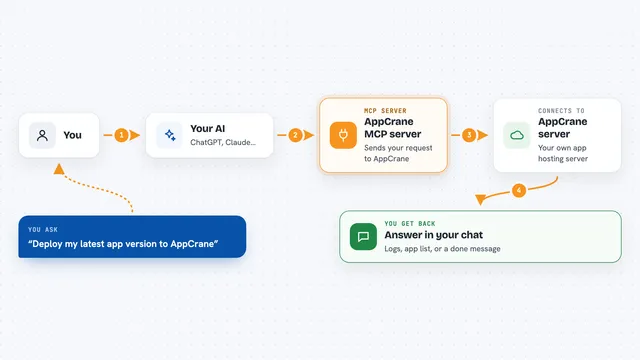
You ask your AI something about the services in your Kubernetes cluster. Your AI passes that request to the kubefwd helper. The helper checks with kubefwd, which is already connected to the cluster and has forwarded the services to your laptop. kubefwd sends back the details, like which services exist, what addresses they have, and how much traffic is moving. Your AI turns that into a plain answer in the chat.
 Click to zoom
What you can do with it
- List the services running in a Kubernetes namespace
- Show the local address and port each service is forwarded to
- Check whether a service is reachable from your laptop
- See how much data has moved in and out of each service
- Stream or view the logs from a pod
- Start or stop forwarding for a namespace
- Look up which pods belong to a service
Try asking your AI
- “What services are running in the default namespace right now?”
- “Is the database service reachable from my laptop, and on what address?”
- “Show me the last 20 lines of logs from the api pod.”
- “How much traffic has the cache service handled since I started kubefwd?”
What it gives back to you
You get back plain answers in the chat. That could be a list of service names with their local addresses and ports, a short note that a service is up or down, a few lines of log text, or numbers showing how much data has moved. If you ask it to start or stop forwarding, it tells you what it did.
Before you start
What you need
- kubefwd installed on your computer (brew, winget, scoop, or a download from the releases page)
- A working kubectl setup that can reach your Kubernetes cluster
- Permission to run commands with sudo (kubefwd needs it to edit your hosts file and set up network addresses)
Good to know
kubefwd needs sudo and edits your hosts file, so only run it when you trust the cluster you are connecting to.
Install it with your AI
Add kubefwd MCP server to your AI, no technical skills needed
You don't install anything by hand. You copy one prompt, paste it into an AI that can work on your computer, and it checks, installs and connects the server for you, asking you when it needs something.
Sign in to get the install prompt
Members get a ready-made prompt that lets the Claude desktop app check kubefwd MCP server, install it and connect it for them, step by step. You don't need any technical skills: you copy, paste and answer a few questions. Your connected AI can also find and install any of the 4,609 MCP servers here for you.
Who it's for
Developers and testers who run their applications in Kubernetes and want to work on them from their own laptop.