MCP server · Analytics · official
UptyBots MCP server
by uptybots · official
Lets your AI check your website monitors, see downtime, and create new monitors for you.

This is a small helper that connects your AI assistant to your UptyBots account. UptyBots watches websites, servers, and certificates to tell you when something goes down. Once connected, you can just ask your AI things like which sites are failing right now, instead of clicking around a dashboard.
What is an MCP server? The 30-second version
On its own, your AI can only chat with you. An MCP server is a small helper program that gives your AI a new skill or a connection to an app. This one connects your AI to UptyBots, so it can look up your monitors, incidents, and stats, and even set up new monitors when you ask. You stay in the chat, and the helper does the talking to UptyBots behind the scenes.
What this MCP server does
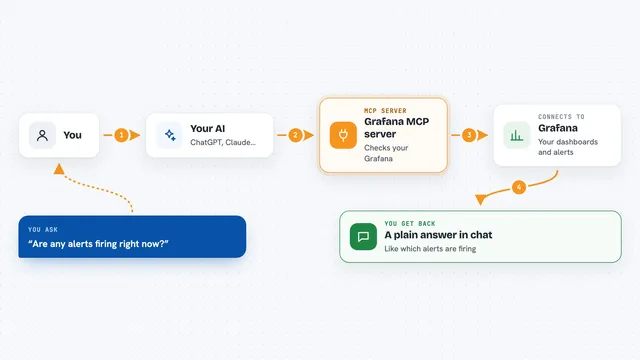
You ask your AI a question about your UptyBots monitoring, like which sites are down or how a monitor has been doing this week. Your AI passes that request to this helper. The helper talks to UptyBots using your account, pulls back the details, and hands them to your AI. Your AI then explains the answer to you in plain words, right in the chat. If you ask it to create or change a monitor, the helper makes that change in your UptyBots account too.
 Click to zoom
What you can do with it
- List all your monitors and filter them by type or status
- Show downtime incidents for a specific monitor
- Pull hourly or daily performance and uptime stats
- Create new monitors for websites, APIs, pings, ports, SSL certificates, or domains
- Pause, resume, or delete a monitor
- Review your notification history
- Check which SSL certificates or domains expire soonest
Try asking your AI
- “Which of my monitors are failing right now, and since when?”
- “Give me an uptime report for the last 7 days, worst first.”
- “Show me the incident history for my main website monitor.”
- “Create an HTTP monitor for https://example.com checking every 5 minutes.”
What it gives back to you
You get answers in the chat: lists of monitors with their status, summaries of incidents and how long they lasted, uptime percentages and response times, and expiry dates for certificates and domains. When you ask it to create, pause, resume, or delete a monitor, it tells you what it changed. Everything comes back as plain text you can read, not as files or code.
Before you start
What you need
- A UptyBots account (free to create)
- An API key from your UptyBots account page (a kind of password for apps, the site gives you one)
- Node.js 18 or newer on your computer if you use the local version
- An MCP-compatible AI client such as Claude Desktop, Claude Code, or Cursor
Good to know
It can create, pause, resume, and delete monitors in your UptyBots account, so double-check before letting your AI delete anything.
Install it with your AI
Add UptyBots MCP server to your AI, no technical skills needed
You don't install anything by hand. You copy one prompt, paste it into an AI that can work on your computer, and it checks, installs and connects the server for you, asking you when it needs something.
Sign in to get the install prompt
Members get a ready-made prompt that lets the Claude desktop app check UptyBots MCP server, install it and connect it for them, step by step. You don't need any technical skills: you copy, paste and answer a few questions. Your connected AI can also find and install any of the 4,609 MCP servers here for you.
Who it's for
Anyone who runs websites or servers and wants to check on them by chatting with their AI instead of opening a dashboard, especially small teams and solo site owners.