
AI news ·
Federal judge dismisses antitrust lawsuits against Google over AI Overviews
A federal judge dismissed antitrust lawsuits against Google over AI-generated search summaries, ruling that publishers have no legal right to web traffic. Some publishers are seeing search referral declines of 40% year-over-year.
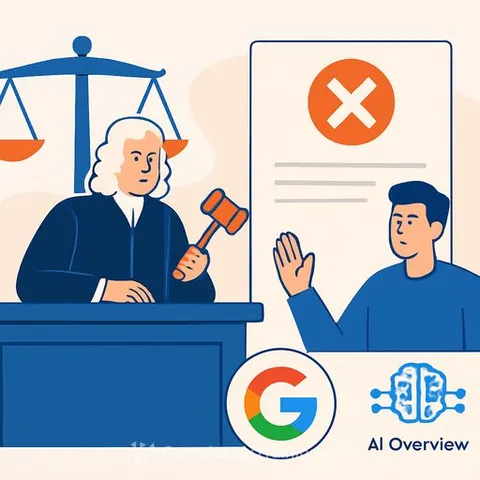
A federal judge dismissed antitrust lawsuits brought by Chegg and Penske Media Corporation against Google, ruling that the companies' claims over AI-generated search summaries do not violate antitrust law. The decision leaves publishers without a clear legal path to challenge AI Overviews that siphon traffic from their sites, even as referral declines reach 40% year-over-year for some properties.
Judge Amit Mehta of the U.S. District Court for the District of Columbia said publishers hold only an "expectation" of web traffic, not a legally protected right. The dismissal was issued without prejudice, meaning both Chegg and Penske Media can refile amended complaints.
The core legal argument
Chegg and Penske Media argued that Google's AI Overviews - which display summarized answers at the top of search results - effectively divert users who would otherwise click through to publisher websites. Judge Mehta rejected that framing. "The plaintiffs' expectation of traffic does not constitute a legal agreement under antitrust law," he wrote in the ruling.
Search engines crawling and indexing content, then presenting AI-generated summaries, falls within standard search engine operations, the judge found. The decision does not address whether AI Overviews harm publishers financially. It simply holds that those harms, even if real, do not amount to an antitrust violation under current law.
Traffic losses and industry response
The Hollywood Reporter, citing Chartbeat data, noted that Penske Media saw a 40% year-over-year decline in Google search referrals. ArsTechnica reported the lawsuits were originally filed in 2025 and referenced Judge Mehta's earlier antitrust ruling against Google in the Department of Justice case - a separate matter focused on search distribution deals, not AI features.
The Verge highlighted a parallel Google pilot program that pays some publishers for contributing content to AI Overviews. That program operates outside the litigation and suggests Google is exploring voluntary compensation models even as it fights legal challenges.
Why this matters for creatives, legal professionals, and communications teams
The ruling signals that AI-driven search features operate in a regulatory gap. Publishers, content creators, and the legal teams advising them cannot rely on antitrust law to push back against traffic losses from AI summaries. Any remedy will likely require new legislation or alternative legal theories - such as copyright claims or contract-based disputes - rather than competition law.
For marketing and PR professionals, the decision underscores a shifting distribution model. Organic search traffic, long treated as a reliable channel, is becoming less predictable as AI Overviews answer user queries directly on Google's results page. Communications strategies built on search visibility need to account for this structural change.
Policy professionals tracking AI regulation can monitor whether Congress or state legislatures respond. Courses on AI public policy and regulatory compliance may help teams understand the evolving legal landscape around AI deployment in public-facing platforms.