MCP server · Analytics
PostgreSQL MCP server (MCPg)
by devopam
Lets your AI look inside a PostgreSQL database, answer questions about the data, and suggest fixes for slow queries.

MCPg is a helper that connects your AI assistant to a PostgreSQL database. PostgreSQL is a popular place where companies keep their data, and this helper lets your AI read it, ask questions about it, and explain what it finds. It is handy for anyone who works with a database but does not want to write SQL by hand.
What is an MCP server? The 30-second version
On its own, your AI can only chat. An MCP server is a small helper program that gives your AI a new skill or a connection to an app or service. This one connects your AI to a PostgreSQL database, so the AI can look things up and run safe queries for you when you ask. You stay in the chat, and the helper does the database work behind the scenes.
What this MCP server does
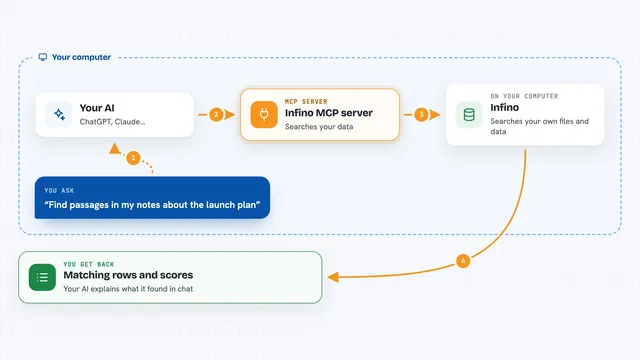
You ask your AI a question in plain English, like which tables exist or why a query is slow. The AI passes that request to MCPg, which talks to your PostgreSQL database. MCPg checks that any query is safe to run, then sends it to the database and brings back the results. Your AI turns those results into a clear answer, a table, or a short summary in the chat.
 Click to zoom
What you can do with it
- List the schemas and tables in your database
- Summarise the biggest tables and what they contain
- Explain why a slow query is slow and suggest an index
- Turn a plain English question into a SQL query
- Search inside text columns and find matching rows
- Check database health, locks, and running queries
- Compare two database structures and show what changed
Try asking your AI
- “What schemas exist in this database, and what are the three biggest tables in each one?”
- “Why is this query slow: SELECT * FROM orders WHERE customer_id = 42 ORDER BY created_at DESC”
- “Show me the ten most recent orders and the customer name for each one”
- “Which indexes would help the orders table, and why?”
What it gives back to you
You get answers in the chat: lists of tables, short summaries, numbers, and sometimes a table of rows. For slow queries, it explains the steps the database takes and suggests indexes. If you ask it to change something and that is allowed, it tells you what it changed.
Before you start
What you need
- A PostgreSQL database you can connect to (version 14 or newer)
- The connection details for that database, usually a URL like postgresql://user:pass@host:5432/db
- Python 3.10 or newer, or Docker, depending on how you install it
- For the plain English to SQL feature, a key from an AI provider such as Anthropic or OpenAI
Good to know
By default it only reads, but if you turn on write or admin modes it can change or delete data, so keep the default read-only setting unless you really need more.
Install it with your AI
Add PostgreSQL MCP server (MCPg) to your AI, no technical skills needed
You don't install anything by hand. You copy one prompt, paste it into an AI that can work on your computer, and it checks, installs and connects the server for you, asking you when it needs something.
Sign in to get the install prompt
Members get a ready-made prompt that lets the Claude desktop app check PostgreSQL MCP server (MCPg), install it and connect it for them, step by step. You don't need any technical skills: you copy, paste and answer a few questions. Your connected AI can also find and install any of the 4,361 MCP servers here for you.
Who it's for
Analysts, support teams, product managers, and developers who work with a PostgreSQL database but do not want to write SQL by hand.