MCP server · Analytics
PostgreSQL MCP server
by JaviMaligno
Lets your AI look inside a PostgreSQL database: explore tables, run read-only queries, and check performance.

This is a small helper that connects your AI assistant to a PostgreSQL database. PostgreSQL is a popular place where companies keep their data in tables, a bit like very large, well organised spreadsheets. If you ever need to peek at that data or ask questions about it, this makes it possible without writing code yourself.
What is an MCP server? The 30-second version
On its own, your AI can only chat. An MCP server is a small helper program that gives your AI a new skill, in this case a connection to your PostgreSQL database. Once it is set up, your AI can ask the database questions for you, like listing tables or counting rows. You just type what you want in plain words, and the helper does the technical part behind the scenes.
What this MCP server does
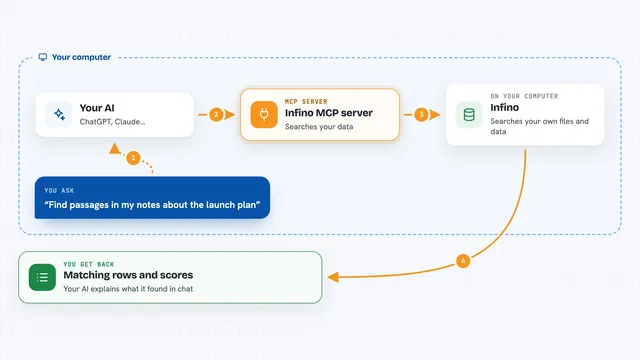
You ask your AI something like "list the tables in the public schema" or "show me 10 rows from the orders table". Your AI passes that request to this helper program. The helper talks to your PostgreSQL database, runs a safe read-only query, and brings the answer back. Your AI then shows you the result in the chat as a table, a list, or a short summary. By default it can only look, not change anything.
 Click to zoom
What you can do with it
- List schemas, tables, views and functions in your database
- Describe a table's columns, types and constraints
- Run read-only SQL queries and show you the rows
- Check indexes and constraints on a table
- Get row counts, table sizes and basic statistics
- Explain how a query would run, to spot slow spots
- Search for columns by name across all tables
Try asking your AI
- “List all tables in the public schema”
- “Describe the users table structure”
- “Show me 10 rows from the orders table”
- “What indexes exist on the orders table?”
What it gives back to you
You get answers right in the chat: lists of tables or columns, small tables of rows, counts and numbers, and short explanations. For example, asking to describe a table gives you its columns with types and any rules attached. Asking for rows gives you up to a set limit of rows, shown as a table. It does not hand you files; it hands you readable answers.
Before you start
What you need
- A PostgreSQL database you can reach, with its host, port, database name, user and password
- Node.js 20 or newer if you use the TypeScript version, or Python 3.10 or newer for the Python version
- An MCP-compatible app such as Claude Desktop, Claude Code, or Cursor
Good to know
It can only read by default, but if someone turns on write operations it can change or delete data, so keep that off unless you really need it.
Install it with your AI
Add PostgreSQL MCP server to your AI, no technical skills needed
You don't install anything by hand. You copy one prompt, paste it into an AI that can work on your computer, and it checks, installs and connects the server for you, asking you when it needs something.
Sign in to get the install prompt
Members get a ready-made prompt that lets the Claude desktop app check PostgreSQL MCP server, install it and connect it for them, step by step. You don't need any technical skills: you copy, paste and answer a few questions. Your connected AI can also find and install any of the 4,361 MCP servers here for you.
Who it's for
Anyone who works with a PostgreSQL database and wants to explore it or ask questions in plain words, such as analysts, support staff, product people, and developers who prefer not to write SQL by hand.