MCP server · Research
BioLit MCP server
Let your AI search real biomedical papers and only cite studies it actually looked up.
BioLit is a helper that connects your AI assistant to real scientific databases: PubMed, Europe PMC, NCBI Gene and UniProt. It is made for people who ask questions about genes, proteins and medical research and want answers backed by actual papers, not made-up references. If you have ever caught an AI inventing a citation, this is for you.
What is an MCP server? The 30-second version
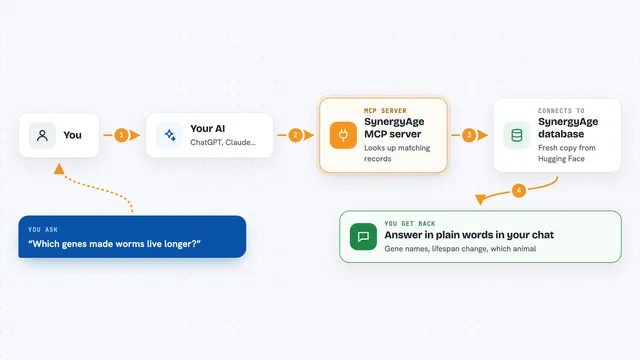
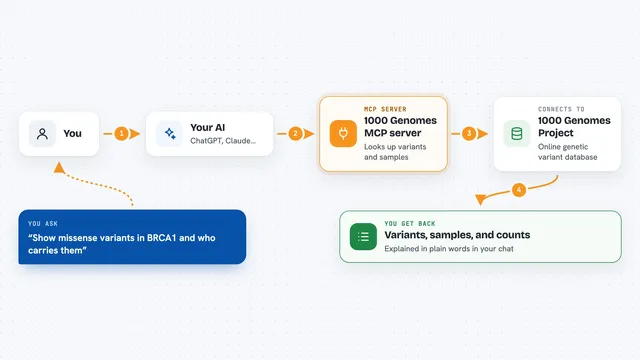
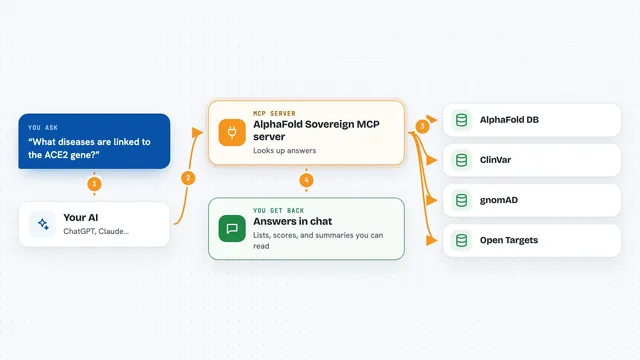
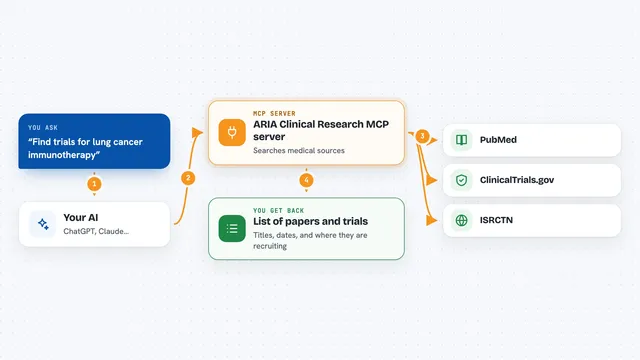
On its own, your AI can only chat with you using what it already learned. An MCP server is a small helper program that gives your AI a new skill or a connection to an outside service. This one connects your AI to biomedical databases like PubMed and UniProt. So when you ask about a gene or a treatment, the AI can go look things up there and bring back real results instead of guessing.
What this MCP server does
You ask your AI a question about a gene, a protein or a medical topic. The AI uses this helper to search PubMed and Europe PMC for matching papers, and to look up gene and protein records in NCBI Gene and UniProt. The helper sends back titles, journals, years, abstracts, gene details and protein details. The AI then writes an answer where each claim points to a real paper it just read. It can only cite papers it actually retrieved in that session, so it cannot invent references.
What you can do with it
- Search PubMed for papers on a topic and get their PMIDs and titles
- Pull the abstract and details for a list of papers
- Look up a gene and see its official name, chromosome and summary
- Look up a protein and see its function and length
- Get an answer where each sentence points to a real paper
- Check that a cited paper actually exists
Try asking your AI
- “What is the evidence that lecanemab slows cognitive decline in early Alzheimer's disease?”
- “Find recent papers on CRISPR gene therapy for sickle cell disease and summarize what they show.”
- “Look up the gene BRCA1 and tell me its chromosome and what it does.”
- “What does the protein TP53 do, and which papers support that?”
What it gives back to you
You get back a written answer in the chat, with claims linked to PMIDs, which are the ID numbers of real papers. You also get lists of paper titles, journals and years, plus gene and protein details when you asked for those. If a paper you mentioned does not exist, it is flagged instead of quietly made up. The answer is usually split into a bottom line, the evidence, and the references.
Before you start
What you need
- Python 3.11 or newer
- The uv tool installed
- The Claude desktop app or Claude Code
- An email address for NCBI (recommended, not required)
Good to know
It only reads abstracts, not full papers, and it is not meant for making medical decisions about patients.
Install it with your AI
Add BioLit MCP server to your AI, no technical skills needed
You don't install anything by hand. You copy one prompt, paste it into an AI that can work on your computer, and it checks, installs and connects the server for you, asking you when it needs something.
Sign in to get the install prompt
Members get a ready-made prompt that lets the Claude desktop app check BioLit MCP server, install it and connect it for them, step by step. You don't need any technical skills: you copy, paste and answer a few questions. Your connected AI can also find and install any of the 4,609 MCP servers here for you.
Who it's for
Scientists, students, doctors and anyone who reads biomedical research and wants answers with real, checkable citations.