MCP server · Notes
memem memory plugin for Claude Code
by TT-Wang
Give Claude Code a long-term memory that remembers your project decisions and fixes between sessions.

memem is a memory helper for Claude Code. It listens to your coding sessions, picks out the useful bits (decisions you made, rules you follow, bugs you fixed), and saves them as plain notes in an Obsidian vault on your own computer. Next time you start a session, Claude can look those notes up instead of asking you to explain everything again.
What is an MCP server? The 30-second version
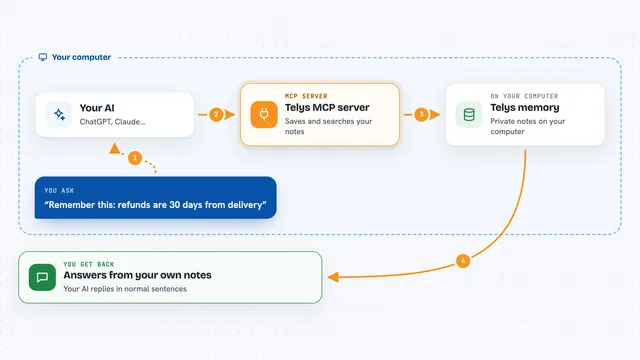
On its own, Claude Code only knows what is in the current chat. An MCP server is a small helper program that gives your AI a new skill or a connection to something else. This one connects Claude Code to a memory vault on your machine, so the AI can save lessons from past sessions and read them back later. You stay in control because everything is stored as normal text files you can open and edit.
What this MCP server does
You work in Claude Code like you normally do. When a session turn ends, memem quietly reads the new part of the conversation and pulls out things worth keeping, like a decision, a convention, or a bug fix. It writes those as markdown notes into your Obsidian vault. When you start a new session or ask Claude to recall something, memem finds the notes that match and hands them to Claude, so your AI answers with your project's own history in mind.
 Click to zoom
What you can do with it
- Remember decisions you made in earlier sessions
- Recall your project's coding conventions and preferences
- Look up how you fixed a bug before
- Search past conversations by keyword
- Save a specific memory yourself when you want to keep it
- Show a short working set of relevant memories for the current task
- Keep everything as plain markdown files you can read and edit
Try asking your AI
- “What did we decide about the database schema last week?”
- “Remind me of the naming conventions we use in this project.”
- “How did we fix that login timeout bug?”
- “Search my past sessions for anything about the payment flow.”
What it gives back to you
You get back short notes and answers drawn from your own past sessions. Sometimes it is a list of matching memories with titles and snippets, sometimes it is a small working set of the most relevant ones for what you are doing now. It can also save a new memory when you ask. Everything it writes lands as markdown files in your vault, so you can open them any time.
Before you start
What you need
- Claude Code installed and working
- Python 3 (the plugin runs on it)
- An Obsidian vault folder for your notes (the default is ~/obsidian-brain/memem/memories/)
- An Anthropic API key so the miner can read and summarize your sessions
Good to know
It reads your Claude Code sessions and sends them to Anthropic's API to extract memories, so do not use it on sessions that contain secrets you would not want summarized.
Install it with your AI
Add memem memory plugin for Claude Code to your AI, no technical skills needed
You don't install anything by hand. You copy one prompt, paste it into an AI that can work on your computer, and it checks, installs and connects the server for you, asking you when it needs something.
Sign in to get the install prompt
Members get a ready-made prompt that lets the Claude desktop app check memem memory plugin for Claude Code, install it and connect it for them, step by step. You don't need any technical skills: you copy, paste and answer a few questions. Your connected AI can also find and install any of the 4,361 MCP servers here for you.
Who it's for
Developers and anyone who uses Claude Code on the same project over many days and is tired of re-explaining context each time.