MCP server · Music
Gradus Notation MCP server
by delmas41
Turn a plain music score into sheet music, MIDI and theory answers right inside your AI chat.

This is a helper for your AI that deals with music notation. You describe a piece of music in a simple text format, and your AI can turn it into sheet music, a MIDI file, or a written analysis. It is handy for anyone who writes, studies or teaches music and wants quick results without opening a music program.
What is an MCP server? The 30-second version
On its own, your AI can only chat. An MCP server is a small helper program that gives your AI a new skill or a connection to a service. This one connects your AI to the Gradus music service, so it can draw sheet music, check a score, and answer music theory questions for you. You just ask in normal words, and the helper does the technical part behind the scenes.
What this MCP server does
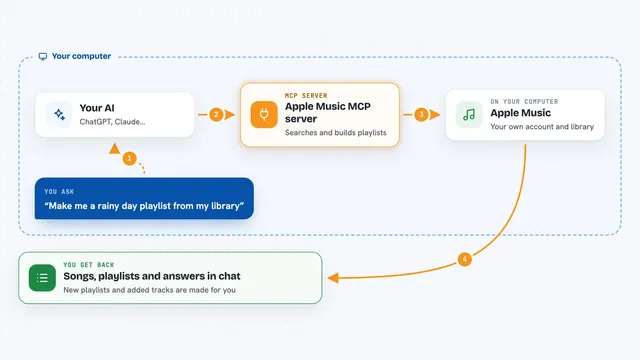
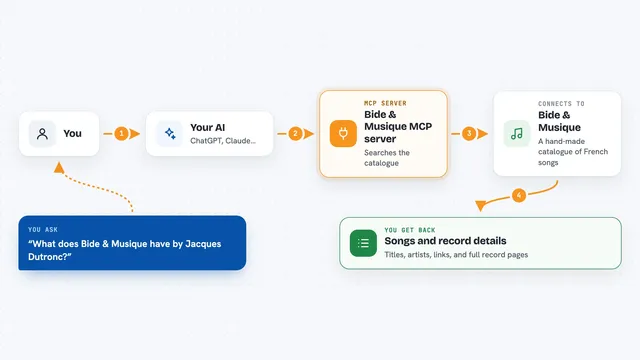
You type a request like "make me a C major scale" or paste a music file. Your AI sends that to this helper, which passes it to the Gradus music service. The service builds the sheet music, the MIDI sound file, or the analysis, and sends it back. Your AI then shows you the result in the chat, such as a picture of the notes or a list of findings.
 Click to zoom
What you can do with it
- Turn a simple text description of notes into sheet music you can view
- Create a MIDI file so you can hear the piece
- Check a score for engraving mistakes and get the rule it breaks
- Analyze a piece for its key, chords and cadences
- Look up music theory rules with a proper citation
- Search a library of figured-bass exercises for practice
- Search real pieces for a harmony example you can cite
Try asking your AI
- “Render a C major scale for violin at tempo 100”
- “Analyze this MusicXML file and tell me the key and any modulations”
- “Check this score for engraving problems and cite the rules”
- “Find me a figured-bass exercise about suspensions”
What it gives back to you
You get back answers in the chat: an inline picture of the sheet music, a MIDI file you can play, or a written report. Reports can list chords, keys, cadences, engraving findings with rule codes, or matching exercises and theory patterns. Each finding usually comes with a citation so you can check where it came from.
Before you start
What you need
- The Claude desktop app or Claude Code, with MCP support
- Node.js installed on your computer (the free program that runs the helper)
Good to know
It reads any file path you give it, so only point it at files you are happy to share.
Install it with your AI
Add Gradus Notation MCP server to your AI, no technical skills needed
You don't install anything by hand. You copy one prompt, paste it into an AI that can work on your computer, and it checks, installs and connects the server for you, asking you when it needs something.
Sign in to get the install prompt
Members get a ready-made prompt that lets the Claude desktop app check Gradus Notation MCP server, install it and connect it for them, step by step. You don't need any technical skills: you copy, paste and answer a few questions. Your connected AI can also find and install any of the 4,361 MCP servers here for you.
Who it's for
Composers, music students, teachers, and anyone who works with written music and wants quick notation or theory help from their AI.