MCP server · Notes
Gingugu memory server
by gingugu
Give your AI a lasting memory of your projects, so it remembers decisions and fixes between sessions.

Gingugu is a memory helper for AI coding assistants. Normally your AI forgets everything the moment you close the chat, so you end up repeating yourself. Gingugu keeps a private notebook on your own computer and lets your AI read from it and write to it.
What is an MCP server? The 30-second version
On its own, your AI can only chat. It cannot remember yesterday's conversation or look anything up on your machine. An MCP server is a small helper program that gives your AI a new skill. Gingugu is that helper for memory: it runs quietly in the background, keeps a single database file on your computer, and your AI asks it to save or find things when you talk to it.
What this MCP server does
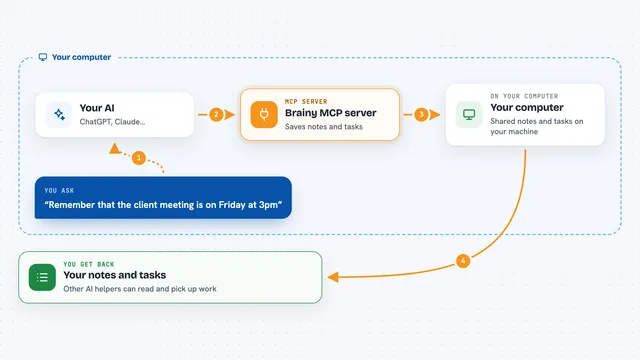
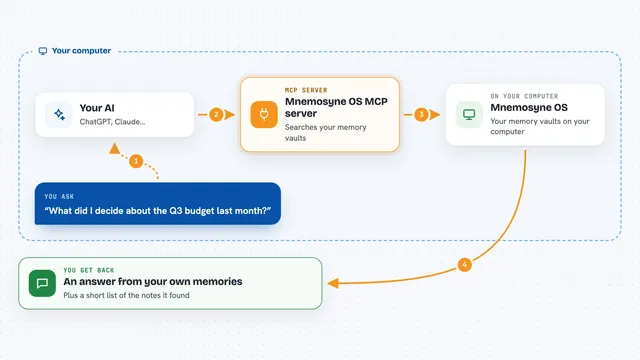
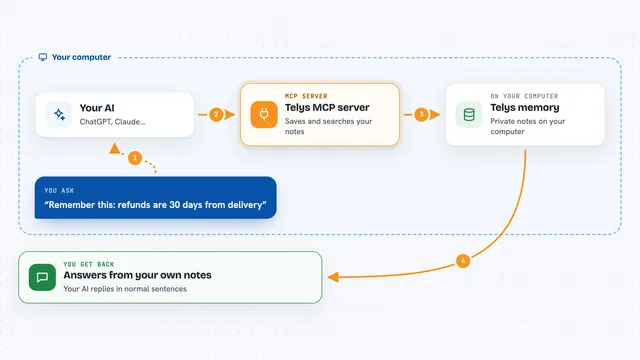
You tell your AI something worth keeping, like a decision you made or a bug you fixed. Your AI passes that note to Gingugu, which stores it in a local database file with a label, a project name, and a confidence level. Later, when you start a new session, your AI can ask Gingugu what it already knows about this project, and Gingugu searches its notes and hands back the most relevant ones. You can also ask it to merge duplicates, show a health report, or store a password safely in your computer's keychain.
 Click to zoom
What you can do with it
- Save a decision, fix, or fact so your AI remembers it next time
- Search past memories by keyword or by meaning, not just exact words
- Load relevant context automatically when a new session starts
- Link related memories together, like which one replaced another
- Merge or clean up duplicate memories when your notes pile up
- See stats and a health report about your memory store
- Store API keys and tokens in your computer's secure keychain
Try asking your AI
- “Remember that we switched the login flow to use refresh tokens instead of long-lived sessions”
- “What do you already know about the payments service in this repo”
- “Find any memory about the bug we fixed in the CSV export last month”
- “Clean up duplicate memories about the database migration”
What it gives back to you
You get back short, readable notes in the chat: the memories your AI found, with their labels and how confident the store is in each one. Sometimes you get a summary, a list of duplicates, or a small health report with numbers. When your AI saves something, it just confirms that the note was stored. Nothing is shown as raw database rows.
Before you start
What you need
- Python 3.11 or newer
- The uv tool or pip to install it
- An MCP client like Claude Code, Cursor, or Windsurf
- A Mac, Linux, or Windows computer (the keychain feature needs your OS secret store)
Good to know
It can store secrets and change or delete memories, so only connect it to an AI you trust and keep an eye on what it saves.
Install it with your AI
Add Gingugu memory server to your AI, no technical skills needed
You don't install anything by hand. You copy one prompt, paste it into an AI that can work on your computer, and it checks, installs and connects the server for you, asking you when it needs something.
Sign in to get the install prompt
Members get a ready-made prompt that lets the Claude desktop app check Gingugu memory server, install it and connect it for them, step by step. You don't need any technical skills: you copy, paste and answer a few questions. Your connected AI can also find and install any of the 4,609 MCP servers here for you.
Who it's for
Developers and technical people who work with an AI coding assistant across many sessions and projects and are tired of repeating context.