MCP server · Productivity
Jev MCP server
Lets your AI ask a fast, cheap decision model for calibrated picks, scores and yes/no verdicts.

This is a small helper that connects your AI assistant to Jev, a decision model made by TypeSafe. Instead of writing sentences, Jev takes a question with a fixed list of answers and returns numbers: which option is most likely, how confident it is, and how the chances split across all options. It is handy when you have to make the same small judgment over and over, like sorting incoming tickets or grading risk on a list of changes.
What is an MCP server? The 30-second version
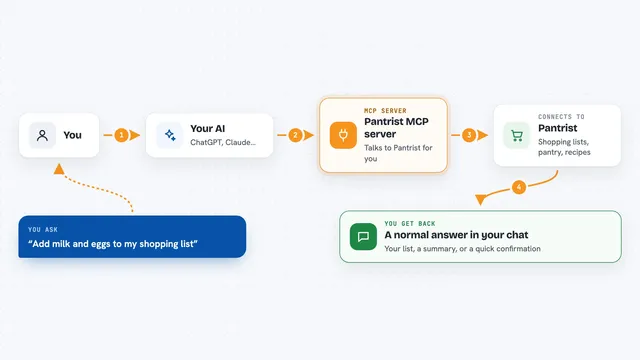
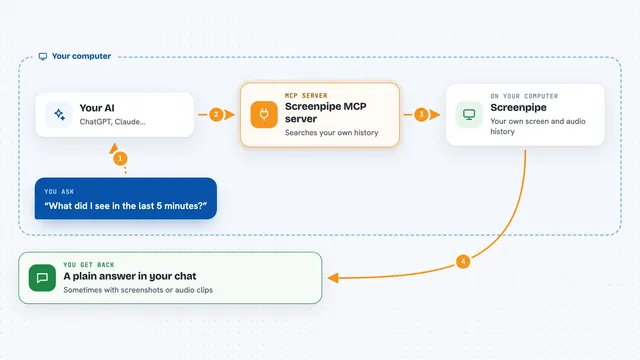
On its own, your AI can only chat with you. An MCP server is a small helper program that gives your AI a new skill or a connection to another service. This one connects your AI to Jev, a hosted decision model, so the AI can send it a structured question and get back a typed answer with probabilities. You never talk to Jev directly; your AI does it for you when you ask.
What this MCP server does
You ask your AI a question that has a clear set of possible answers. The AI turns that into a structured question and sends it to Jev through this helper. Jev looks at the options and returns a pick, a confidence value, and a probability for each option. Your AI then reads those numbers and tells you the result in the chat. It is quick, roughly half a second per call, and each call costs a tiny fraction of a cent.
 Click to zoom
What you can do with it
- Pick the most likely option from a list of two to a hundred choices
- Grade something on an ordered scale, like risk or severity
- Answer a yes/no question with a degree between 0 and 1
- Compare two candidates and show which one wins and by how much
- Check whether a piece of evidence supports a claim
- Classify up to 100 items against one shared set of labels in a batch
- Store your TypeSafe key locally so you do not have to put it in a config file
Try asking your AI
- “Which of these rollout plans is safest? Show me the probability split.”
- “Grade the regression risk of rewriting the auth middleware in place, no tests yet, on a minor/moderate/severe scale.”
- “Does this CI log support the claim that all tests passed?”
- “Sort these 60 support emails into billing, bug, feature request or other.”
What it gives back to you
You get numbers back, not paragraphs. For a choice question you see the winning option, a confidence value, and the probability for every option, so near-ties are visible. For a score question you get a fractional number and the nearest level. For a yes/no or verify question you get a value between 0 and 1 and a short verdict like not supported. Your AI may add its own explanation, but that reading is the assistant's, not Jev's.
Before you start
What you need
- A TypeSafe API key from console.typesafe.ai (a kind of password for apps; the site gives you one for free)
- An MCP client that supports local servers, such as Claude Code, Cursor, Codex, OpenCode or pi
- uv or uvx installed (a small tool that runs Python programs; the README shows one-line install commands)
Good to know
Each call spends a small amount of money on your TypeSafe account, and a batch of 100 items costs about $0.007, so keep an eye on usage if you run many calls.
Install it with your AI
Add Jev MCP server to your AI, no technical skills needed
You don't install anything by hand. You copy one prompt, paste it into an AI that can work on your computer, and it checks, installs and connects the server for you, asking you when it needs something.
Sign in to get the install prompt
Members get a ready-made prompt that lets the Claude desktop app check Jev MCP server, install it and connect it for them, step by step. You don't need any technical skills: you copy, paste and answer a few questions. Your connected AI can also find and install any of the 4,066 MCP servers here for you.
Who it's for
People who need to make the same small judgment many times, like triage, routing, grading or gating work, and want it fast and cheap.