MCP server · Notes
Annota MCP server
by dengls24
Let your AI read your Zotero papers, highlight key findings, explain formulas, and save reading notes back to your library.

Annota is a small helper that connects your AI assistant to your Zotero library of research papers. You point it at a PDF, and the AI reads it, then adds highlights and notes right inside Zotero. It is handy for students, researchers, and anyone who reads a lot of papers and wants help keeping track of the important parts.
What is an MCP server? The 30-second version
On its own, your AI can only chat with you. An MCP server is a small helper program that gives your AI a new skill or a connection to an app, and here it connects your AI to Zotero, your reference manager. Once it is set up, your AI can look inside your Zotero papers and add highlights or notes there when you ask. You still do the asking in plain words, and the helper handles the technical part behind the scenes.
What this MCP server does
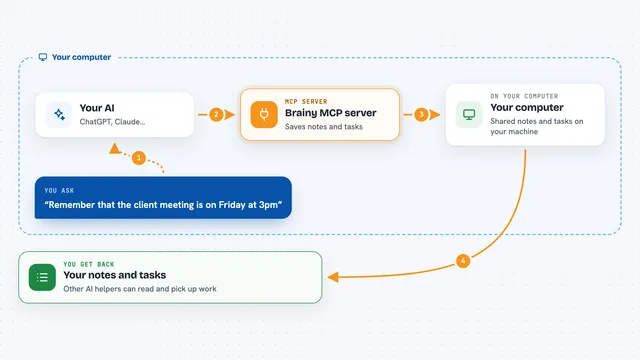
You tell your AI which paper you want to work on, usually by giving it the file path or a title. The AI uses this helper to open the paper and read the text. It figures out which sentences matter, like findings in the abstract or a formula on page 3. Then it asks the helper to add highlights or notes to that paper in your Zotero library. When it is done, you open Zotero and see the new highlights and notes waiting for you.
 Click to zoom
What you can do with it
- Highlight key findings in a paper's abstract
- Explain formulas and add the explanation as a note
- Write a structured reading note with methods, results, and limitations
- Annotate hypotheses and explain the theory behind each one
- Review a paper as if you were a peer reviewer, with scores and feedback
- Browse and search your Zotero library by title, author, or key
- Add notes to any item in your library
Try asking your AI
- “Highlight the findings in this paper's abstract in green”
- “Explain the formulas on page 3 and add a note with the explanation”
- “Write a structured reading note for this paper and save it to my library”
- “Review this paper as a reviewer for ISCA, with scores and feedback”
What it gives back to you
You get highlights and notes added to the paper inside your Zotero library. In the chat, the AI also tells you what it found, like a short summary of the paper's topic, method, and key results. For reviews, it gives you a structured write-up with scores and comments. Everything it writes is saved, so you can read it again later in Zotero.
Before you start
What you need
- The Zotero app installed on your computer, with some papers already in it
- Python installed on your computer
- The Claude Code app, since Annota is set up through its settings
- The path to your Zotero data folder (the README shows how to find it)
Good to know
Annota writes directly into your Zotero database, which is not officially supported, so back up your zotero.sqlite file first and close Zotero before letting it add highlights or notes.
Install it with your AI
Add Annota MCP server to your AI, no technical skills needed
You don't install anything by hand. You copy one prompt, paste it into an AI that can work on your computer, and it checks, installs and connects the server for you, asking you when it needs something.
Sign in to get the install prompt
Members get a ready-made prompt that lets the Claude desktop app check Annota MCP server, install it and connect it for them, step by step. You don't need any technical skills: you copy, paste and answer a few questions. Your connected AI can also find and install any of the 4,361 MCP servers here for you.
Who it's for
Researchers, students, and anyone who reads a lot of academic papers and keeps them in Zotero.