
Learning path
Learning AI as an Embedded Systems Engineer
A guided path for embedded systems engineers who want to use AI at work. Set up your tools, connect them to your job, and practice prompts for firmware, debugging, and documentation.

Your path
Everything in the Embedded Systems Engineer AI kit, in the order that makes sense. Members tick off each step and see their progress.
Set up your AI
We guide you through each click.
Let skills do your everyday tasks
Connect your apps and pick your AI apps
Hand whole tasks to AI agents
Build your own tools
Everything for embedded systems engineers
All the courses, certifications, AI tools, MCP servers and apps for embedded systems engineers, most relevant first. Open any list to see more.
Take the prompt courses
A short framework course to learn how to ask, then 9 lessons with ready-to-use prompts for embedded systems engineers.
Start with this framework: how to talk to AI
RACE fits embedded engineering because it maps role, action, context, expectation to firmware tasks like debugging an I2C timeout on STM32.
Then your prompt course for embedded systems engineersWatch the video courses or add them to your Favorites for later
55 video courses our AI picked for embedded systems engineers, most useful first. Save the ones you want to watch later with the heart.
Favorites are saved to your account: sign in or get your AI kit first.
Show all 55 video courses
Get certified, or add certifications to your Favorites
Every course ends in an exam and a certificate you can add to LinkedIn. Save the certifications you are aiming for with the heart.
Favorites are saved to your account: sign in or get your AI kit first.
More certifications for embedded systems engineersShow all 24 certifications
Try the AI tools for embedded systems engineers
17 AI tools our AI matched to the work of embedded systems engineers, best fit first. Each review shows what it does, its alternatives and the jobs it suits.
Favorites are saved to your account: sign in or get your AI kit first.
Show all 17 AI tools
Connect your AI to the apps embedded systems engineers use
MCP servers let ChatGPT, Claude or Copilot look things up and get work done in other apps, like your email, calendar or bookkeeping software. These 12 fit the work of embedded systems engineers best, well-known apps first.

Embedded Debugger MCP server
by adancurusulLets your AI talk to a hardware debug probe so it can inspect, halt, and flash a microcontroller for you.

PlatformIO MCP server
by powerdragonfireLet your AI build, flash, and debug microcontroller firmware and read the serial output for you.

smolmux MCP server
by magnusmalmLet your AI watch and talk to a serial port or debugger on a tiny embedded board.

fw-context MCP server
by turbyhoLets your AI read your firmware the way the compiler sees it, so it can trace calls, callbacks and dead code.

ByteAsk Embedded MCP server
by ByteAskLets your AI look up exact facts from embedded and firmware reference docs, with page citations.
ResearchNo install
Telink SDK Builder MCP server
by JannLeoLet your AI compile embedded firmware from a Telink or other SDK repo and even flash it to a chip.
Show all 12 MCP servers

ESP32 MCP server (ESP-IDF)
by horwLet your AI set up, build, and flash ESP32 projects with ESP-IDF, so you can fix build issues by chatting.

SheetsData MCP server
by octoco-ltdLets your AI look up electronic component specs, pinouts and package info from datasheets without opening a PDF.
ResearchNo install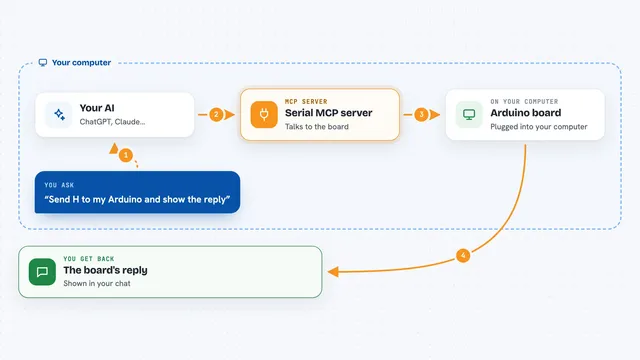
Serial MCP server
by adancurusulLets your AI talk to devices plugged into a serial port, like Arduino or STM32 boards.
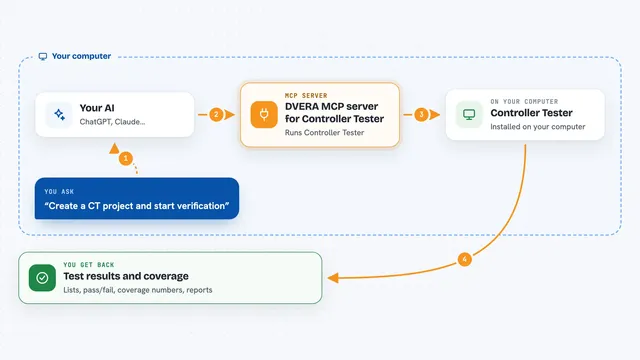
DVERA MCP server for Controller Tester
by SuresoftTechnologiesLets your AI set up, run, and review Controller Tester checks for C and C++ code.
Developer toolsCoding Official
Ghidra MCP server
by LaurieWiredLet your AI look inside program files, read their code, and give parts clearer names for you.

SuperGrep code context MCP server
by infino-aiLets your AI search a code folder or log folder by meaning and by exact text, instead of reading every file.
Developer toolsCoding Official











































About this learning path
6 topicsA practical AI path for embedded engineers
A practical learning path for embedded systems engineers who want to use AI tools in their daily work. It starts with simple setup questions and helps you connect ChatGPT, Claude, or Gemini to the tasks you already do.
The path includes skills for the job inside your AI, this prompt course, and video courses picked for embedded systems work. You will also see the certifications that come with those courses, so you can show what you have learned.
Why AI matters now
Embedded systems work is full of dense datasheets, complex debug logs, and tight deadlines. AI can help you read faster, plan better, and write cleaner firmware without losing your engineering judgment.
Teams are already using AI to draft code, summarize registers, and check test plans. Learning to use it well keeps you current and makes you more valuable on projects.
What the path includes
You start with setup questions, then connect your AI tool to your job. The path walks you through skills for embedded systems work, like firmware coding, debugging, and documentation.
You also get this prompt course and video courses chosen for embedded engineers. Each video course comes with its certification, so you can track your progress.
How it saves you time
AI can turn a long datasheet into a clear register map or suggest debug steps from a log. That means less time searching and more time building and testing.
You can also use prompts to draft firmware initialization, plan tests, and write change logs. The time you win back goes to the work that needs your hands and your head.
How it protects your career
AI will not replace engineers who understand hardware and software. It will replace tasks that are repetitive and slow. By learning to direct AI, you stay in control of the important decisions.
The path also helps you show your skills through certifications. That makes it easier to talk about your value in reviews or interviews.
How to start
Begin with the setup questions and connect your AI tool of choice. Then work through the prompt course at your own pace, trying each prompt on a real task from your job.
After that, pick a video course that matches your current project. The path is designed to fit around a full workday, so you can learn in small steps.
Frequently asked questions
Do I need to be an AI expert to use this path?
No. The path is made for embedded systems engineers who are new to AI, and it starts with simple setup and plain language.Will AI write my firmware for me?
AI can help you write and understand firmware, but it does not replace your engineering judgment. You still review, test, and adapt everything. The course teaches you how to use AI as a helpful assistant.What tools do I need?
You need access to an AI tool like ChatGPT, Claude, or Gemini. A computer with your usual development environment is enough. No special hardware is required for the course.How long does the path take?
You can move at your own speed. Most engineers finish the prompt course in a few sittings and then take video courses over several weeks. The path is built to fit around your job.