
Learning path
Learning AI as a Manufacturing Engineer
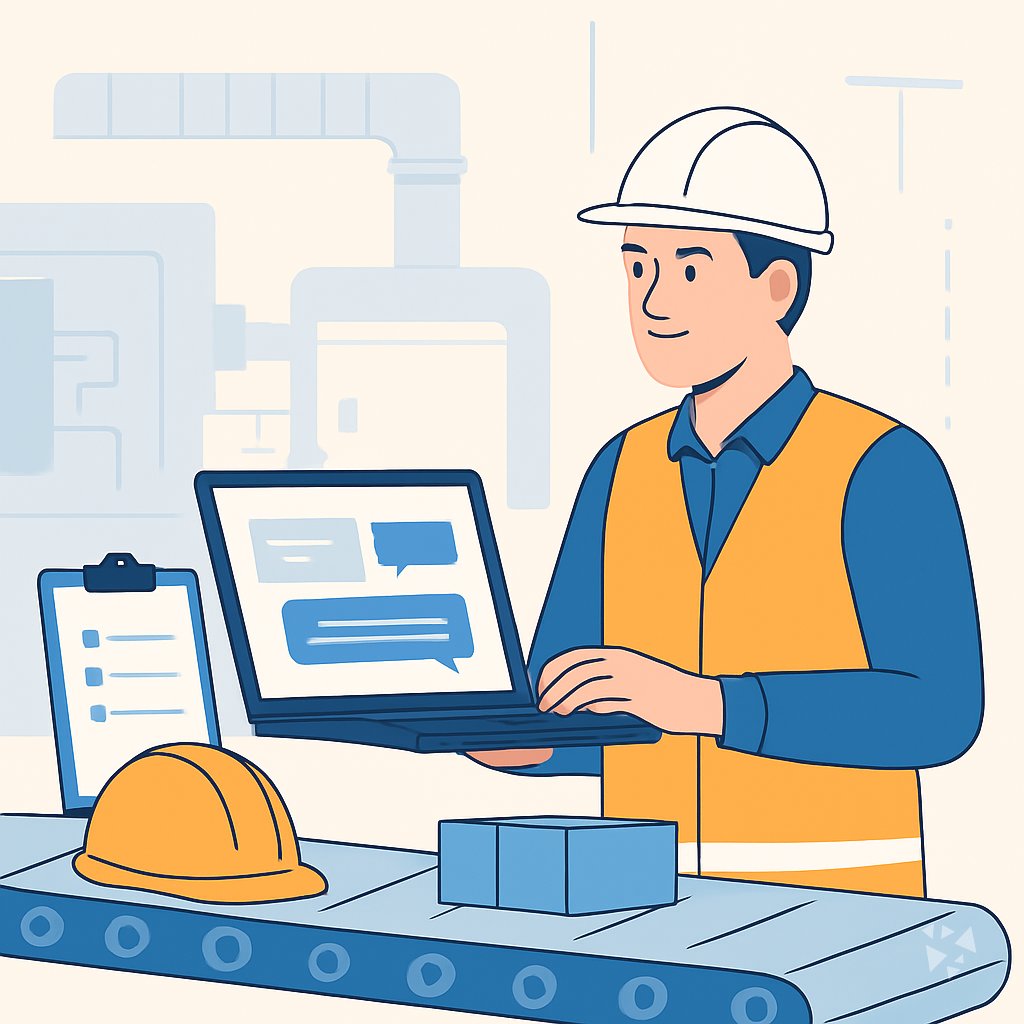
This path helps manufacturing engineers use AI to document processes, troubleshoot faster, and improve quality. It includes setup, job-specific skills, prompts, video courses, and certifications.
Your path
Everything in the Manufacturing Engineer AI kit, in the order that makes sense. Members tick off each step and see their progress.
Set up your AI
We guide you through each click.
Let skills do your everyday tasks
Connect your apps and pick your AI apps
Hand whole tasks to AI agents
Build your own tools
Keep growing
Everything for manufacturing engineers
All the courses, certifications, AI tools, MCP servers and apps for manufacturing engineers, most relevant first. Open any list to see more.
Take the prompt courses
A short framework course to learn how to ask, then 8 lessons with ready-to-use prompts for manufacturing engineers.
Start with this framework: how to talk to AI
ICIO and CIDI reusable prompt templates fit manufacturing engineers because you can classify defect reports and extract machine downtime causes each shift.
Then your prompt course for manufacturing engineersWatch the video courses or add them to your Favorites for later
75 video courses our AI picked for manufacturing engineers, most useful first. Save the ones you want to watch later with the heart.
Favorites are saved to your account: sign in or get your AI kit first.
Show all 75 video courses
Get certified, or add certifications to your Favorites
Every course ends in an exam and a certificate you can add to LinkedIn. Save the certifications you are aiming for with the heart.
Favorites are saved to your account: sign in or get your AI kit first.
More certifications for manufacturing engineersShow all 24 certifications
Try the AI tools for manufacturing engineers
3 AI tools our AI matched to the work of manufacturing engineers, best fit first. Each review shows what it does, its alternatives and the jobs it suits.
Favorites are saved to your account: sign in or get your AI kit first.
Connect your AI to the apps manufacturing engineers use
MCP servers let ChatGPT, Claude or Copilot look things up and get work done in other apps, like your email, calendar or bookkeeping software. These 10 fit the work of manufacturing engineers best, well-known apps first.

Quality Control Plan MCP server
by imnoo-teamTurn a technical drawing PDF into a numbered inspection plan, a ballooned drawing and an Excel report.

FoundryNet Forge MCP server
by FoundryNetLets your AI read and manage data from industrial machines like CNC machines and robots in plain language.
AnalyticsNo install
GNU Units MCP server
by laszlopereLets your AI convert between thousands of units and check unit math, all offline.
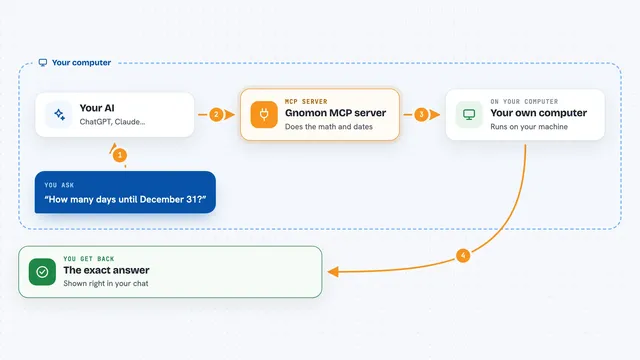
Gnomon MCP server
by lihtnessGives your AI a reliable calculator and calendar so dates, math, and unit conversions stop being guesses.
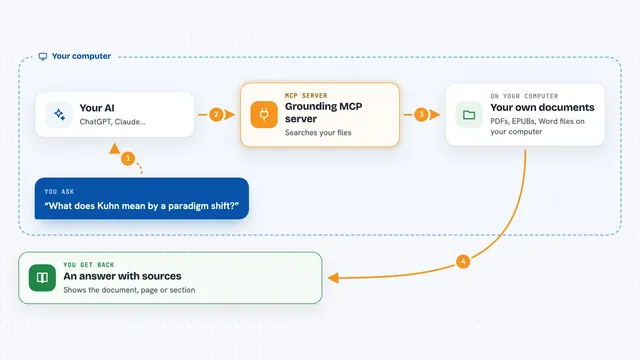
Grounding MCP server
by andyliszewskiSearch your own PDFs, EPUBs and Word files locally and get answers with page and section citations.

UGS CNC MCP server
by zackpeters93Lets your AI talk to a CNC machine through Universal GCode Sender so you can jog, home, run files, and check G-code.
Show all 10 MCP servers

Calculator MCP server
by githejieLets your AI do exact math instead of guessing at numbers.
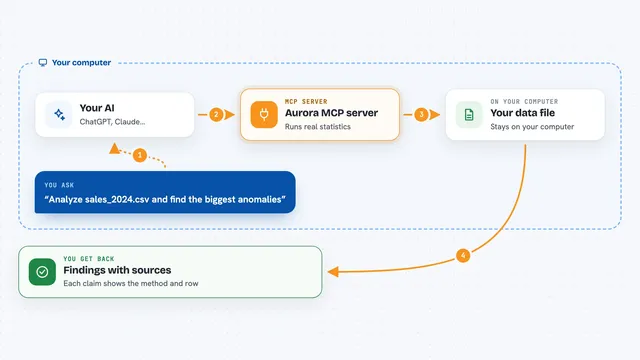
Aurora MCP server
by FantasyLab-aiLet your AI run honest statistics on your data and cite every finding, instead of guessing.

Local RAG MCP server
by shinprSearch your own PDF, Word, text and Markdown files from your AI chat, all on your own computer.
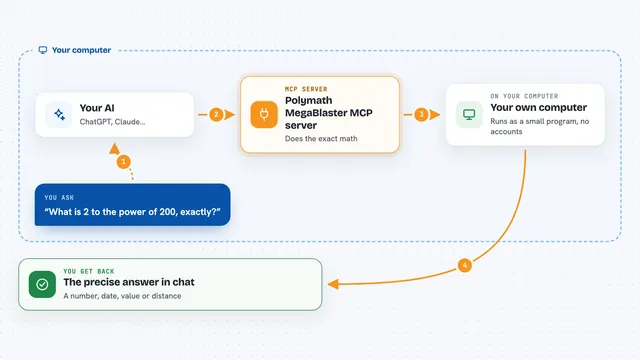
Polymath MegaBlaster MCP server
by headlessherm-creatorGive your AI a local calculator for exact math, dates, units, stats, and distances.
Build your own AI apps for manufacturing engineers
Apps you build yourself with your own AI, no coding needed and no monthly fee. Our AI picked the 7 that fit the work of manufacturing engineers.
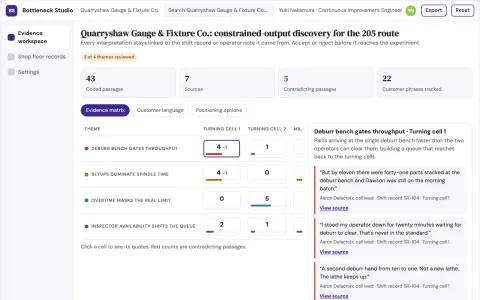
Operational process bottleneck discovery studio
Test the cause of constrained output before buying equipment.
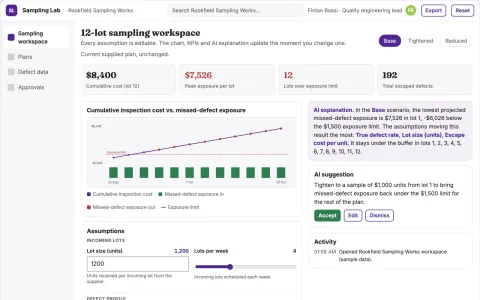
Production quality sampling economics lab
Make inspection-resource tradeoffs visible.
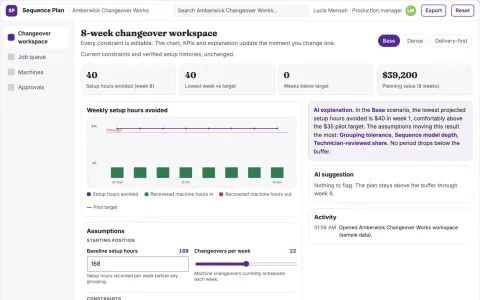
Machine changeover sequence optimizer
Recover capacity by reducing avoidable setup work.
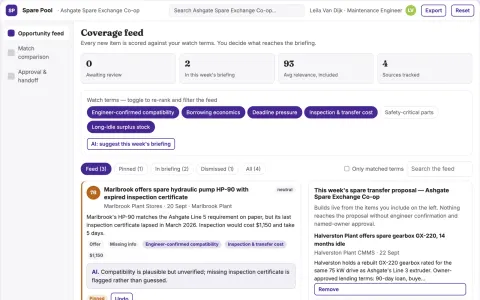
Industrial maintenance spare pooling exchange
Reduce emergency procurement delay using existing stock.
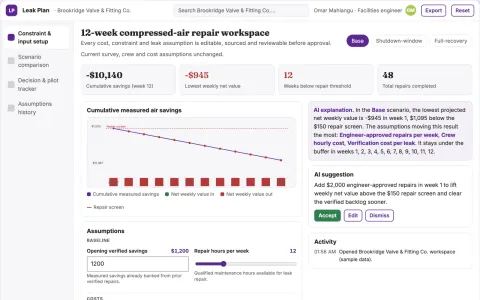
Compressed-air repair investment optimizer
Target verified repairs with measurable operating value.
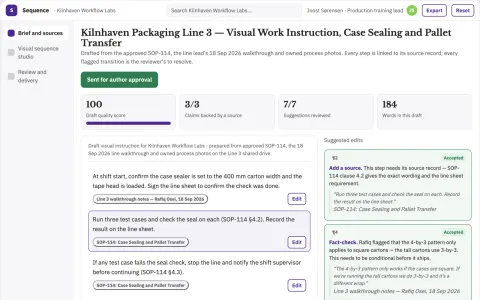
Work instruction visual sequence studio
Visual sequencing from validated procedures.
Show all 7 apps








































About this learning path
6 topicsAI for Manufacturing Engineers: Save Time, Improve Quality
Manufacturing engineers keep production running smoothly. You spend your days solving problems on the floor, documenting processes, and finding ways to improve quality and efficiency. AI can help you do that work faster and with less frustration.
This learning path is built for manufacturing engineers who are not technical experts. You will learn how to set up AI tools, connect them to your daily work, and use prompts that speak your language. You will also find video courses and certifications picked for your job, so you can learn what matters most.
Why AI Matters for This Job Now
Factories are generating more data than ever. Machines, sensors, and operators all produce information that can point to problems or opportunities. AI helps you make sense of that information quickly, without needing to be a data scientist.
Companies are also facing pressure to do more with less. AI can take over repetitive tasks like drafting reports or summarizing standards, freeing you to focus on the floor where your expertise matters most.
What the Path Includes
You start with setup questions to get your AI tools ready. Then you learn how to connect your AI to the systems you already use, like your maintenance logs or quality reports. The path includes skills for the job inside your AI, such as how to ask for troubleshooting steps or line balancing ideas.
The prompt course gives you a set of ready-to-use prompts for common tasks, from writing work instructions to analyzing downtime. You also get video courses chosen for manufacturing engineers, along with the certifications that come with them.
How It Saves Time
Think about the last time you had to write a work instruction from scratch. Or the last time you spent hours digging through fault codes to find a solution. AI can draft those documents and suggest troubleshooting steps in minutes, not hours.
You can also use AI to summarize long safety standards or pull key numbers from production reports. The time you save adds up, and you can spend it on the floor where your judgment is needed.
How It Protects the Career
AI is changing how manufacturing work gets done. Engineers who know how to use these tools will be the ones who lead improvements and solve the toughest problems. This path helps you stay ahead without becoming a programmer.
You will learn to use AI safely and responsibly, especially around sensitive production data and safety procedures. That makes you more valuable to your employer and more prepared for whatever comes next.
How to Start
Begin with the setup questions and the first few prompts. Try them on a small task, like drafting a simple work instruction or summarizing a recent downtime event. Once you see how it works, move on to the video courses and certifications.
You do not need to finish everything at once. Pick one area, like quality control or line balancing, and start there. The path is designed to fit around your shifts and your schedule.
Frequently asked questions
Do I need to know how to code to use AI in my job?
No. The tools in this path are made for people who work with their hands and their teams, not programmers. You will learn to ask questions in plain language and get useful answers.Will this path help me with the specific problems I face on the floor?
Yes. The prompts and lessons are built around real manufacturing tasks like troubleshooting, line balancing, and quality checks. You can apply them directly to your daily work.How much time does the path take?
You can go at your own pace. Most engineers spend a few hours a week and see results quickly. The video courses are short and focused on practical skills.Is my production data safe when I use AI?
The path includes guidance on safety and privacy for manufacturing. You will learn what to share and what to keep private, so you can use AI without putting your company at risk.