MCP server · Email
MailFathom MCP server
by Krzysztof318
Ask your AI questions about your own email archive and get answers with citations.

MailFathom is a program you run yourself that makes a searchable copy of your email in a database on your own computer. Once it is connected to your AI assistant, you can ask questions about your mail in plain words and get answers that point back to the actual messages. It is handy if you have years of email and want to find things without scrolling through folders.
What is an MCP server? The 30-second version
On its own, your AI can only chat with you. An MCP server is a small helper program that gives your AI a new skill or a connection to something else. This one connects your AI to your email archive, which MailFathom keeps in a database you control. So when you ask about a message or a conversation, your AI can look it up there and answer you.
What this MCP server does
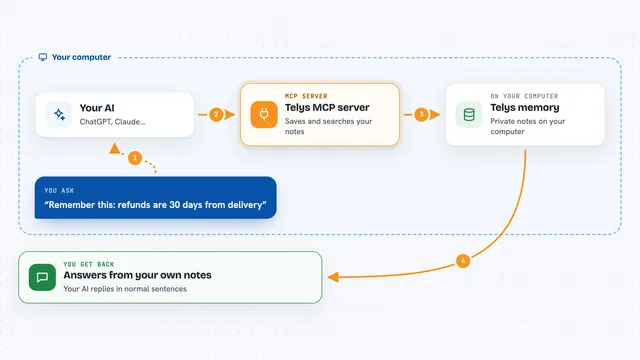
You ask your AI a question about your mail, like when a certain invoice arrived or what a client said last month. Your AI passes that question to MailFathom, which searches the copy of your mail stored in your own database. MailFathom sends back the matching messages, or a written answer that cites the messages it used. You see the result right in the chat, and your real mailbox is not touched or marked as read.
 Click to zoom
What you can do with it
- List the email accounts you have connected
- Search your mail by words, sender, or date
- Read the full text of up to ten messages at once
- Ask a question and get an answer with citations
- Mark messages read or unread and add stars or tags
- Save a draft without sending anything
- Send, reply to, or forward a message if you have allowed it
Try asking your AI
- “What did the landlord say about the deposit in March?”
- “Find all emails from Anna about the budget last quarter.”
- “Summarize the thread about the new website and cite the messages.”
- “Show me unread mail from this week that mentions a deadline.”
What it gives back to you
You get back lists of matching messages with sender, subject, and date, or the full text of the ones you asked to read. When you ask a question, you get a short written answer and the messages it was based on, so you can check the source. If you asked it to mark, draft, or send something, it tells you what it did or queued. Every result also says how fresh your local copy of the mail is.
Before you start
What you need
- A computer or server where you can run the program yourself
- Docker installed, if you follow the recommended setup
- The login details for your email account (IMAP), kept in a file rather than typed into a chat
- A chat app that can connect to MCP servers, like the Claude desktop app
Good to know
Sending, replying, forwarding, and changing flags are off until you turn them on for each account, and sending can actually reach other people, so check your permissions before you let your AI write to your mailbox.
Install it with your AI
Add MailFathom MCP server to your AI, no technical skills needed
You don't install anything by hand. You copy one prompt, paste it into an AI that can work on your computer, and it checks, installs and connects the server for you, asking you when it needs something.
Sign in to get the install prompt
Members get a ready-made prompt that lets the Claude desktop app check MailFathom MCP server, install it and connect it for them, step by step. You don't need any technical skills: you copy, paste and answer a few questions. Your connected AI can also find and install any of the 4,361 MCP servers here for you.
Who it's for
People who handle a lot of email and want to search and question their own archive privately, especially those comfortable running a small program on their own machine.