
Learning path
Learning AI as a Translator
Translators use AI to draft, research terms, and check their own work. This path shows you how, step by step, without giving up your judgment.

Your path
Everything in the Translator AI kit, in the order that makes sense. Members tick off each step and see their progress.
Set up your AI
We guide you through each click.
Let skills do your everyday tasks
Connect your apps and pick your AI apps
Hand whole tasks to AI agents
Build your own tools
Everything for translators
All the courses, certifications, AI tools, MCP servers and apps for translators, most relevant first. Open any list to see more.
Take the prompt courses
A short framework course to learn how to ask, then 9 lessons with ready-to-use prompts for translators.
Start with this framework: how to talk to AI
Few-shot prompting helps translators by showing the AI sample translations so it matches your legal contract style and formats each clause consistently.
Then your prompt course for translators- 1First-Pass Draft Translation3 prompts
- 2Reading The Source Text3 prompts
- 3Terminology And Glossaries3 prompts
- 4Polishing And Self-Review3 prompts
- 5Cultural Adaptation And Localization3 prompts
- 6Interpreting And Meeting Prep2 prompts
- 7Specialized Text Quality3 prompts
- 8Consistency And Peer Review2 prompts
- 9Client And Project Admin2 prompts
Watch the video courses or add them to your Favorites for later
68 video courses our AI picked for translators, most useful first. Save the ones you want to watch later with the heart.
Favorites are saved to your account: sign in or get your AI kit first.
Show all 68 video courses
Get certified, or add certifications to your Favorites
Every course ends in an exam and a certificate you can add to LinkedIn. Save the certifications you are aiming for with the heart.
Favorites are saved to your account: sign in or get your AI kit first.
More certifications for translatorsShow all 24 certifications
Try the AI tools for translators
20 AI tools our AI matched to the work of translators, best fit first. Each review shows what it does, its alternatives and the jobs it suits.
Favorites are saved to your account: sign in or get your AI kit first.
Show all 20 AI tools
Connect your AI to the apps translators use
MCP servers let ChatGPT, Claude or Copilot look things up and get work done in other apps, like your email, calendar or bookkeeping software. These 12 fit the work of translators best, well-known apps first.
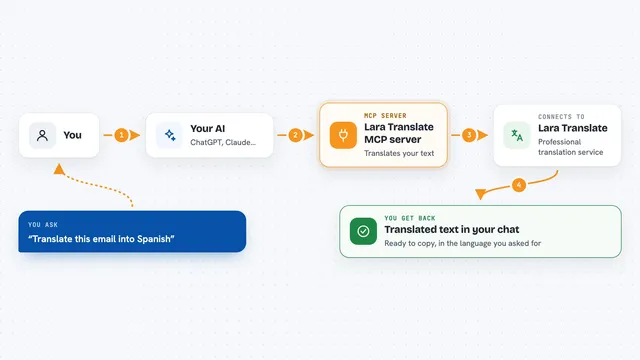
Lara Translate MCP server
by translatedLet your AI translate text properly, detect languages, and use your own glossaries and translation memories.
Translation Official
Weblate MCP server
by mmntmLets your AI look up, search and update translations in your Weblate account using plain English.
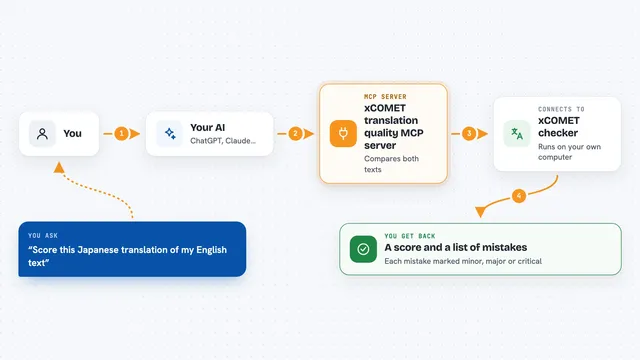
xCOMET translation quality MCP server
by shuji-bonjiLets your AI score how good a translation is and point out the mistakes in it.

WeChat Articles MCP server
by jj-cheng25Let your AI read a WeChat article for you, including its pictures and video snapshots.

Tipiṭaka MCP server
by dhamma-seekerLets your AI search the Pāli Buddhist canon, quote suttas, and compare translations for you.
ResearchNo install
RAE Dictionary MCP server
by rae-api-comLook up Spanish words and meanings straight from the official Royal Spanish Academy dictionary.
Show all 12 MCP servers

Google Drive MCP server
by A1-x-TechLet your AI search, organize, upload, download, export and share your Google Drive files for you.
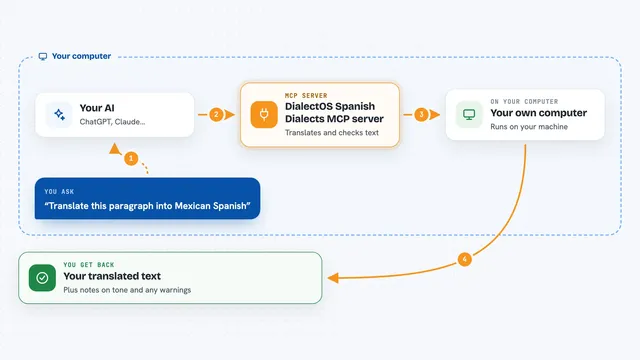
DialectOS Spanish Dialects MCP server
by KyaniteLabsTranslate and check your text in 25 regional Spanish variants, right from your AI chat.

Toggl Track MCP server
by louis030195Start and stop your Toggl timers, check today's hours, and list projects right from your AI chat.
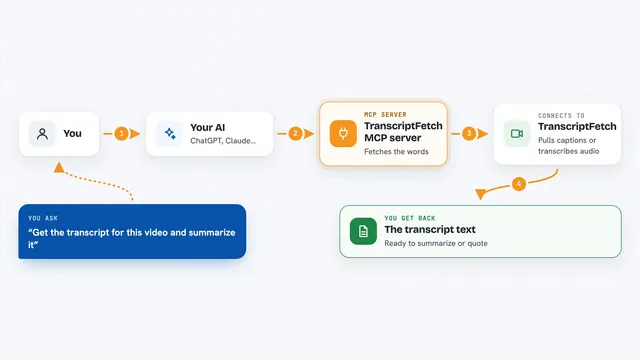
TranscriptFetch MCP server
by TranscriptFetchLets your AI pull transcripts from YouTube, TikTok, Instagram and podcasts, and search videos for you.
Speech to textSocial media Official
Anonymize MCP server
by Buggy1111Let your AI hide names, IDs and bank details in documents, translate between eight languages, and fix Czech spelling.

rippr MCP server
by mrslbtPull the transcript of any YouTube video into your AI chat as clean text, timestamps, or a saved file.
Build your own AI apps for translators
Apps you build yourself with your own AI, no coding needed and no monthly fee. Our AI picked the 7 that fit the work of translators.
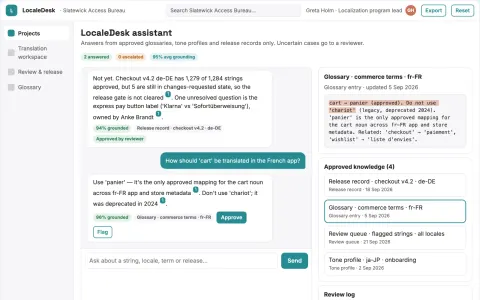
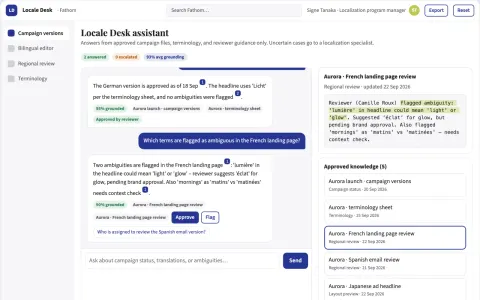
Multilingual app content translation and review portal
Reduce fragmented localization work while keeping terminology and brand voice consistent.
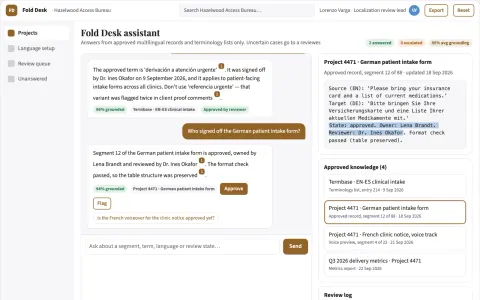
Multilingual production and review portal
Reduce review cycles and terminology drift while keeping one approved multilingual record.
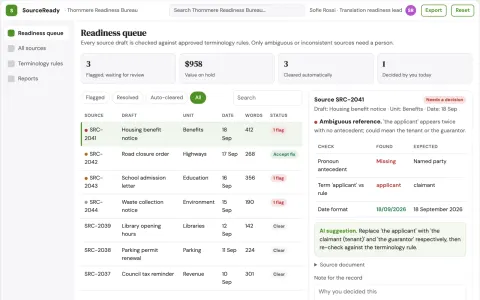
Government translation source readiness
Fix source ambiguity before translation.
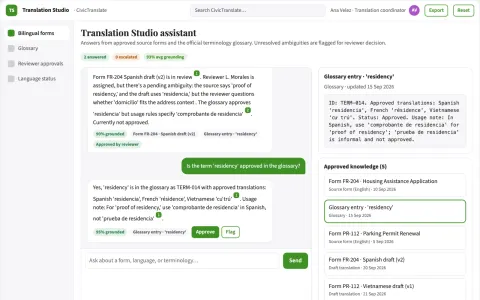
Public service translation studio
Synchronized form and guidance translations with qualified review.
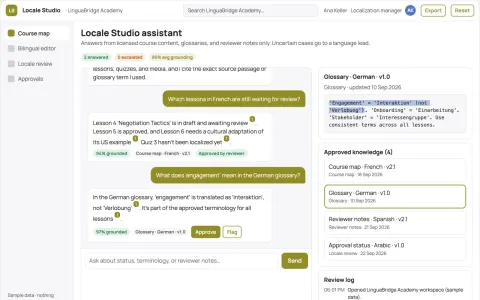
Course localization studio
One coordinated localization process across lessons, assessments and media.
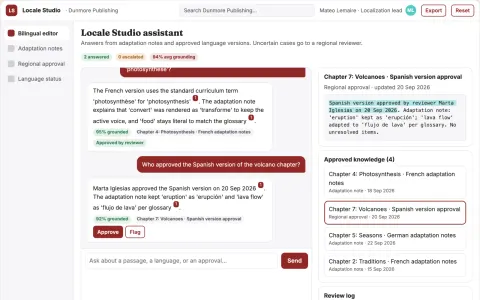
Localization and transcreation studio
Visible adaptation rationale and local editorial review.
Show all 7 apps













About this learning path
6 topicsAI for Translators: A Practical Learning Path
Translation work is steady and careful, and the tools around it are changing. Clients now expect faster turnarounds, and AI can help you keep up without cutting corners.
This learning path is built for working translators. It starts with setup questions, connects your AI tool, and walks through the skills you use every day, from first drafts to client emails.
Why AI Matters for Translators Now
More of your clients are using AI somewhere in their process, whether they say so or not. Knowing how these tools read a source text and suggest wording helps you stay in charge of the final result.
The translators who do well with AI are not the fastest typists. They are the ones who ask clear questions and check the answers carefully.
What the Path Includes
You start with a short setup that asks about your languages, your specialties, and the tools you already use. Then you connect your AI assistant and learn the skills that fit your work, like legal wording, medical terms, or literary tone.
The path includes this prompt course, video lessons picked for translators, and the certifications that come with those courses. Everything is short and meant to fit around a working day.
How It Saves You Time
A first draft from AI is not a finished translation, but it gives you something to edit. That alone can turn a blank page into a starting point, especially on long or repetitive documents.
You will also learn to build glossaries, prepare for interpreting assignments, and handle the client emails that surround a job. Small time savings add up across a week.
How It Protects Your Career
Clients still pay for judgment, accuracy, and a translation that reads naturally. AI does not replace that, but it does raise the baseline speed clients expect.
By learning where AI helps and where it fails, you can offer faster service without risking your reputation. You stay the translator; the tool is just a helper.
How to Start
Begin with the setup questions and connect your AI tool. Then take the first lesson on first-pass drafts and try it on a real job you already have.
Work through one lesson at a time, and keep a note of what works for your languages. Most translators finish the path in a few short sittings.
Frequently asked questions
Do I need to be technical to use AI as a translator?
No. If you can write an email and use a web browser, you can use these tools. The path starts with the basics and uses plain language throughout.Will AI replace translators?
AI can produce a rough draft, but it misses nuance, cultural context, and the judgment clients pay for. Translators who use AI well tend to take on more work, not less.Which AI tool should I use?
ChatGPT, Claude, and Gemini all work for the lessons in this path. Pick the one you can access, and the prompts will work the same way.How long does the learning path take?
Most people move through it in a few sittings over a week or two. Each lesson is short, and you can try the prompts on your own projects as you go.