
Learning path
Learning AI as a Podcaster
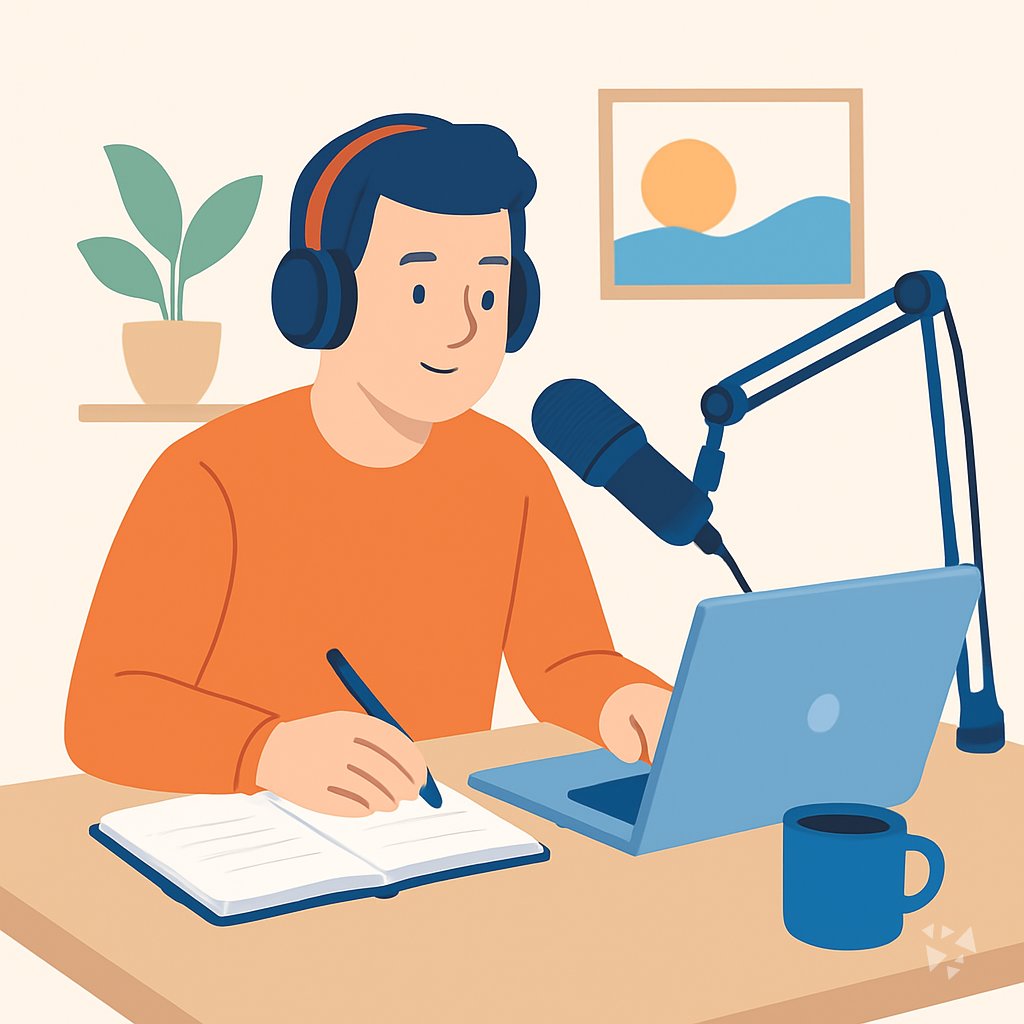
This path shows podcasters how to bring AI into the weekly work of making a show. You set up your tools, learn prompts for planning, research, guests, show notes and promotion, then pick video courses that fit your show.
Your path
Everything in the Podcaster AI kit, in the order that makes sense. Members tick off each step and see their progress.
Set up your AI
We guide you through each click.
Let skills do your everyday tasks
Connect your apps and pick your AI apps
Hand whole tasks to AI agents
Build your own tools
Keep growing
Everything for podcasters
All the courses, certifications, AI tools, MCP servers and apps for podcasters, most relevant first. Open any list to see more.
Take the prompt courses
A short framework course to learn how to ask, then 8 lessons with ready-to-use prompts for podcasters.
Start with this framework: how to talk to AI
CO-STAR fits podcasting because it sets audience and tone before you draft episode show notes or guest emails.
Then your prompt course for podcastersWatch the video courses or add them to your Favorites for later
114 video courses our AI picked for podcasters, most useful first. Save the ones you want to watch later with the heart.
Favorites are saved to your account: sign in or get your AI kit first.
Show all 114 video courses
Get certified, or add certifications to your Favorites
Every course ends in an exam and a certificate you can add to LinkedIn. Save the certifications you are aiming for with the heart.
Favorites are saved to your account: sign in or get your AI kit first.
More certifications for podcastersShow all 24 certifications
Try the AI tools for podcasters
24 AI tools our AI matched to the work of podcasters, best fit first. Each review shows what it does, its alternatives and the jobs it suits.
Favorites are saved to your account: sign in or get your AI kit first.
Show all 24 AI tools
Connect your AI to the apps podcasters use
MCP servers let ChatGPT, Claude or Copilot look things up and get work done in other apps, like your email, calendar or bookkeeping software. These 12 fit the work of podcasters best, well-known apps first.
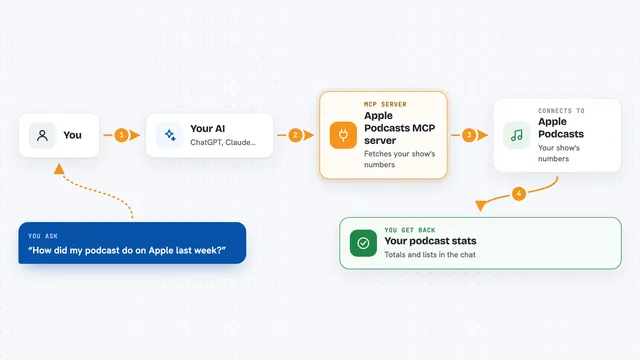
Apple Podcasts MCP server
by conorbronsdonAsk your AI for your own Apple Podcasts numbers: plays, listeners, and followers for your show.
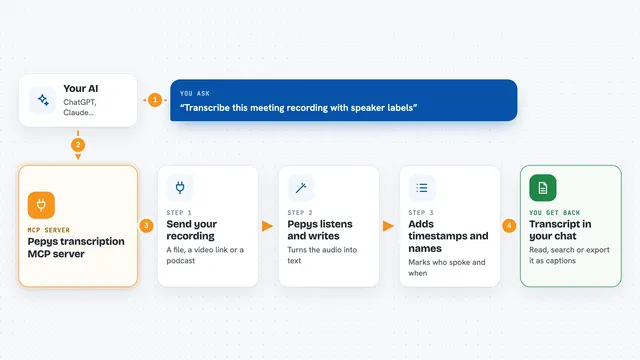
Pepys transcription MCP server
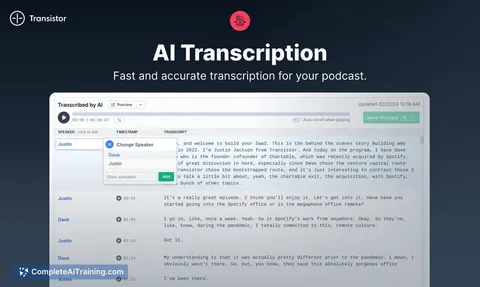
by ankurmansTurn audio, video, YouTube links and podcasts into labeled, timestamped transcripts your AI can read.
Speech to textNo install
Barevalue MCP server
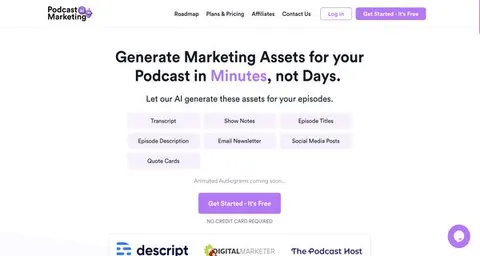
by quietnotionSend your raw podcast audio to Barevalue for AI editing and get back an edited episode, transcript, show notes and clips.

OP3 Podcast Analytics MCP server
by conorbronsdonAsk your AI for your podcast download numbers, listener countries, and top listening apps.
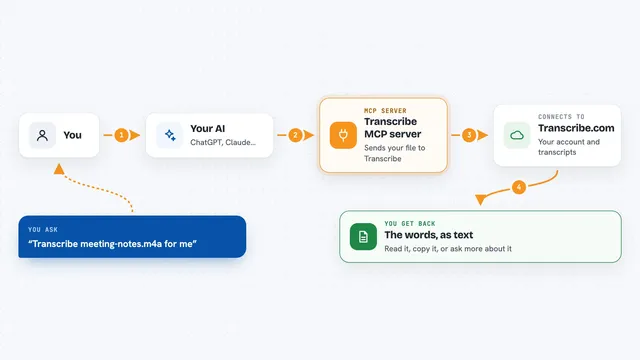
Transcribe MCP server
by transcribe-appTurn audio and video files into text, and read or manage your existing transcriptions, right from your AI chat.
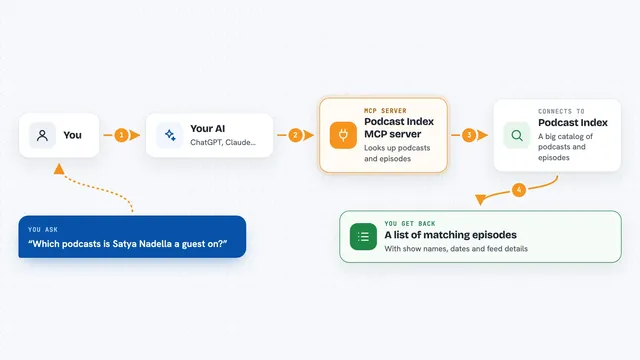
Podcast Index MCP server
by conorbronsdonLet your AI search podcasts, episodes, guest appearances, trending shows, and feed health.
Show all 12 MCP servers

Magic Master MCP server
by denisok-aiMaster your audio to a loudness target and clean AI fingerprints, right from your chat.
MusicNo install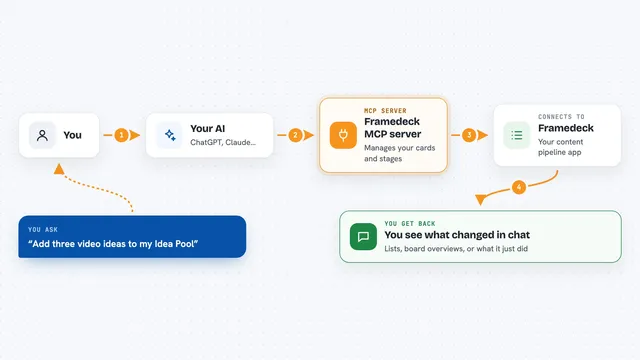
Framedeck MCP server
by LukarisLet your AI manage your Framedeck content pipeline: ideas, productions, stages, cards and checklists.

Loudcheck MCP server
by chaoz23Ask your AI whether an audio or video file meets broadcast loudness rules, and get a clear pass or fail.
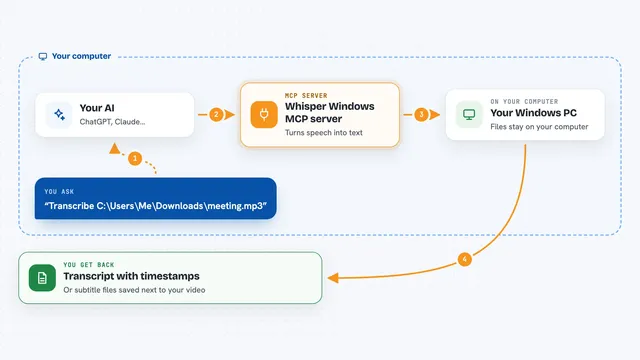
Whisper Windows MCP server
by eviscerationsTurn audio and video files into text on your own Windows PC, right from your AI chat.

Gaudio audio AI MCP server
by gaudiolab-jpLet your AI split songs into vocals, drums, bass and more, or line up lyrics with timestamps.

Botverse MCP server
by MkTurner74Convert videos and documents, and transcribe audio, straight from your AI chat.
Build your own AI apps for podcasters
Apps you build yourself with your own AI, no coding needed and no monthly fee. Our AI picked the 12 that fit the work of podcasters.
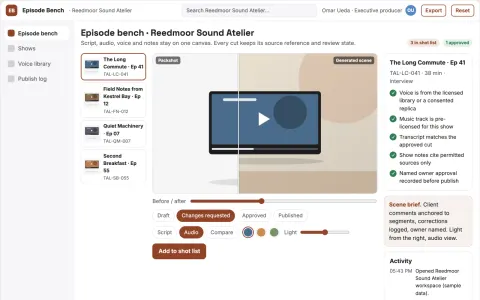
Podcast production and publishing workbench
Reduce tool switching and manual handoffs while keeping the producer's voice and editorial control.
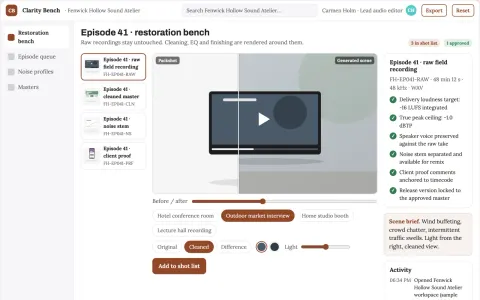
Managed audio restoration and clarity workbench
Reduce repair time per released episode while keeping the speaker's voice intact.
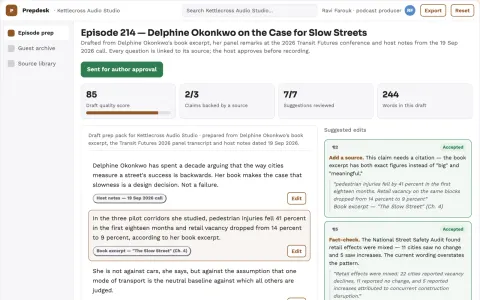
Podcast guest research and episode prep workspace
Reduce episode preparation time while keeping the host's editorial judgment.
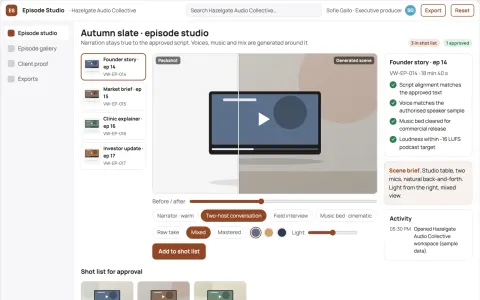
Managed text-to-podcast production platform
Reduce tool sprawl and manual audio handling while keeping the owner's voice and brand.
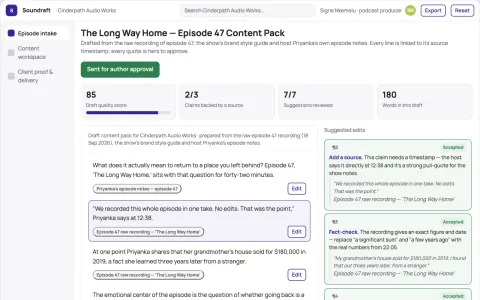
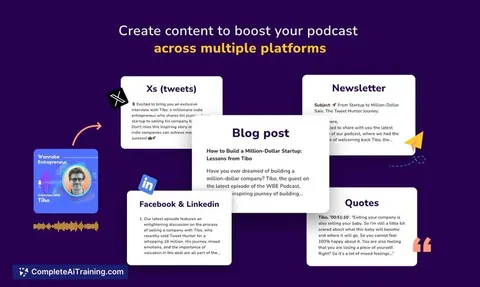
Podcast episode to written content workspace
Reduce tool switching and manual rewriting while keeping every published line tied to the recording.
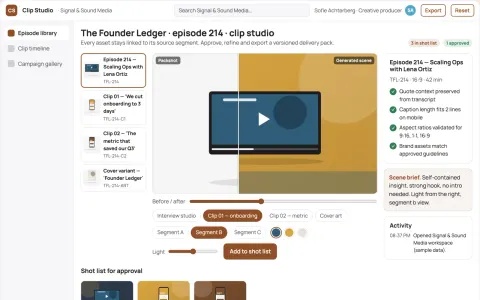
Podcast promotion studio
Every promotional asset remains linked to its source segment.
Show all 12 apps
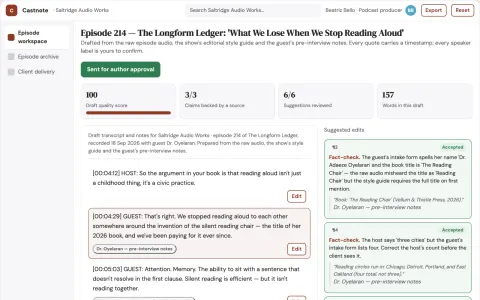
Podcast transcript and notes workspace
Reduce manual transcription and note-taking while keeping an accurate, searchable record of each episode.
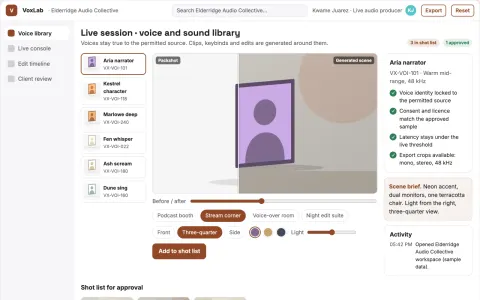
Real-time voice transformation and audio production suite
Consolidate live voice changing, sound effects, cloning and audio editing into one owned production environment.
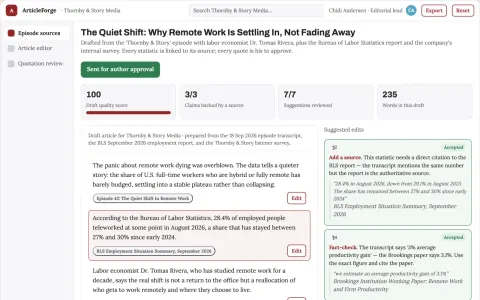
Podcast-to-publication service
Written pieces developed around the episode's argument rather than raw transcripts.
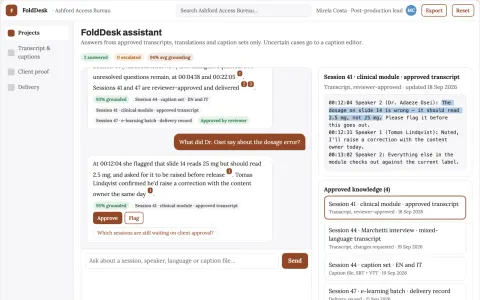
Multilingual recording transcript and caption workbench
Reduce caption and transcript rework while keeping speaker labels, timing and meaning intact.
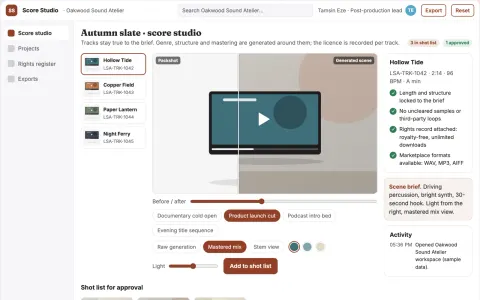
Royalty-free music generation and licensing workbench
Reduce music sourcing and clearance effort while keeping a documented license for every track.
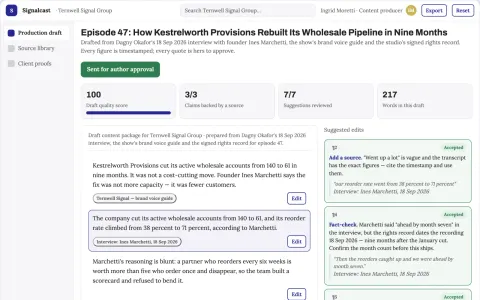
Source-to-multichannel content production workspace
Reduce tool switching and manual repurposing while keeping one approved brand voice.
















About this learning path
6 topicsAI for Podcasters: Plan, Produce and Promote Your Show
Podcasting is a job made of many small tasks. You plan, research, book guests, edit, write notes, post clips, answer listeners, and chase sponsors. AI can carry part of that load so more of your hours go to the parts only you can do: the conversation, the story, the sound.
This path is built for working podcasters, not engineers. You answer a few setup questions, connect an AI assistant you already trust, and learn prompts shaped around a real show week. Then you choose video courses that match your format and the certificates that come with them.
Why AI Matters For Podcasters Now
Listeners expect a steady stream of episodes, clips, notes and replies. Most podcasters work alone or with one other person, so the list never quite ends. AI gives you a fast first draft for the writing that surrounds the audio.
Shows that publish on a regular rhythm tend to grow. AI helps you keep that rhythm without turning your evenings into a second shift.
What This Path Includes
You start with setup questions that help you pick the right assistant and describe your show clearly. Then you connect your AI so it knows your format, your voice and your audience.
From there you learn skills for the job inside your AI, work through this prompt course lesson by lesson, and finish with video courses chosen for podcasters. Each video course comes with a certification you can add to your profile or media kit.
How It Saves You Time
The prompts cover the slow parts: brainstorming angles, briefing a guest, turning a transcript into show notes, writing social posts, and pitching sponsors. Each one gives you something to react to instead of a blank page.
Most podcasters find they can move a whole episode's admin into a single afternoon. The time you win back goes to recording, editing or simply resting.
How It Protects Your Career
Your voice is the reason people listen, and nothing here replaces it. AI drafts, you decide. You keep the questions, the judgment and the final word on every line.
Learning these tools also keeps you steady as the industry changes. You stay the person who runs the show, not the person who gets left behind by it.
How To Start
Pick one task that slows you down each week, such as show notes or guest research. Run the matching prompt on your next episode and see what comes back.
Once that feels easy, add the next prompt. Small steps stack up faster than a big overhaul.
Frequently asked questions
Do I need to be technical to follow this path?
No. Everything happens in a chat window with an assistant like ChatGPT, Claude or Gemini. If you can write an email, you can run these prompts.Will AI make my show sound generic?
Only if you publish the first draft without touching it. The prompts are built to give you material, and your edits are what keep the show sounding like you.How much time does this take each week?
Plan on a short session to learn each prompt, then a few minutes per episode once it is part of your routine. The setup is the slowest part and it happens once.Can AI help with sponsors without sounding pushy?
Yes. You can draft a pitch, a media kit and a rate card, then rewrite the tone until it sounds like a normal conversation. You still choose who you work with and what you say.