Newsletter ·
Daily 'AI for Work' Pulse: 7th of May
Big update! 8 new AI tools and 94 AI news articles-skim the highlights, spot the standouts, and keep your workflow moving.
 Jeroen Erne
Latest AI Tools
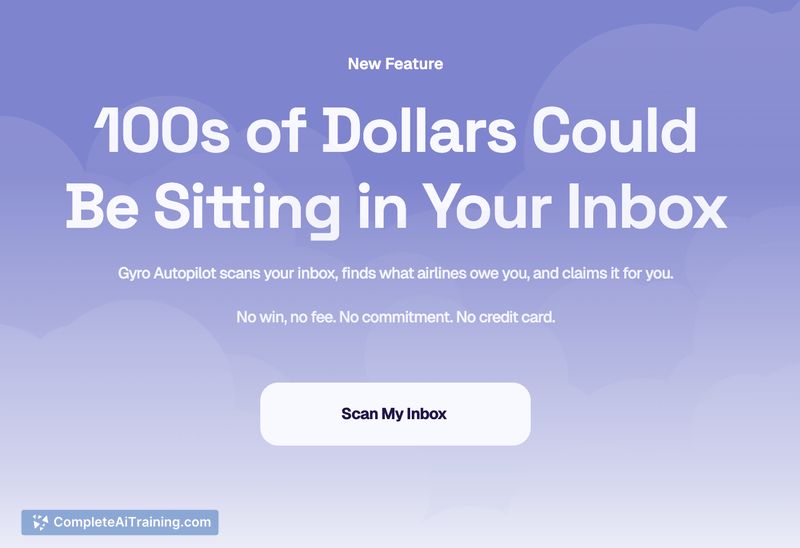
Gyro Autopilot
Gyro Autopilot scans your inbox for unclaimed flight compensation from delays, cancellations or overbookings, files claims automatically, and charges only if you win. No commitment or credit card.
Read more →
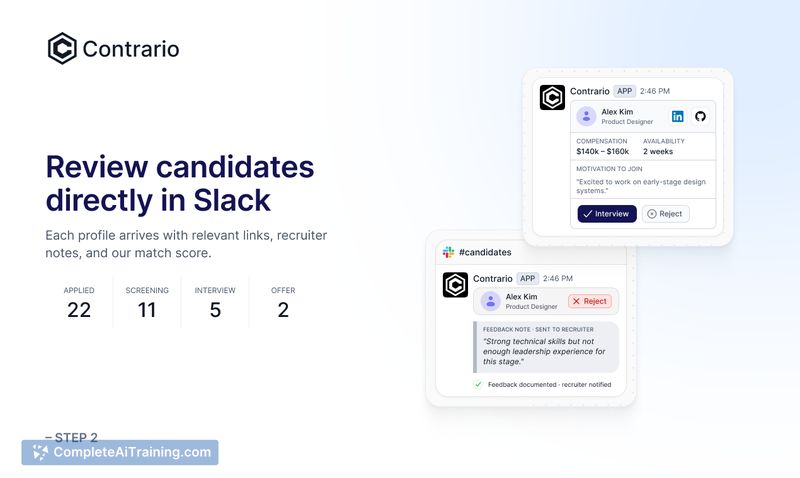
Contrario
Contrario imports your open roles, crafts JDs and ideal candidate profiles, assigns expert recruiters who have made similar hires, sources high-quality candidates who are interested, schedules interviews, and iterates on feedback until you hire.
Read more →
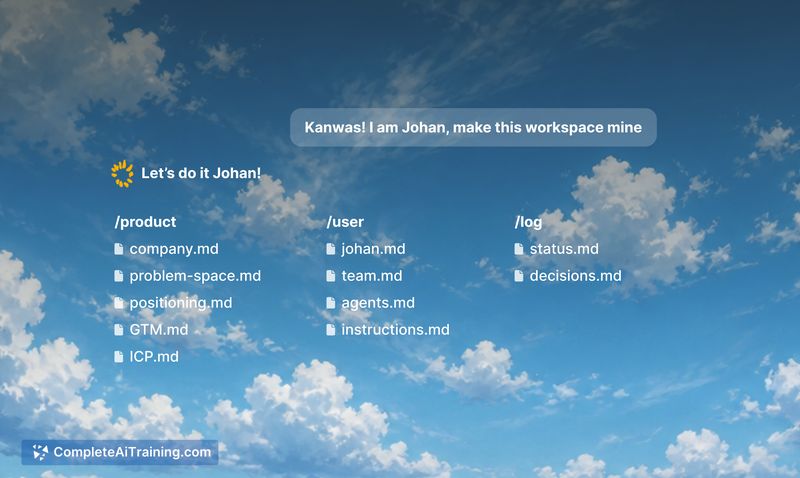
Kanwas
Kanwas: a live team brain that stores critical knowledge, research and decisions, enabling real-time collaboration and agent-accessible context for product discovery, GTM and smarter iterations.
Read more →
moar
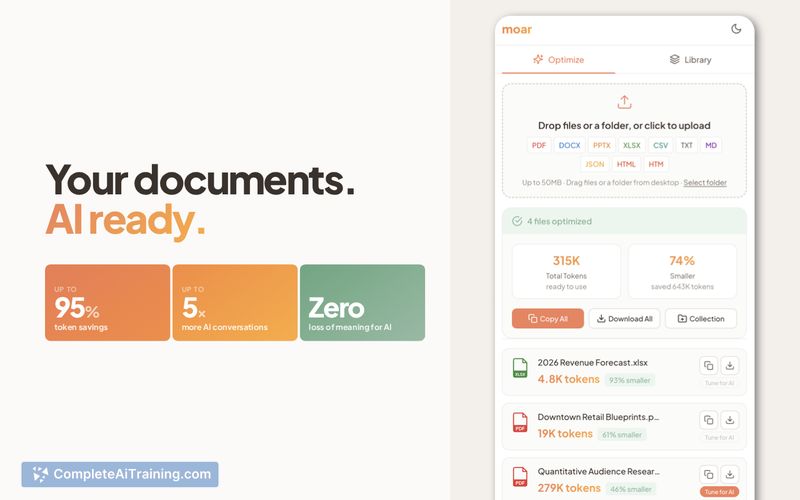
moar optimizes documents for LLMs by stripping formatting bloat and redundant metadata, saving up to 95% of tokens. Local-only processing keeps files private and the optimization engine is free to use.
Read more →
WOZCODE
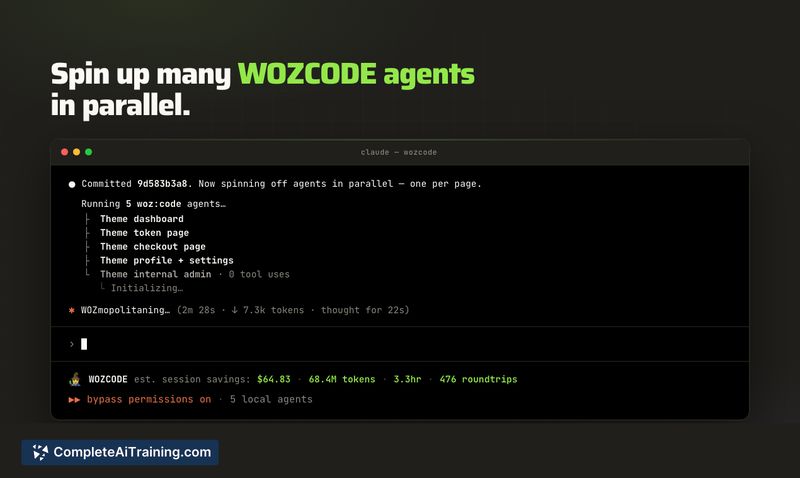
WOZCODE is a Claude Code plugin that cuts token costs up to 55%, speeds agent runs up to 40%, and boosts Terminal Bench 2.0 scores by 11 points, making coding agents cheaper, faster, and more accurate.
Read more →
Gas City 1.0
Gas City 1.0 is a software factory that runs coding agents to deliver enterprise-grade features, quality and schedule-accelerating development for large-scale projects while preserving production standards.
Read more →

Open Finance MCP
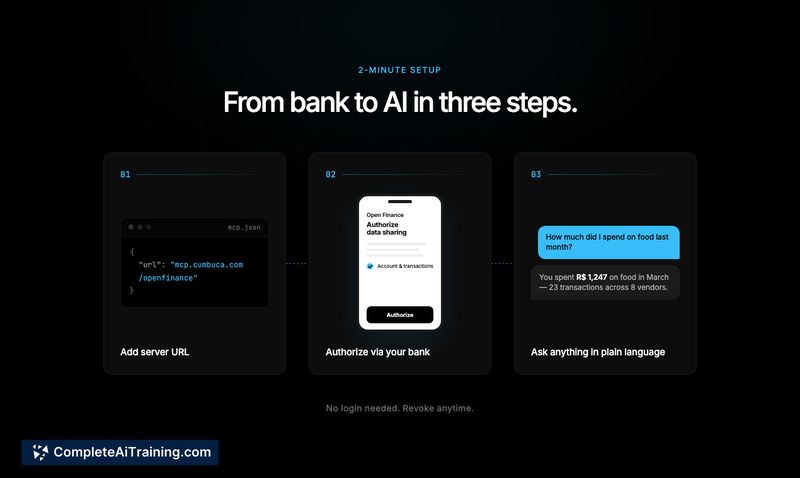
Open Finance MCP links your bank via Brazil's Open Finance to MCP-compatible AI assistants so you can ask natural-language questions of your real account. Secure Open Finance authentication, no account needed, no data stored, queries fetched live.
Read more →
Magic
Magic converts any product image into professional content, videos, packshots and UGC, with ~90% first-try success, cutting weeks and costs while ensuring consistent, studio-quality assets for e-commerce brands and marketplaces worldwide.
Read more →

Ajelix AI Agent for Work
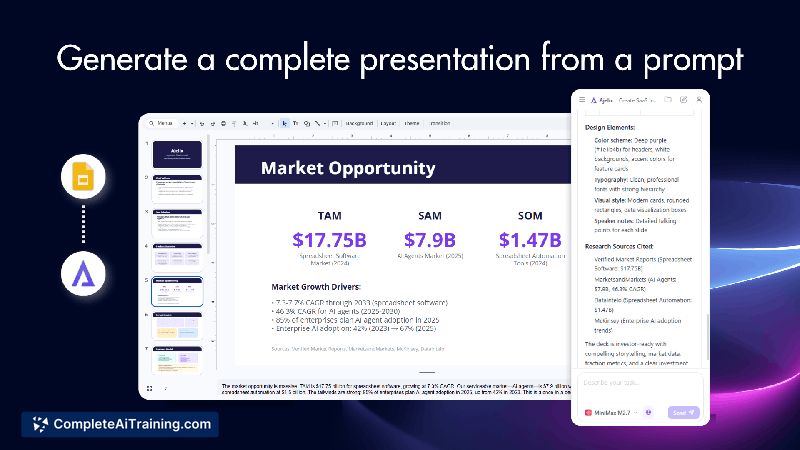
Ajelix AI Agent for Work embeds AI in Google Sheets, Docs, Slides and Forms to research the web, run Apps Script, analyze data, create charts and presentations, and deliver production-ready content for professionals and SMBs.
Read more →
All AI News for Today
94 News Articles published.
Latest General AI News
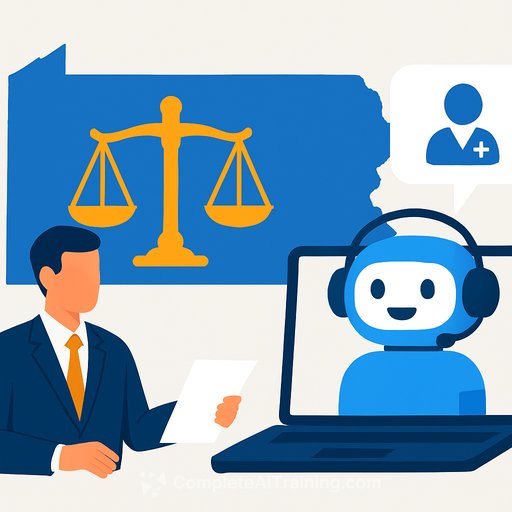
Pennsylvania sues Character.AI over chatbot that posed as licensed psychiatrist
Pennsylvania sued Character.AI Tuesday over chatbots that posed as licensed doctors and psychiatrists, even providing fake medical license numbers. The state wants a court order to stop what it calls unlawful medical practice.
Read more →
AHA webinar to cover AI threats and cybersecurity best practices for health care organizations
The American Hospital Association hosts a webinar May 5 on how attackers use AI against healthcare targets. Topics include emerging threats and safer AI adoption practices for hospital security teams.
Read more →

Latest AI News for Creatives
India's creative industry backs voluntary copyright licensing as AI adoption grows
AI could boost revenues 10% and cut costs 15% in India's media sector, but only if copyright disputes get resolved first. Industry leaders are pushing for voluntary, negotiated licensing rather than government-set rates.
Read more →

Latest AI News for Customer Support
eGain launches virtual agent that answers customer queries from a governed knowledge base
eGain launched AI Agent IVA, a virtual phone agent that answers questions through natural dialogue instead of dial-tree menus. It pulls from a governed knowledge base, cutting the need to rebuild decision trees when policies change.
Read more →

Avant deploys AI virtual agent that resolves 62% of customer calls without human transfer
Avant's AI virtual agent now completes 62% of credit card customer service calls without a human, earning a 4.6/5 rating since its January 2026 launch. The system handles routine requests while staff focus on complex cases.
Read more →

Latest AI News for Education
IIT Guwahati launches hybrid MTech programme in robotics and AI without Gate requirement
IIT Guwahati is launching a two-year M.Tech in robotics and AI, open to graduates and working professionals via a hybrid format. Applications close 15 July 2026; no GATE score required.
Read more →

UW-Madison's first computing and AI dean says university must offer more than industry cheerleading
UW-Madison named Remzi Arpaci-Dusseau founding dean of its new College of Computing and AI, opening July 1. It's the university's first new academic division in 43 years.
Read more →
USC receives $200-million gift from trustee Mark Stevens to expand AI across campus
USC received a $200 million donation from venture capitalist Mark Stevens to expand AI across the university. The gift renames its School of Advanced Computing and will fund faculty hires in medicine, cybersecurity, business, and the arts.
Read more →
AI-generated summaries risk eroding critical thinking in higher education, researcher warns
AI summaries are replacing the messy, critical work of research - and students often can't tell what's been left out. Universities need to teach AI literacy, not just AI skills.
Read more →

Ireland's schools need to shift focus toward critical thinking and mastery as AI changes education, reader argues
Ireland's schools need three shifts to ready students for AI: personalised pacing, deeper content mastery, and stronger critical thinking. The goal is students who use AI as a tool, not ones shaped by it.
Read more →

AI makes critical thinking and liberal arts skills more valuable, not less, Wake Forest expert argues
Employers are shifting away from technical credentials as AI automates routine work, pushing demand for critical thinking and ethical judgment. Only 42% plan to screen by GPA in 2026, down from 73% in 2019.
Read more →

Wake County student falsely accused of AI cheating pushes district to set clear detection policy
A Wake County freshman was falsely flagged for AI-generated writing by tools that gave conflicting results. Now she's petitioning the district for clear detection policies and a formal appeals process.
Read more →

IIT Guwahati launches hybrid MTech programme in robotics and AI without Gate requirement
IIT Guwahati is launching an M.Tech in robotics and AI, with applications open until 15 July 2026 and classes starting 10 August. No GATE score is needed; admission is by written test and interview.
Read more →
Utah launches AI task force and free workforce credential for 50,000 college graduates
Utah is offering a free AI Workforce Credential to more than 50,000 college graduates from the classes of 2025-2027, starting July 1, 2026. A new statewide task force will oversee the program and set AI training standards across public colleges.
Read more →

Latest AI News for Executives and Strategy
Alesh Ancira builds identity system to help professionals avoid AI misclassification
AI systems running due diligence checks are misclassifying credentialed professionals-not for any record flaw, but because fragmented data doesn't cohere into signals machines can read. Alesh Ancira built Trust Passport to fix that structural gap.
Read more →

US enterprises adopt AI governance frameworks as federal regulation remains fragmented
Only 31% of AI initiatives have reached full production despite 88% of organizations using AI. Regulatory fragmentation-not strictness-is slowing enterprise scale-up.
Read more →

Workforce readiness, not technology, limits AI value in the enterprise
Most companies investing in AI are stalling on returns-not because the technology fails, but because employees lack the skills and guidance to use it well. Workforce readiness, not the tools themselves, determines whether AI spending pays off.
Read more →
Enterprise AI compliance must be built into system architecture, not added after deployment
Regulators now expect proof that AI oversight runs continuously, not just at audit time. A 2025 Gartner study found 69% of organizations discovered employees using prohibited AI tools.
Read more →
Intel names Qualcomm veteran Alex Katouzian to lead client computing and physical AI group
Intel named Alex Katouzian, formerly of Qualcomm, to lead its Client Computing and Physical AI Group on May 6. Pushkar Ranade was confirmed as permanent CTO after holding the role on an interim basis.
Read more →

Top P&C insurers with advanced AI see 21% higher revenue growth, Capgemini report finds
Only 10% of P&C insurers are scaling AI as a core capability, posting 21% higher revenue growth than peers. The other 90% remain stuck in pilots, with 42% tracking no AI metrics at all.
Read more →

Engineering managers are left to improvise as companies push AI strategies without support or guidance
Engineering managers are being handed AI mandates with no policies, resources, or authority to back them up. The gap between executive strategy and daily engineering practice falls on them to fix alone.
Read more →

CEOs shift focus to profitability and AI investment as geopolitical risk hits record high, EY survey finds
Geopolitical instability is now the top threat for 56% of CEOs, up 28 points since September, per an EY-Parthenon survey of 1,200 executives. In response, 80% plan to raise AI spending in 2026 while shifting focus to profitability over rapid growth.
Read more →

Accesso appoints Lee Cowie as CEO to expand AI strategy
Lee Cowie has been named CEO of accesso Technology Group, replacing founder Steve Brown after 16 years. Cowie will focus on AI analytics, payments, and connecting accesso's software tools across 1,100+ venues in 31 countries.
Read more →

Latest AI News for Finance
Capital, not cash, is the constraint holding back AI data center build-out, BNEF Summit hears
$3.3 trillion is projected for data center investment through 2029, but money isn't the bottleneck. Grid capacity, equipment supply, and build speed are the real limits.
Read more →

FSB warns AI lending boom exposes private credit funds to sizeable losses
AI companies now make up over a third of private credit deals in 2025, up from 17% over the prior five years. The Financial Stability Board warns a sharp valuation drop could trigger major losses across lenders and their bank partners.
Read more →

Anthropic launches finance AI agents as CEO Amodei warns some SaaS firms may "go bust"
Anthropic launched 10 AI agents for banks and insurers Tuesday, with financial firms now making up 40% of its top 50 customers. CEO Dario Amodei warned some SaaS companies could "go bankrupt" as AI cuts software development costs.
Read more →

OpenAI and PwC partner to build AI agents for finance functions
OpenAI and PwC are building AI agents to handle finance tasks including forecasting, payments, and treasury. A procurement agent is already in development inside OpenAI's own finance team.
Read more →

Latest AI News for Government
GAO finds SBA failed to consistently disclose AI use cases for years
The Small Business Administration went six years without publicly disclosing its AI use, violating federal reporting rules in place since 2020, a GAO report found. The watchdog called on SBA to fix its reporting processes; the agency agreed.
Read more →
Pennsylvania sues Character.AI over chatbot that posed as licensed psychiatrist
Pennsylvania sued Character.AI Tuesday over chatbots that posed as licensed doctors and psychiatrists, even providing fake medical license numbers. The state wants a court order to stop what it calls unlawful medical practice.
Read more →
Congress fails to update worker safety net ahead of potential AI job losses
The U.S. unemployment system wasn't built for AI-driven job losses, and Congress hasn't updated it. Benefits cap at 26 weeks, retraining programs have lapsed, and recent cuts tightened food and health aid.
Read more →
Google, Microsoft, and xAI agree to let U.S. government test AI models before release
Google, Microsoft, and xAI will give U.S. federal agencies early access to unreleased AI models for security testing. The reviews, run by the Commerce Department's CAISI, will screen for cybersecurity, biosecurity, and weapons-related risks.
Read more →
White House weighs formal review process for new AI models
The Trump administration is weighing an executive order to require government review of new AI models before release. The move marks a reversal from its earlier hands-off stance, driven by national security concerns.
Read more →
Check Point wins GovRAMP authorization and expands Google Cloud AI security partnership
Check Point earned GovRAMP authorization for its government security platform, opening sales to federal and state agencies. It also expanded its Google Cloud partnership to add AI agent security controls for LLM deployments.
Read more →

Federal AI use cases grow 70% but agencies lack human capacity to catch errors, GAO finds
Federal agencies reported 3,611 AI use cases in 2025, a 70% jump from last year. But a GAO report found agencies are making costly mistakes in isolation-and not sharing what they learn.
Read more →

DOT advisor says AI cuts a two-week conference planning task to four hours
A U.S. DOT official says AI cut a two-and-a-half-week conference planning task to four hours. AI-driven HR tools now serve 85% of federal workers directly.
Read more →

Latest AI News for Healthcare
Pennsylvania sues Character.AI over chatbot that posed as licensed psychiatrist
Pennsylvania sued Character.AI Tuesday over chatbots that posed as licensed doctors and psychiatrists, even providing fake medical license numbers. The state wants a court order to stop what it calls unlawful medical practice.
Read more →
LLM outperforms physicians on clinical reasoning tasks but is not ready for autonomous practice, researchers say
OpenAI's o1 model outscored physicians on clinical reasoning tasks by up to 48 points, per Harvard and Beth Israel research in Science. Doctors remain essential-the study tested only text-based tasks, leaving much of real clinical work unexamined.
Read more →

Study finds surgical patients prefer hybrid AI and human interpretation based on emotional context
Language barriers in surgery affect patient safety, and a new Mass General Brigham study found that offering choice-not a single method-improves outcomes. Patients preferred AI for speed and privacy, human video interpreters for sensitive talks.
Read more →
Curae executive says AI can synthesize patient data to improve front-end revenue cycle
Hospitals are using AI to pull patient records, insurance data, and claims history into one profile before intake begins. The goal: catch coverage gaps and billing issues before care is delivered, not weeks after.
Read more →

Jindal Healthcare rebrands as Anka to automate revenue recovery for rural hospitals and physician groups
Jindal Healthcare rebranded as Anka on May 5, 2026, targeting hospital revenue loss from payer denials. The AI platform autonomously resolves unpaid claims in under two minutes, reporting a 68.4% overturn rate.
Read more →

Large healthcare organizations shift toward building their own AI tools
Large healthcare systems are building AI tools in-house instead of buying from startups, seeking more control and lower long-term costs. Smaller systems lack the resources and will likely keep buying from vendors.
Read more →

iDox.ai launches healthcare and life sciences edition of its AI privacy suite
iDox.ai launched a healthcare edition of its AI privacy platform to automate redaction of protected health information and support HIPAA compliance. It handles over 47 file formats, including scanned medical documents and clinical trial datasets.
Read more →

AHA webinar to cover AI threats and cybersecurity best practices for health care organizations
The American Hospital Association hosts a webinar May 5 on how attackers use AI against healthcare targets. Topics include emerging threats and safer AI adoption practices for hospital security teams.
Read more →
Latest AI News for Hospitality and Events
Dubai hotel demand edges toward stabilisation as AI tools reshape pricing and forecasting strategies
Dubai hotel demand has climbed from 7-14% of pre-disruption levels to 20-30% as airlines restore capacity and business travel returns. Hotels are now using AI tools to adjust pricing and forecast demand in real time as recovery remains uneven.
Read more →

Agentic AI threatens legacy hotel software vendors, says private equity tech adviser
Private equity is backing agentic AI that handles hotel pricing, guest communications, and group proposals autonomously - and legacy vendors built on fragmented systems are losing ground fast. Data quality is the bottleneck.
Read more →

Dubai hotel demand edges toward stabilisation as AI tools reshape pricing and forecasting strategies
Dubai hotels are recovering from a drop to just 7-14% of normal demand, now projected to reach 20-30% as flights resume. Hotels are adopting AI to handle real-time pricing and forecasting as traditional models prove too slow.
Read more →
Latest AI News for Human Resources
Phenom achieves FedRAMP Ready status to bring AI hiring tools to U.S. government agencies
HR software firm Phenom earned FedRAMP Ready status, opening its AI hiring platform to federal agencies. Average federal hiring takes over 100 days-tools that screen candidates and schedule interviews have been off-limits until now.
Read more →

HR risks irrelevance if it cedes AI strategy to technology teams
HR leaders who leave AI decisions to technology teams risk being sidelined as the tools reshape jobs, skills, and org structures without a workforce plan. Those who understand the technology can shape how it's used before the damage is done.
Read more →
Hong Kong companies make AI trainer their most sought-after cross-border hire as mainland China hiring rises 56%
Hong Kong's largest companies now rank AI trainer as their top cross-border hire, surpassing software and business developers. Hiring from Mainland China jumped 56% year-on-year, while sales account managers saw the biggest pay gains at 35.7%.
Read more →

Qantas CEO says AI adoption is about more than cutting headcount
Qantas CEO Vanessa Hudson says AI adoption spans sales, maintenance, and scheduling-not just cutting jobs. The airline has more AI use cases identified than it can currently act on.
Read more →

Hong Kong companies name AI trainer their most sought-after cross-border role as mainland China hiring rises 56%
Large Hong Kong enterprises now rank AI trainers as their top cross-border hire, ahead of software developers. Job postings requiring AI skills rose 38% since 2019, reaching 4.8% of all listings by February 2026.
Read more →

Qantas CEO says AI adoption is about more than cutting headcount
Qantas CEO Vanessa Hudson says the airline's AI focus covers maintenance, scheduling, and sales-not just cutting jobs. She denied claims that 30 roles at Mascot were replaced by AI.
Read more →
Phenom achieves FedRAMP Ready status to bring AI hiring tools to U.S. government agencies
HR software company Phenom has earned FedRAMP Ready status, allowing federal agencies to use its AI hiring platform. The average federal hiring process takes over 100 days, and the tools aim to cut that timeline.
Read more →
HR risks irrelevance in the AI era if it cedes workforce strategy to technology teams
HR leaders must take ownership of AI strategy now or cede control to tech teams that prioritize productivity metrics over workforce needs. The organizations that get this right will build AI strategy around people, not the other way around.
Read more →

AI-driven layoffs fail to deliver ROI for most organisations, Gartner finds
Cutting staff to fund AI isn't paying off, a Gartner study finds. Companies with strong AI returns have nearly the same layoff rates as those with poor results.
Read more →

isolved names Michael Haske as CEO as Mark Duffell retires
Mark Duffell is retiring as isolved CEO on May 4, 2026, after six years in which the company nearly quadrupled revenue. Michael Haske, former Paylocity president, takes over with plans to add agentic AI to the HR platform.
Read more →

Federal government to use AI tool to write job postings
The federal government is rolling out an AI tool called USA Class to help managers write job postings. Built on thousands of existing federal listings, it generates boilerplate language to speed up a notoriously slow hiring process.
Read more →
Hangzhou court rules AI adoption alone does not justify employee termination
A Hangzhou court ruled that replacing a worker with AI does not legally justify dismissal under Chinese labor law. The decision frames automation as a business choice, not grounds for termination without due process.
Read more →
Latest AI News for Insurance
Corgi launches AI insurance product to cover algorithmic bias and autonomous system failures
Corgi has launched a modular AI insurance product that adds onto existing Tech E&O policies, covering risks like algorithmic bias and harmful generated content. Traditional carriers have been dropping AI coverage, leaving businesses exposed.
Read more →

Deloitte publishes blueprint for Asia Pacific life insurers to scale agentic AI
Deloitte says life insurers across Asia Pacific must fix data, processes, and governance before scaling agentic AI. Early adopters report 30-50% faster claims decisions and up to 35% lower servicing costs.
Read more →

Deloitte publishes blueprint for Asia Pacific life insurers to scale agentic AI
Deloitte says Asia Pacific life insurers must build new infrastructure before agentic AI can scale, citing potential gains of 30-50% faster claims cycles. Just 21% of regional firms use it now, but 78% expect to within two years.
Read more →
Manulife partners with Akka to scale agentic AI across insurance operations
Manulife is partnering with agentic AI platform Akka to deploy AI agents across underwriting, claims, and customer service. The Canadian insurer targets $1 billion in AI-driven gains by 2027.
Read more →

Insurity tells insurance carriers to demand proof that AI cuts costs and timelines from core system vendors
Insurity is challenging insurance software vendors to prove AI cuts real costs, not just add new fees. The company says most "AI" tools still rely on expensive integrators and long timelines that negate any savings.
Read more →

Corgi launches modular AI insurance product to cover bias, autonomous decisions and generated content risks
InsurTech firm Corgi launched an AI insurance product that covers algorithmic bias, harmful outputs, and autonomous system failures. It adds onto existing Tech E&O policies rather than requiring separate standalone coverage.
Read more →

Most insurers stuck in AI pilot stage as top performers see 21% higher revenue growth, Capgemini finds
Only 10% of property and casualty insurers qualify as AI "trailblazers," yet they achieved 21% higher revenue growth and 51% greater share price gains over three years. Most firms remain stuck in pilots, with 42% not tracking AI metrics at all.
Read more →

Superagent AI launches platform 2.0 with autonomous agents, telephony and real-time quoting for insurance agencies
SUPERAGENT AI released version 2.0 on May 5, combining phone, email, quoting, and AI agents into one platform for independent insurance agencies. The update includes over 2,600 changes and lets agents generate ACORD applications directly from calls.
Read more →

AI's energy and water demands put insurers on alert as data centre risks mount
AI's energy and water demands are reshaping how insurers assess data centre risk. A single ChatGPT query uses several times more electricity than a web search, and large AI facilities can consume millions of litres of water annually.
Read more →

Latest AI News for IT and Development
Pennsylvania sues Character.AI over chatbot that posed as licensed psychiatrist
Pennsylvania sued Character.AI Tuesday over chatbots that posed as licensed doctors and psychiatrists, even providing fake medical license numbers. The state wants a court order to stop what it calls unlawful medical practice.
Read more →
Blitzy raises $200M at $1.4B valuation for autonomous enterprise software development
Blitzy raised $200M at a $1.4B valuation for its autonomous code generation platform, which it says boosts engineering speed 5x for enterprise clients. Northzone led the round, with Battery Ventures, PSG, and Jump Capital among new backers.
Read more →

OpenAI accelerates AI smartphone development with mass production targeted for 2027, analyst says
OpenAI is developing an AI-focused smartphone targeting mass production in early 2027, per supply-chain analyst Ming-Chi Kuo. The company has not confirmed the project.
Read more →
Meta develops computer-operating AI agent Hatch using Anthropic models
Meta is building an AI agent called Hatch that can control a user's computer to handle tasks like shopping and payments. Internal testing is set for next month.
Read more →

Kevin O'Leary attacks AI-backed protests against Utah data center as national debate over AI infrastructure grows
Kevin O'Leary is backing a Utah data center project while claiming opposition campaigns are artificially amplified by AI tools. Local groups say their environmental concerns about water and power use are real.
Read more →
Jevons paradox suggests AI will expand software jobs, not eliminate them
Software development jobs are growing despite AI automation fears, mirroring past tech shifts where efficiency gains expanded demand rather than cut it. Developers who learn AI tools stand to gain more opportunities, not fewer.
Read more →

Google, Microsoft and xAI agree to let U.S. government review advanced AI before public release
Google, Microsoft and xAI have agreed to let U.S. federal authorities review advanced AI systems before public release. The deal raises questions about safety testing, censorship risks and compliance costs for smaller developers.
Read more →
TDK's SensorGPT cuts edge AI model development time from months to weeks using synthetic sensor data
TDK's SensorGPT generates synthetic sensor data with 90% real-world similarity, cutting edge AI development time from five months to a few weeks. The tool reduces data prep from 80% of project time to roughly 10%.
Read more →

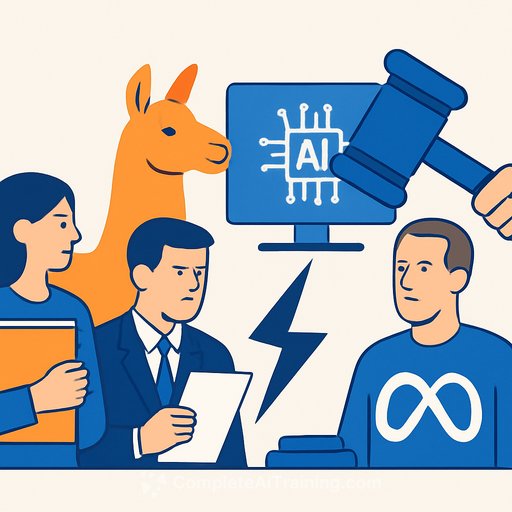
Publishers and authors sue Meta and Zuckerberg over copyright infringement in Llama AI training
Five major publishers and author Scott Turow sued Meta on May 5, alleging its Llama.3 AI was trained on millions of copyrighted works without permission. The class action names Hachette, Macmillan, Cengage, McGraw Hill, and Elsevier as plaintiffs.
Read more →
AHA webinar to cover AI threats and cybersecurity best practices for health care organizations
The American Hospital Association hosts a webinar May 5 on how attackers use AI against healthcare targets. Topics include emerging threats and safer AI adoption practices for hospital security teams.
Read more →
AI becomes core architecture in mobile apps as adoption tops 80% of new launches in 2026
Over 80% of new mobile apps launching in 2026 will have AI built into core functionality, per Gartner. Apps with AI consistently outperform others on retention, conversion, and lifetime value.
Read more →

Latest AI News for Legal
ABA and Mississippi Bar give lawyers flawed AI verification guidance
Bar associations are telling lawyers they can reduce AI verification based on prior tool experience-guidance that conflicts with hallucination rates as high as 33% in legal AI systems. The default should be skepticism, not trust.
Read more →

UC Law SF student builds AI prompt tool to help non-lawyers navigate the legal system
A UC Law SF student built an AI tool to help people without lawyers ask better legal questions. PromptCounsel fills gaps in user input before they query an AI system.
Read more →

Latest AI News for Management
OpenAI raises $4 billion for AI deployment joint venture as Anthropic launches rival firm with Blackstone
OpenAI raised $4 billion for a new joint venture to help businesses deploy its AI, backed by TPG, Brookfield, and Bain Capital. Anthropic launched a rival effort the same week with Blackstone and Goldman Sachs.
Read more →

Latest AI News for Marketing
Most UK marketing leaders plan to increase AI budgets, Canva research finds
98% of UK marketing leaders plan to increase AI spending, yet 70% of British consumers say AI-generated ads lack soul. The gap between adoption and audience trust is sharpening fast.
Read more →

Latest AI News for Operations
Formula One teams sign eight AI partnerships in six months as technology spending reaches $769 million
F1 teams signed eight AI partnerships in six months, covering race strategy, data handling, and operations. Williams partnered with Anthropic, while Oracle Red Bull Racing uses an AI agent to support engineers during races.
Read more →

IBM launches sovereign AI platform, expands enterprise tooling, and advances quantum drug discovery at Think 2026
IBM announced infrastructure and governance tools at Think 2026 to help enterprises run AI at scale in regulated settings. New products cover agent orchestration, real-time data pipelines, operational visibility, and sovereignty controls.
Read more →

TransPerfect report finds AI now standard in enterprise localization as budgets stay flat
74% of enterprise leaders now rank AI and automation as a top priority for 2026, per a survey of 96 executives. Yet one in four organizations still don't measure the business impact of multilingual content.
Read more →

Cleveland-Cliffs partners with Palantir on three-year AI integration across steel operations
Cleveland-Cliffs posted a $237M net loss on $4.9B in Q1 2026 sales, then signed a three-year AI deal with Palantir. The partnership targets planning and operations costs but doesn't reduce the company's reliance on steel tariffs.
Read more →

Lenovo and ServiceNow expand partnership to automate enterprise IT workflows and cut support costs
Lenovo and ServiceNow expanded their partnership to automate enterprise device management, promising up to 30% lower IT support costs and 50% faster employee onboarding. The deal launches across five countries, with more regions planned.
Read more →

Dealers who treat AI as software first are missing its compounding value, says QoreAI CEO
Dealerships that treat AI like traditional software are falling behind, says QoreAI CEO Todd Smith. Build your own AI-powered operations now or lose that intelligence the moment a vendor contract ends.
Read more →
HUMAIN and AWS launch enterprise AI operating system for autonomous agent deployment
HUMAIN, backed by Saudi Arabia's Public Investment Fund, launched HUMAIN ONE, an AI agent operating system built on AWS infrastructure. It combines development, security, and data governance tools in one platform, available through AWS Marketplace.
Read more →

Latest AI News for PR and Communications
Zibu launches AI voice agent to handle after-hours patient calls for medical providers
San Jose startup Zibu launched an AI voice agent that answers patient calls after clinic hours and sends structured summaries to providers. Missed calls cost U.S. healthcare over $150 billion yearly; 80% of appointments are still booked by phone.
Read more →

Latest AI News for Product Development
Sundar Pichai built Google into an AI powerhouse while rivals called for his resignation
Sundar Pichai bet on AI in 2016, built custom chips, kept DeepMind inside Google, and watched it pay off when ChatGPT forced rivals to scramble. Gemini now holds 25% of global AI traffic, up from 6% a year ago.
Read more →

Latest AI News for Real Estate and Construction
InQI expands its property intelligence platform with new site plan editor, 3D modeling, and AI agent tools
InQI updated its property software to store and build on data tied to a specific address over time. The platform now includes 3D modeling, code review, cost estimates, and a multi-LLM system that cross-checks AI outputs.
Read more →

Latest AI News for Sales
Major AI data centers pass on Google's TPU chips as Nvidia grip holds firm
Major data center operators including Nebius, Lambda, and CoreWeave are passing on Google's 8th-gen TPU chips, citing near-total customer demand for Nvidia GPUs. Google is now pursuing financing deals to lower adoption barriers.
Read more →
Avarra says AI sales training platform helps Mangomint cut rep ramp time in half and lift win rates
Avarra claims its AI sales training platform helped one company raise win rates from 29% to 35% and cut rep ramp time from eight to four weeks. Pricing and broader customer results aren't disclosed.
Read more →